Get Full Government Meeting Transcripts, Videos, & Alerts Forever!
Get email alerts on the School Meals topic
No spam. Unsubscribe anytime.
Board approves changes to meal‑debt policy, cites donor help and warns CEP would require multi‑million dollar subsidy
Summary
After a public hearing, the board approved revisions to student meal‑debt policy (including a $50 cap on unpaid charges that stops extra purchases but preserves a reimbursable meal for eligible students). Staff warned that adopting universal free meals districtwide under CEP could create a $4M–$5.7M annual deficit without federal multiplier changes.
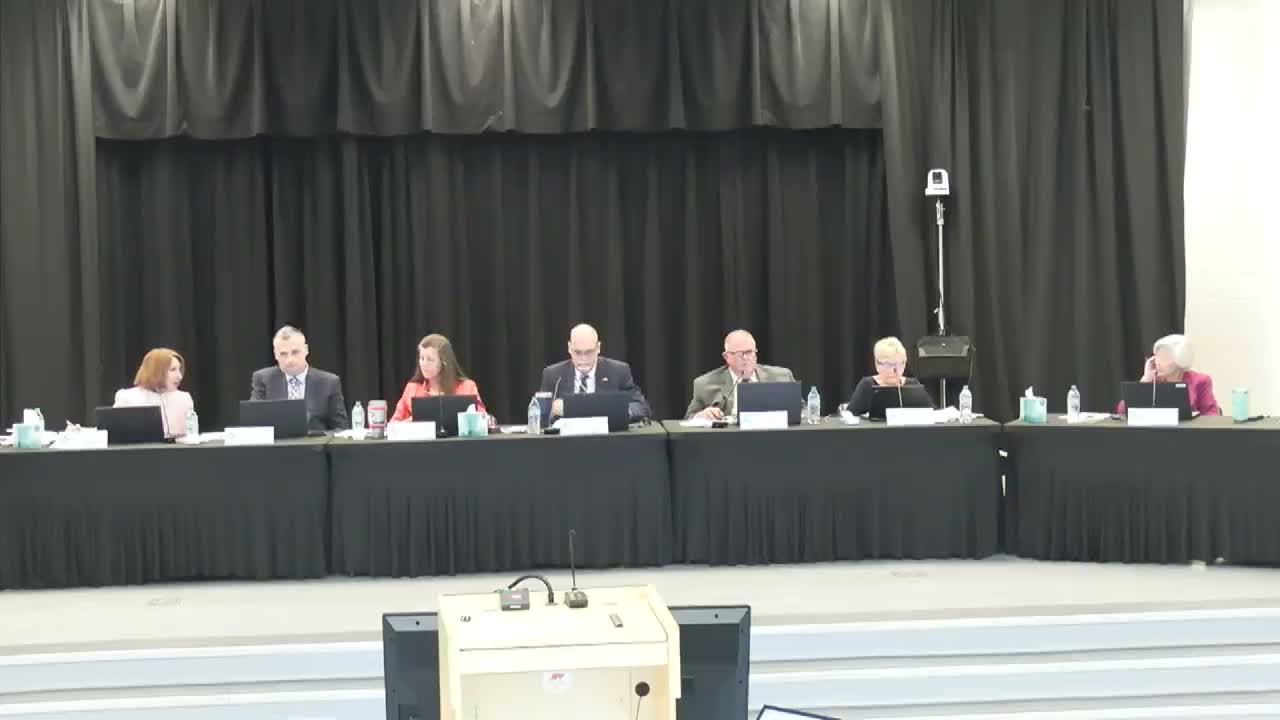
The Santa Rosa County School Board on Sept. 9 approved revisions to district nutrition policy aimed at limiting unpaid student meal debt while preserving meals for students in need.
Travis Fulton, the district’s director for purchasing and food service matters, told the board the district has seen unpaid meal balances rise and fall across recent years — examples cited included roughly $36,000 outstanding at one point and a high of about $61,000 in a prior year. The district changed its practice this year and rolled forward unpaid balances for returning students, starting the term with roughly $23,000 in carry‑forward unpaid charges; as of Sept. 3 staff reported about $13,000 in new charges and roughly $12,000 in donations or pledged donations toward those balances.
To limit escalating balances while ensuring children receive meals, the revised policy adds a $50 cap: once a student’s unpaid balance reaches $50 the school will restrict purchases of à la carte or extra items and establish local procedures to prevent further charges, but the district will not withhold a reimbursable meal. Fulton emphasized that students who are already classified as free or reduced through either an approved application or an administrative application will continue to receive a reimbursable meal even if their balance exceeds $50; the administrative application is a tool principals can use — with social‑worker support — to place eligible students into free status.
Autumn Wright, speaking for the district social‑work team, said social workers are proactively helping families complete free/reduced applications and securing donations; teams have been visiting homes with tablets to complete forms and are coordinating with cafeteria managers to intervene earlier when balances rise.
Board members also reviewed Community Eligibility Provision (CEP) modelling. Fulton said district calculations using validated ISP percentages and enrollment suggest districtwide CEP reimbursement would be roughly $10–$11 million while contracted food‑service costs are just over $17 million. Under that modelling the district would face a program shortfall in the range of about $4 million to $5.7 million annually that would have to be covered by the general fund; staff noted CEP eligibility and reimbursement rates depend on federal multipliers controlled by Congress and the USDA.
The board voted to adopt policy revisions (8.42) following the public hearing; members discussed outreach to families to meet the Sept. 22 free/reduced application grace‑period deadline to avoid retroactive meal debt for eligible families.