Get Full Government Meeting Transcripts, Videos, & Alerts Forever!
Get email alerts on the Ballot Measures topic
No spam. Unsubscribe anytime.
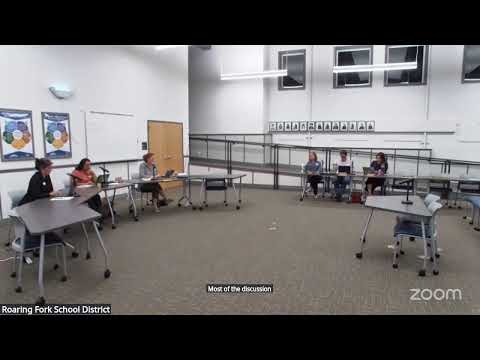
Board hears presentations on Colorado Mountain College mill‑levy question and a regional early‑childhood district; votes on board action delayed
Summary
Colorado Mountain College and advocates for a regional early‑childhood special district briefed the board on two ballot questions (7C and 7A). The board moved to convert the CMC item from an action item to discussion tonight because of a conflict of interest and will consider any endorsement at a future meeting.
Presenters from Colorado Mountain College and a regional early‑childhood coalition briefed the Roaring Fork School District board Wednesday about two separate ballot measures: CMC’s mill‑levy authority question (7C) and a proposed regional early‑childhood special district (7A).
A presenter for Colorado Mountain College explained that Question 7C would allow the college to waive a recently imposed statutory property tax limit so it can use the mill levy approved by voters in 2018 to invest in facilities and programs (skilled trades, nursing, first responders, housing) and to sustain concurrent‑enrollment offerings. The presenter said that voters authorized a floating mill levy in 2018 and that the college “refunded nearly $50,000,000 back to the taxpayers” in later cycles; the presenter characterized the current question as "not a new tax" and stated, “There is no fiscal impact,” for the school district.
Later in the agenda, a volunteer organizer presented the proposed regional early‑childhood special district (7A). The presenter described the service plan that county commissioners approved for Garfield, Eagle and Pitkin counties and said the district would be governed by a five‑member board elected by director district. The proposal would fund early‑childhood supports via a 0.25% sales tax, with a stated goal of keeping administrative overhead no higher than 5% and directing most funds to tuition subsidies and capacity building to make childcare affordable and increase spots.
Because one board member disclosed a conflict of interest on the CMC item, a director moved to amend the agenda so item 9.1 would be treated as discussion only and any formal action would occur at the next board meeting when the full board could vote; the motion carried by voice vote. Several directors said they support the goals of both proposals and emphasized the importance of regional equity and ensuring provider and family voices are included in governance decisions.
Next steps: the board will place the CMC item on a future meeting agenda for potential action and may draft a resolution or educational materials about the early‑childhood measure depending on follow‑up.