
St. Vrain board hears plan to expand community schools, budgets for scholarships and infant care pilot
Get AI-powered insights, summaries, and transcripts
Subscribe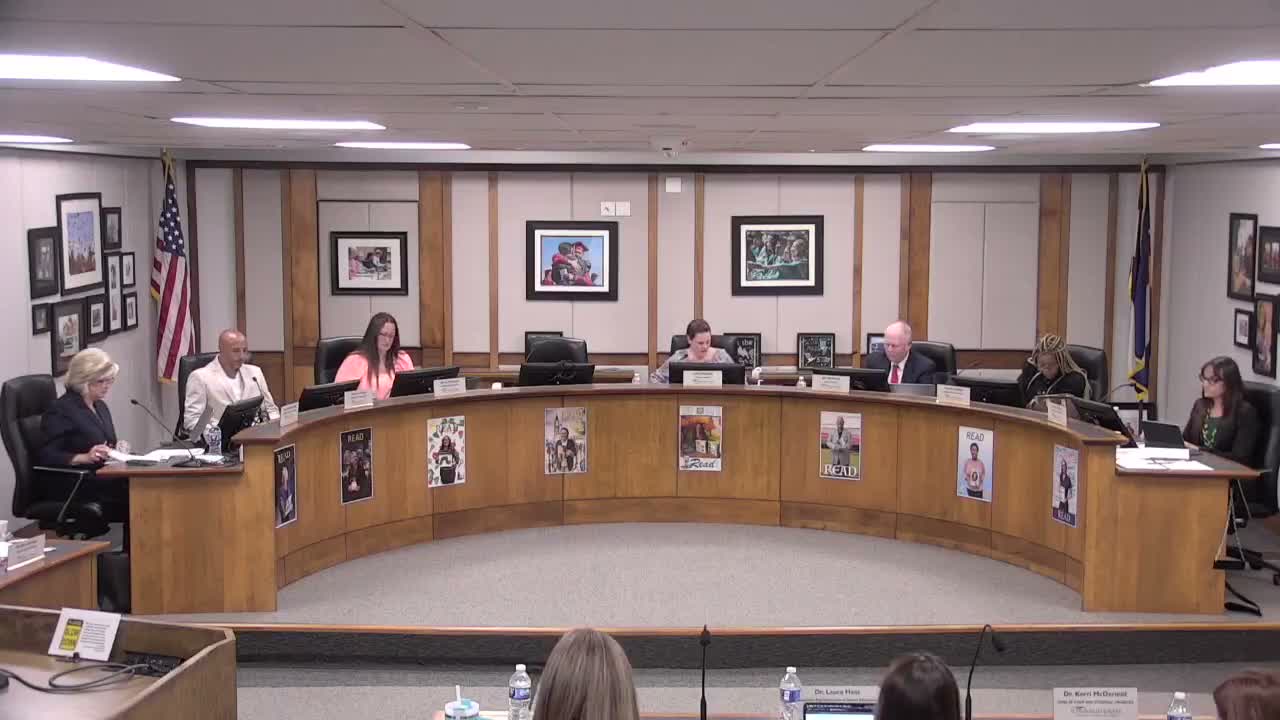
Summary
District officials told the board the Community Schools program has grown from about 1,100 participants in 2010 to nearly 4,000 last year, outlined recent fee-setting practices and an internal scholarship program to cover unpaid fees, and said the district set aside roughly $620,000 for an infant/toddler pilot and about $300,000 for a future toddler room.
The St. Vrain Valley School District No. Re1J Board of Education on Sept. 10 heard a detailed presentation on the district's Community Schools before-and-after care and enrichment programs, including enrollment trends, fee policy and planned expansions.
District leaders said the program provides licensed childcare, preschool wraparound and out-of-school enrichment to support working families and to extend classroom learning. "Our primary goals are offering reliable solutions for our working parents," Susan Zimmerman said during the presentation, describing services for preschoolers (ages 3—4) and elementary students (ages 5—13).
The district traced the program's origins to the 1980s and, by 2010, served just over 1,100 participants; "up to last year [we] just under 4,000," Zimmerman said. Leaders said they set fees by benchmarking neighboring districts and local childcare centers and deliberately aim to keep fees midrange and affordable. Martha Clemson, assistant coordinator for community schools and the department's budget lead, said the department recently increased fees but does not plan to revisit rates again until 2028.
District staff described an internal scholarship program to make up for unpaid parent fees. "Last year, we did not collect $275,000," Clemson said, adding that the department budgets an anticipated shortfall of about $250,000 to $300,000 annually and does not cap need-based support. She also noted county-level cuts to Colorado Childcare Assistance Program funding, saying Boulder County is in its third year of a freeze and Weld County in its second, which has increased demand for internal assistance.
Presenters outlined near-term capital and program investments tied to enrollment growth and new school openings. The district has set aside about $620,000 to launch a pilot infant and toddler care program for district employees at a new PK-8 in Mead and reserved roughly $300,000 for an additional toddler room associated with a future elementary in Erie.
Board members asked how the department covers fee shortfalls. Clemson said the department budgets anticipatory shortfall amounts and maintains a fund balance to support staff and operations; finance staff were credited with helping to manage turnover and provide reliable financial data.
District officials emphasized equity and flexibility in scheduling, noting the Community Schools program offers drop-in, late-start and multi-day options to meet diverse family needs. "We want to give teachers and paraprofessionals the opportunity to express their creativity," Zimmerman said, describing enrichment classes that have included language instruction, chess and sports instruction led in some cases by high school students working at Title I elementary schools.
The presentation included no formal action; the board received the report and moved on to consent and action items later in the agenda.