
St. Louis County Council Rejects Resolution Recognizing Charlie Kirk After Hours of Public Testimony
Get AI-powered insights, summaries, and transcripts
Subscribe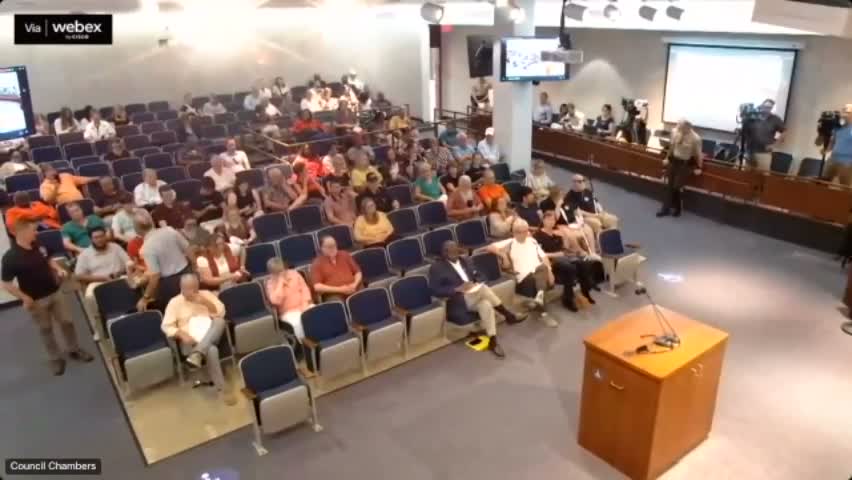
Summary
After nearly two hours of public comment and extended debate, the St. Louis County Council voted 5–2 on Sept. 16, 2025, not to adopt a resolution that would have recognized Charlie Kirk’s life and condemned political violence; supporters said the measure condemned assassination, opponents said section 3 improperly 'honors' his legacy.
The St. Louis County Council voted on Sept. 16, 2025, to reject a resolution introduced by Councilmember Harder that would have condemned political violence and "recognized the short life and work of Charlie Kirk." The motion failed on a roll call of five no votes to two yes votes.
The proposal touched off a large public forum before the vote, with dozens of residents testifying both for and against the measure. Marcos Zalada told the council the resolution "is not saying I agree with Charlie Kirk, but it's saying that we condemn political violence," framing the item as a statement against assassination rather than an endorsement of Kirk’s politics. Several dozen other speakers urged passage on similar grounds, saying condemnation of violence should be unanimous.
Opponents, however, argued the resolution went beyond condemning violence. Speakers and several council members cited past statements by Kirk they described as racist, misogynistic or demeaning to marginalized groups and said the language in section 3—"the council honors Charlie Kirk's life and legacy"—would amount to an official endorsement. John Bowman of the NAACP told the council that honoring Kirk "sends the wrong message" to communities harmed by his rhetoric. Councilwoman Webb said she sympathized with Kirk’s family but "I will not be supporting this resolution," citing the need for accountability and the council's values.
Sponsor Councilmember Harder defended the measure as recognition, not praise, saying the resolution "isn't an endorsement of every word he's uttered" and urging colleagues to vote for a clear stand against political violence. During the debate several members reiterated opposition to political violence while distinguishing that sentiment from honoring the substance of a public figure's work.
After public comment and extended discussion, the roll call returned five no votes and two ayes; the chair announced the resolution was not adopted. The council proceeded to other business, including appointments and routine legislation.
The council had extended the public‑comment period earlier in the meeting to hear all registered speakers; the clerk recorded 24 signups for that add‑on section. Next procedural steps will be internal: no further action on this resolution was taken at the meeting, and any future introduction or amended language would have to be brought back by a council member.