Get Full Government Meeting Transcripts, Videos, & Alerts Forever!
Get email alerts on the St Louis County 2050 topic
No spam. Unsubscribe anytime.
County planning director urges passage of 'St. Louis County 2050'; council members applaud but warn funding is limited
Summary
Jacob Trimble, the county’s planning director, urged the council to approve St. Louis County 2050, describing it as a 25-year comprehensive plan to address five major county challenges. Council members praised the plan’s work but several cautioned that the county currently lacks funding to implement many of its roughly 200 action items.
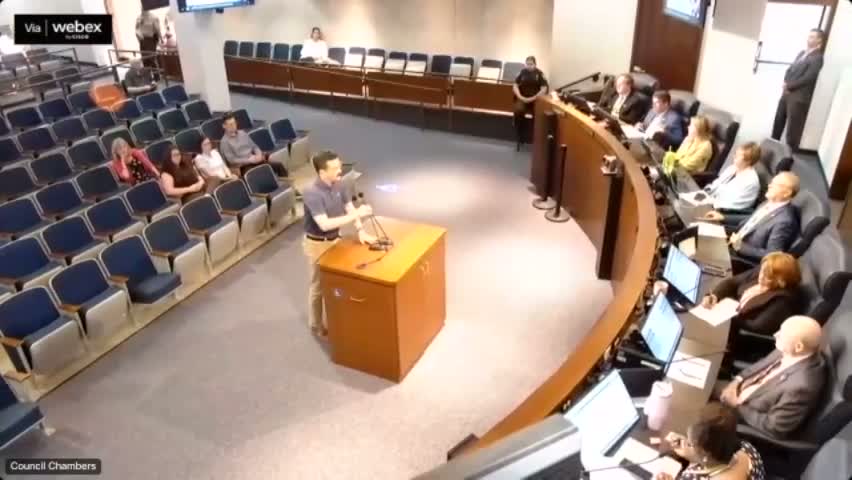
Jacob Trimble, director of the Department of Planning, addressed the St. Louis County Council during the public forum on Sept. 2 to urge an affirmative vote on St. Louis County 2050, calling it a decades-in-the-making, award-winning, 25-year comprehensive plan aimed at addressing population stagnation, job-skill mismatches, infrastructure fiscal challenges, resilience and housing affordability.
"St. Louis County 2050 is the vehicle to drive that change over the next 25 years to become the county and the communities that we want to be," Trimble said, asking council members for their support and describing the plan as a practical starting point for detailed implementation work.
During subsequent council remarks, Councilman Harder praised the planning effort but cautioned residents and colleagues that the plan contains roughly 200 specific action items and that the county presently lacks funding to execute many of the projects. "If someday we got a windfall of money ... but right now ... we don't have the money for any of this," Harder said, and he urged committee review and careful prioritization.
Councilwoman Webb and others commended the planning department’s work, stressed the need to move from planning to execution, and said the council must prioritize and identify recurring funding sources if it expects significant elements of the plan to be implemented.
Bill 186, which staff and the planning director associated with the 2050 plan, was moved for final passage and approved by roll call (seven ayes) later in the meeting. Council members said the approval is a first step and that detailed budgeting, committee work and public follow-ups will determine which recommended actions are funded and implemented over time.
The council did not adopt a financing package to implement the plan at this meeting; members repeatedly noted the difference between adopting a vision document and committing money to the plan’s hundreds of subitems.