Get Full Government Meeting Transcripts, Videos, & Alerts Forever!
Get email alerts on the Sober Living topic
No spam. Unsubscribe anytime.
Supporters and neighbors spar over Life Change sober-living home in Spanish Lake
Summary
Multiple speakers at the Aug. 19 public forum urged the council to support Impact Agape Ministries’ Life Change sober-living program for women in Spanish Lake; proponents said the facility is residential, staffed 24/7, serves court- or medically-referred women and can house 8–15 residents, while some community members raised safety and compliance concerns.
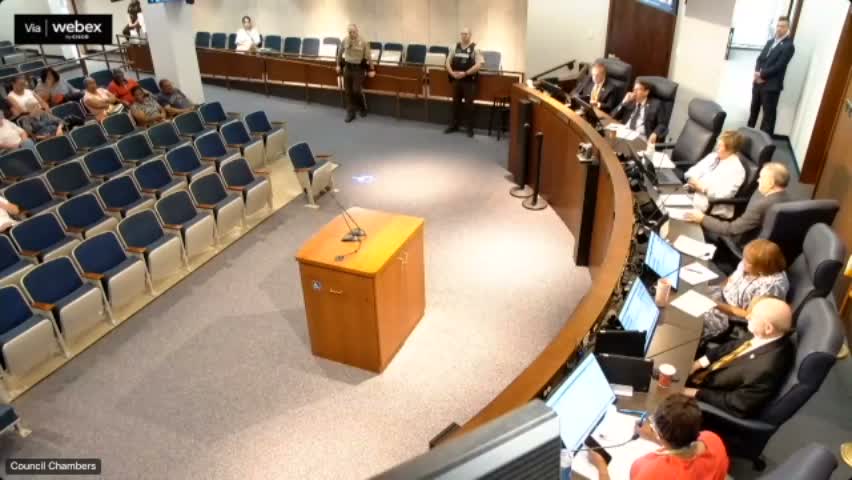
At the public-forum portion of the Aug. 19 Saint Louis County Council meeting, a cluster of speakers addressed a proposed transitional sober-living facility run by Impact Agape Ministries called Life Change.
Supporters described the program as a nonprofit, faith-based transitional home that serves women recovering from substance use disorders and stressed safeguards: Sylvia Crosby, a board member for Impact Agape, said the facility accepts only court-involved or medically referred residents, will be staffed around the clock, restrict visitors and can support "up to 15 women." Kenneth Haines, a pastor with Impact Agape, told the council the residents are not criminal offenders and that the organization provides supervision, transportation and structured programs.
Supporters asked the council and nearby school officials to collaborate to address neighbors’ hypothetical concerns and emphasized the rezoning and conditional use permitting process had occurred: Crosby said the site was rezoned from R-3 to R-5 with conditions and a conditional use permit for a dormitory/group living facility for religious education and charitable purposes.
Other speakers raised objections and broader legal concerns. Dora Owens raised multiple, personal and legal complaints about probate and trafficking issues (comments recorded in the public forum); those remarks reflected individual concerns rather than an administrative action by the council.
No final council action on the facility occurred during the meeting. The comments illustrate both community support for residential recovery services and ongoing neighborhood questions about safety and implementation.
What happens next: The rezoning and conditional-use paperwork referenced by supporters remains the appropriate venue for formal review and any enforcement or follow-up; council staff or the planning department will handle any outstanding compliance issues.