Get Full Government Meeting Transcripts, Videos, & Alerts Forever!
Get email alerts on the Contract And Transition topic
No spam. Unsubscribe anytime.
APA says it left 300‑page 'playbook'; council hears disputes over communication and oversight at shelter
Summary
Former contractor APA told the council it left a 300+ page operational playbook and offered training; APA witnesses said repeated rejections of recommended best practices and loss of liaison roles led to breakdown with public‑health leadership and their decision to exit the contract.
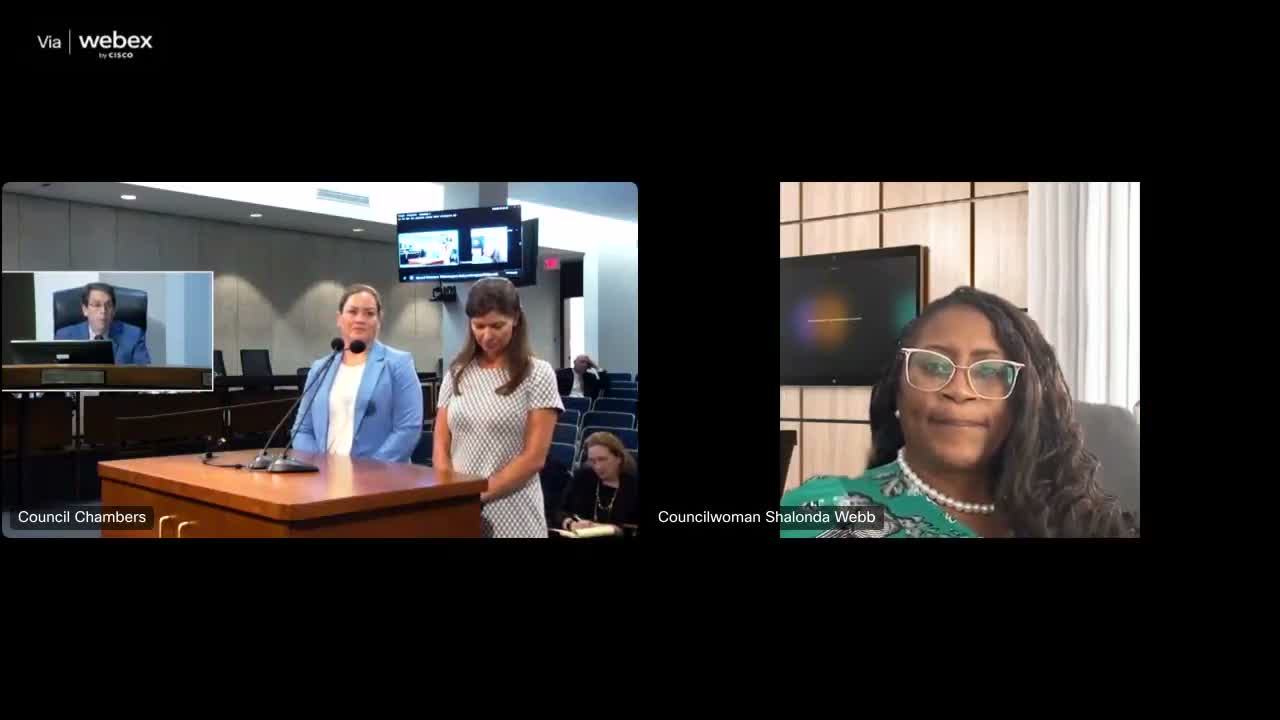
Former shelter operators and county public‑health officials appeared before a St. Louis County council committee Aug. 7 to explain why a previously contracted operator (the Animal Protective Association) left in 2024 and whether county leadership used APA's handover materials.
Sarah Javier, APA president and CEO, and Kim Brown, APA vice president and COO, told the committee they operated the shelter under contract from Dec. 2022 through their exit and that adoptions rose during their tenure, parvovirus cases were uncommon and the organization maintained an 88% survival rate for treated parvo cases. "We gave the playbook several weeks in advance," Javier said of a 300‑plus page operational manual that APA says included SOPs, vendor lists, volunteer templates and training content.
Kim Brown described the playbook and APA's operational approach: focused intake vaccination, cleaning and sanitation protocols, volunteer training and a foster program that placed about 1,600 animals into foster care in a year. She said the playbook preserved the APA's operational templates and that APA offered training during the six‑month transition.
But APA witnesses said their repeated recommendations to the county — for example, using microchip scanners in the field to return found animals rather than bringing them into the shelter — were denied or ignored and that liaison positions that had smoothed communication were eliminated. "There were multiple occasions...we spoke to DPH leadership or tried to facilitate conversations...and very often, those requests were either ignored or denied," Javier said.
Deputy public‑health director Dr. Landris Burrows acknowledged failed inspections earlier in 2025 and said many corrective actions were handled through operations meetings and emails. Burrows said he had not personally negotiated the Best Friends consulting arrangement and that his role focused on collaboration: "Our job is really to try to help support that in any capacity that we can," he said. He described efforts to expand procurement limits and use emergency purchasing to obtain supplies needed during the outbreak.
Council members pressed both sides on recordkeeping and chain‑of‑command questions: who approved the Best Friends consultant arrangement, who was responsible for hiring, and how the county should document SOP ownership going forward. APA said it had shared playbook materials with DPH leadership (they named specific recipients in testimony) and offered photographs and a written inventory showing how they left the building.
The committee requested that APA provide the detailed playbook, photographs and transition inventories already delivered to county staff; the county said it would produce an organizational chart and requested legal guidance on liability questions related to volunteers and foster placements.
The hearing underscored the practical pain points county officials will need to address if they continue to operate the shelter — clarifying official reporting lines, finalizing written SOPs that incorporate outside consultants' guidance, and securing sustained procurement and staff capacity to manage infectious‑disease and intake pressures.