Get Full Government Meeting Transcripts, Videos, & Alerts Forever!
Get email alerts on the Medicaid Estate Recovery topic
No spam. Unsubscribe anytime.
Ohio House Medicaid Committee hears bill to require clearer notices about estate recovery
Summary
Sponsors told the House Medicaid Committee HB 130 would require plain-language notice at application and upon approval explaining Ohio—s Medicaid Estate Recovery Program; witnesses described large estate recovery bills and inconsistent notices. The bill does not change eligibility; opponent testimony and a possible vote were scheduled for next week.
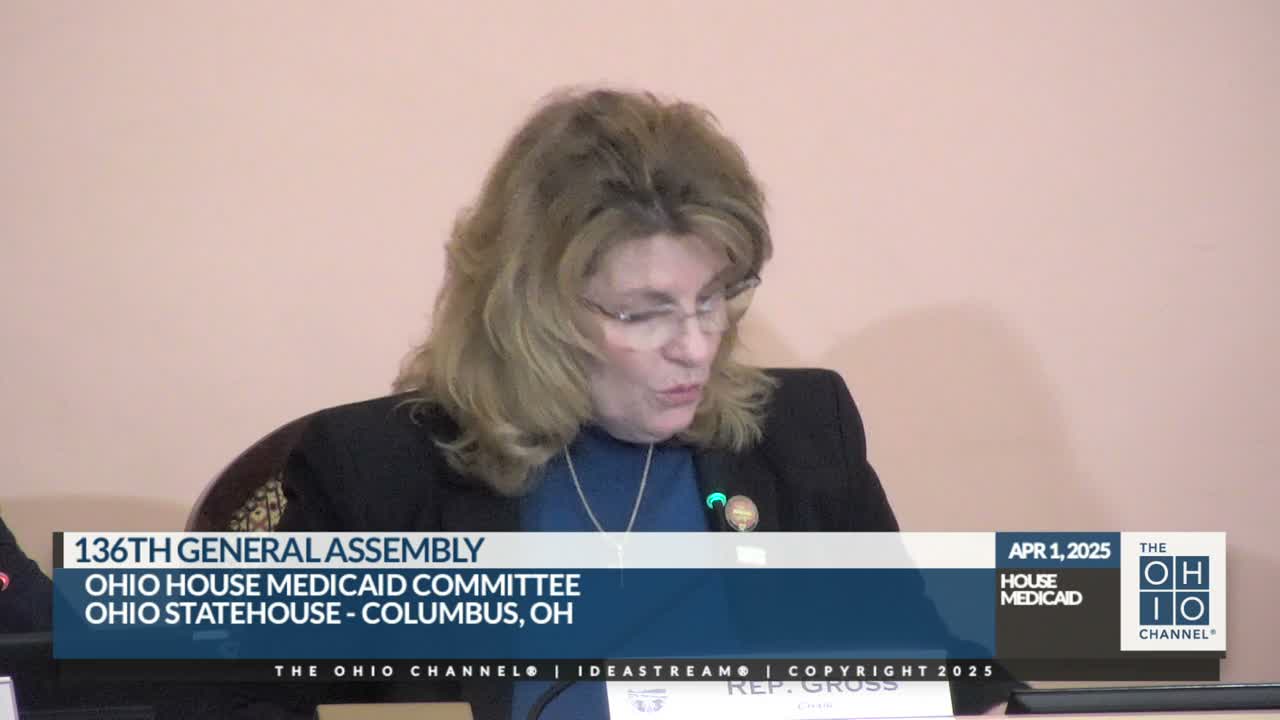
Chair Gross opened a House Medicaid Committee hearing on House Bill 130, the Medicaid Estate Recovery Notification Act, which sponsors said would require the Department of Medicaid to provide clearer, consumer-focused written notice to applicants and enrollees about how the state—s estate recovery process works.
Representative LaRae, the bill—s sponsor, told the committee that HB 130—s goal is "to ensure transparency and clarity for certain individuals and their family members that are enrolled in the Medicaid Estate Recovery Program," and said Ohio is "one of only 18 states that pursues recovery" and has recovered "more than $270,000,000 since 2019." She said the bill would require notice at the time of application and again with the approval letter, and that the Department of Medicaid would develop consumer-facing materials.
Co-sponsor Representative Brennen said many applicants do not know the state may seek repayment from a beneficiary—s estate and urged that notices be drafted in plain language and include examples of what is recoverable. Brennen said recipients should be involved in developing the materials and emphasized "there's nothing in this bill that changes eligibility or any of the current Medicaid program. This is simply a notification piece."
Bob Weldon, a proponent witness, gave extended testimony with multiple examples he said illustrated inconsistent notices and harm from surprise recovery claims. He described cases he had compiled in a packet for the committee: a managed-care premium bill of $1,785.16 that contributed to a total estate recovery of $187,341 for one decedent; a contractor who received a $110,000 bill after his father—s death; and a surviving spouse who was assessed $360,000 and faced a lien on her home. Weldon told members he had reviewed forms, agency websites and an older eligibility manual and said a signature block that once appeared on forms had been removed.
Weldon also cited a CMS communication to state Medicaid directors he said asked states to "thoroughly explore options" to avoid recovery for certain benefits other than long-term care. He argued notices and intake forms used by counties and agencies differ, and that plain-language, consistent notices would help families make informed choices and reduce downstream costs.
Committee members asked sponsors and witnesses several technical questions. Representative Samani and others asked whether draft notice language already exists and whether the bill would require a signature acknowledging receipt; sponsors and Weldon said the bill does not require a signature and that federal law does not mandate one. Representative Craig clarified that the federal long-term-care partnership program remains separate and that long-term-care insurance can affect recovery in specific ways.
Representative Stevens described how liens can lead to neglected properties and framed the bill as addressing "informed consent" about what applicants are signing up for. Members also asked whether HB 130 carries any appropriation; sponsors said it does not. Chair Gross closed by directing members to four written proponent testimonies available on their committee iPads and said the committee will meet next week for opponent testimony and a possible vote on HB 130.
Next steps: opponent testimony and potential committee vote scheduled for the following week.