Get Full Government Meeting Transcripts, Videos, & Alerts Forever!
Get email alerts on the Medicaid Estate Recovery topic
No spam. Unsubscribe anytime.
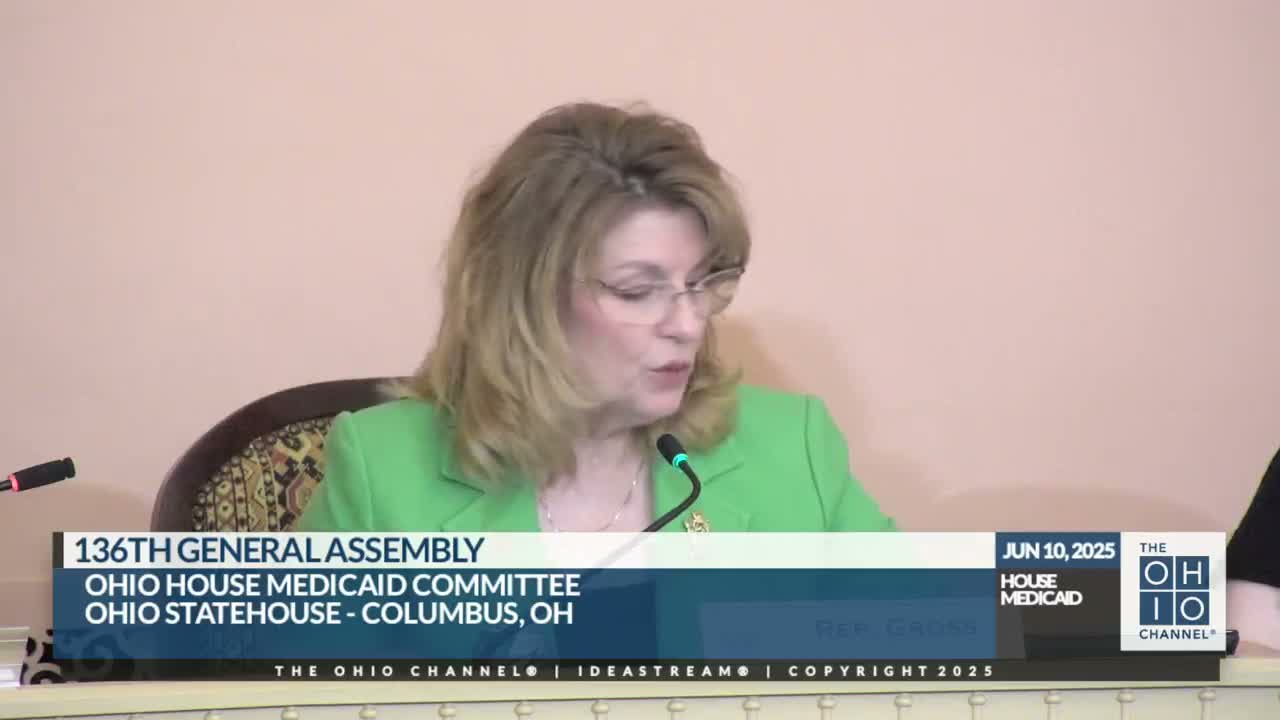
House Medicaid Committee hears sponsors of bill to cap Medicaid estate‑recovery liens
Summary
Sponsors of House Bill 318 said the Saving Homes for Ohioans Legacy Act would limit estate recovery to federally required long‑term care costs, exempt small claims under $20,000, and cap liens at 75% of market value to keep homes marketable and reduce blight; the committee took no vote.
Representative Stevens and Representative Brennan testified before the House Medicaid Committee on House Bill 318, the Saving Homes for Ohioans Legacy Act, saying the measure would cap Medicaid estate‑recovery liens, exclude the smallest claims from collection, and limit recovery to federally‑required long‑term services and supports (LTSS).
Supporters framed the bill as both humane and fiscally sensible. "By capping Medicaid liens at a reasonable amount, properties become viable for new home buyers," Representative Stevens said, arguing that liens that exceed a home's market value leave houses vacant and contribute to neighborhood blight. Representative Brennan told the committee the bill would "limit Medicaid estate recovery only to the mandatory long term services and supports," and would exempt claims under $20,000 and decline to pursue recovery when collection costs exceed the estate's value.
Brennan and Stevens offered specific policy mechanics: a $20,000 exemption for the smallest claims, a cap that liens not exceed 75% of a property's market value, and a restriction that recovery be focused on costs the federal government requires states to recoup for long‑term care. Brennan said those changes would protect low‑income families and, in his view, improve net recoveries by keeping homes marketable so a buyer or family member could purchase and pay down a reasonable lien.
Committee members pressed sponsors on tradeoffs and numbers. Representative Hall asked whether the $20,000 exemption could be raised to $50,000; Brennan said he was open to negotiation but noted he and other sponsors must persuade a broader group of House members. Chair Gross sought examples to illustrate how the 75% cap would work in practice, asking how it would apply to a $300,000 home with $10,000 per month in long‑term care costs; sponsors said the cap is intended to leave enough equity that families or new buyers could finance purchases and thereby return more dollars to Medicaid than the current practice of filing liens that make properties unmarketable.
Speakers also disputed how much the state currently recovers: Stevens said Ohio’s estate recovery program has become "one of the country's most aggressive" and that in some districts liens "far exceed their fair market value," while Brennan stated that "less than 1% of Ohio's total Medicaid expenditures are recovered through the program." Both figures were offered as sponsor testimony to justify narrowing collection efforts; the committee did not receive a staff economic estimate during the hearing.
No motion or vote on HB 318 was taken at the hearing. The committee approved the minutes of its previous meeting without objection earlier in the session and adjourned after questions. Sponsors said they would continue to refine language and discuss possible amendments with committee members.
The House Medicaid Committee is not scheduled in this transcript to take a final vote on HB 318; next procedural steps were not specified during the hearing.