Get Full Government Meeting Transcripts, Videos, & Alerts Forever!
Get email alerts on the Fracking Disclosure topic
No spam. Unsubscribe anytime.
Sponsor seeks mandatory disclosure of fracking chemicals near state parks
Summary
Representative Brennan testified for House Bill 71, which would require well owners operating in or under state parks (or adjacent horizontal drilling) to disclose trade names and chemical components used in hydraulic fracturing so first responders and medical personnel can respond more quickly. Members debated existing reporting, trade‑secret protections and whether disclosure should be limited to first responders.
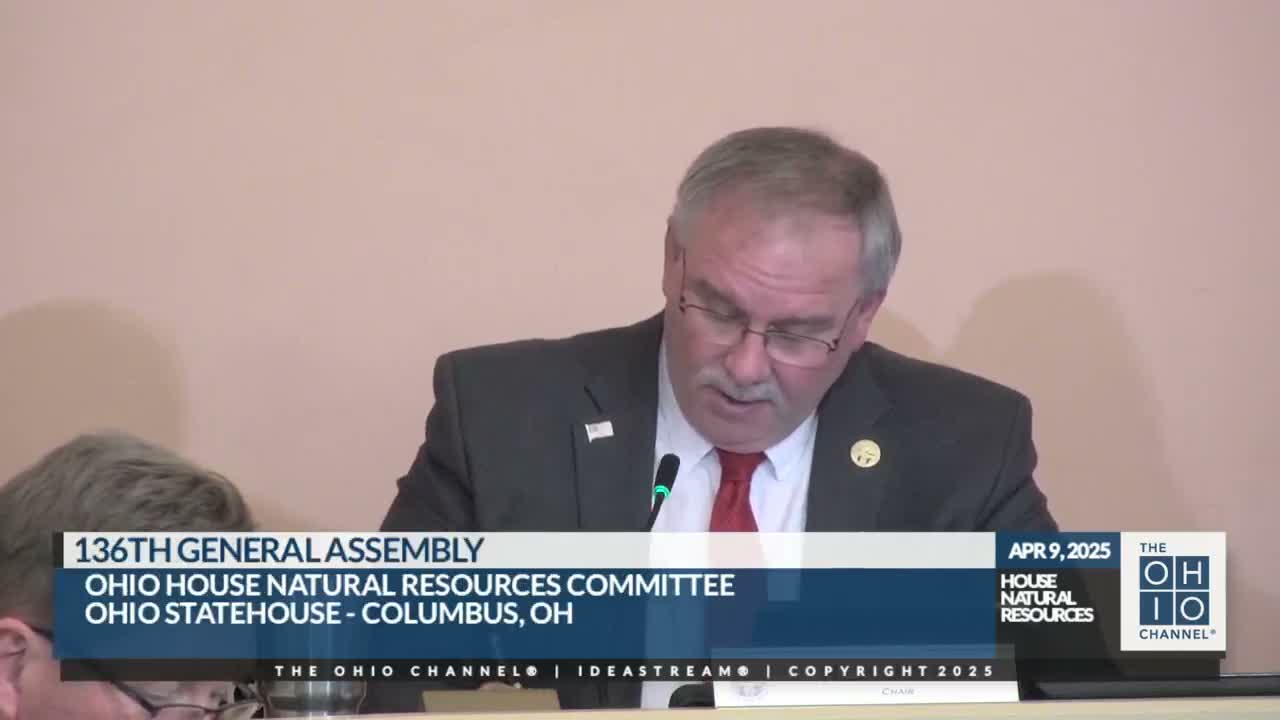
Representative Brennan presented House Bill 71, saying the bill would require owners of hydraulic fracturing wells that are in, under, or adjacent to state parks to disclose the trade names and chemical components of products used in drilling and well operations. Brennan said the change is intended to improve safety for first responders and medical professionals and to increase transparency for communities near parklands.
"House Bill 71 aims to improve public safety and transparency by requiring the owners of a hydraulic fracking, fracking wells in or under state parks to disclose, chemicals they use," Representative Brennan told the committee, citing academic work and incident counts to frame the risk.
Brennan asserted that "In Ohio, there have been over 1,400 fracking incidents between 2018 and 2022," which he characterized as about "one and a half incidents per day," and cited research he attributed to Yale identifying many chemicals potentially linked to cancer risks. He said disclosure allows first responders and doctors to treat exposures more quickly and argued the bill could require disclosure to emergency personnel even if information is withheld from the general public to protect trade secrets.
Members with direct emergency response and industry experience pressed for clarification. Representative Heiner and Representative McNally, who described firefighting experience in drilling areas, said material safety data sheets (MSDS) are normally kept on site and that operators and local fire departments receive reporting. Representative Heiner said that, in his experience, MSDSs are on well pads and companies coordinate training with local fire departments.
Committee members asked what constitutes an "incident." Brennan clarified that the 1,400 incidents ranged from minor events to major explosions and apologized for any impression that pictures he used showed operations inside park boundaries; he said some images were nearby examples. Representative Salvo and others noted existing state reporting mechanisms and questioned whether the lag time Brennan described for first responders to receive chemical details reflected universal practice. Brennan proposed possible compromise approaches, including providing full chemical component lists to local fire departments and medical professionals or adopting a Colorado‑style disaggregated disclosure form that protects proprietary formulations while still giving usable ingredient information.
Representative Holmes and others asked whether the bill should extend beyond parks to all wells; Brennan said the bill was narrowly tailored to parks because of their public‑use and conservation value, but that members could amend the scope if desired.
The hearing ended with sponsors offering to work with industry and emergency responders to refine the bill; no vote was taken.