Get Full Government Meeting Transcripts, Videos, & Alerts Forever!
Get email alerts on the Public Health Fluoridation topic
No spam. Unsubscribe anytime.
Ohio lawmaker urges ban on public water fluoridation, citing choice and health concerns
Summary
Rep. Dean introduced HB 182 to prohibit public water systems from adding fluoride, saying the bill restores individual choice; committee members and dental advocates pressed for evidence about oral-health impacts and effects on low-income communities. The committee held a first hearing and took no vote.
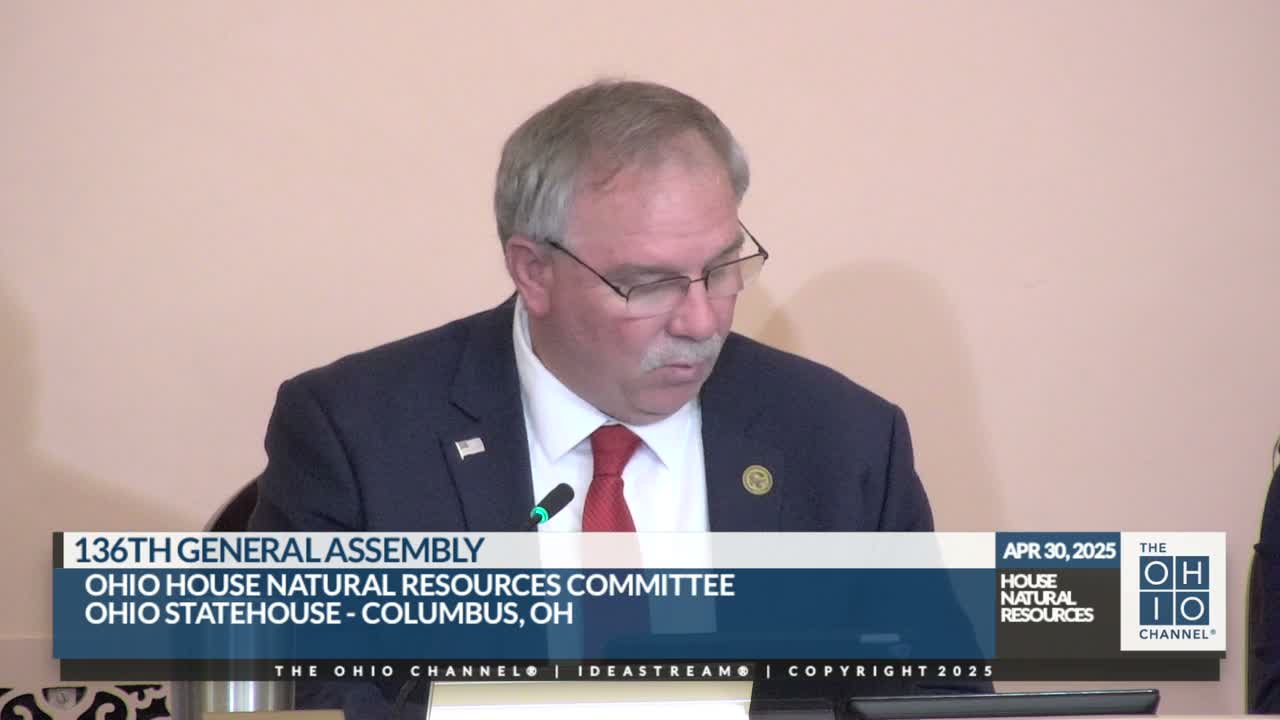
Rep. Dean told the House Natural Resources Committee he introduced House Bill 182 to prohibit public water systems from adding synthetic fluoride, framing the measure as a matter of personal choice and informed consent.
"Public water fluoridation removes personal choice in a deeply personal matter, one's health," Dean said in sponsor testimony, arguing that constituents want the option to choose whether to consume fluoride and that some research links chronic fluoride exposure to health issues.
Supporters of fluoridation and several committee members pushed back in questioning. Representative Bridal said fluoride has a well-established role in preventing tooth decay and argued removing it would disproportionately harm low-income communities that lack access to dental care or home filtration systems. "Fluoride is proven to prevent all types of tooth decay and mouth diseases," Bridal said, asking why the committee would remove a low-cost public-health intervention.
Dean responded that topical application (toothpaste and dental treatments) provides targeted benefits and said wealthier households have more options to avoid systemic exposure—an argument he used to emphasize his bill's focus on choice rather than a claim that fluoride is definitively causing disease. He told the committee he has received both calls and emails for and against the bill but did not provide a precise constituency breakdown.
Committee members asked Dean for demographic or quantitative evidence about constituent concerns; he said he could provide additional details later and that responses so far were roughly split but inexact. No dentists or health officials gave proponent testimony during the hearing; one committee member noted dental students and local dentists had contacted legislative offices opposing removal of water fluoridation.
The committee held the first hearing on HB 182; no committee vote or formal action to advance the bill occurred at this meeting. The record indicates the matter will return for further consideration pending additional information and sponsor follow-up.
What happens next: The bill received a first hearing; committee members requested more data and outreach. There was no vote during this session.