Get Full Government Meeting Transcripts, Videos, & Alerts Forever!
Get email alerts on the Mental Health Crisis Response topic
No spam. Unsubscribe anytime.
Douglas County approves Crisis Response Coalition charter to coordinate behavioral-health crisis services
Summary
The Douglas County Board of Commissioners unanimously approved a charter to formalize a Douglas County Crisis Response Coalition that will provide oversight and coordination among the TRC, mobile response teams, 988 linkage and other partners; presenters cited declines in emergency-department behavioral-health visits and a 65% drop in referrals to Osawatomie State Hospital.
The Douglas County Board of Commissioners on Nov. 19, 2025 unanimously approved a charter creating a Douglas County Crisis Response Coalition intended to provide governance, oversight and problem-solving for local crisis-response services.
Bob Transky, director of behavioral health projects, and Sonia Beza, deputy director of the emergency communications center, presented the final draft charter and described the coalitions structure: an executive committee, a crisis system operations team (CSOT) that meets more frequently for operational coordination, and an expanded community advisory group. Speakers said the coalition will not have unilateral authority to change system partners policies but can bring data-driven recommendations to the county commission, city of Lawrence, KDADS or state hospitals.
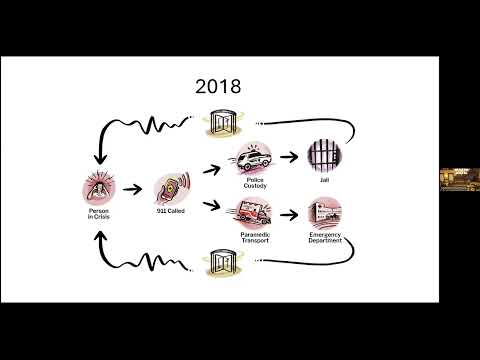
Transky highlighted system metrics the coalition will track, saying emergency-department behavioral-health visits have fallen as the Treatment and Recovery Center (TRC) and other interventions came online and reporting that monthly referrals from Douglas County to Osawatomie State Hospital have declined by more than 65% over the last several years. Transky framed the coalitions mission as improving client-centered care and reducing unnecessary law-enforcement involvement. "We don't look for reasons to say no. We try to find ways to say yes," he said.
The presentation described three near-term priorities: assessing whether Douglas County needs a separate local crisis line in addition to 988; improving system flow between the TRC and LMH (the local hospital) including transportation and medical-clearance processes; and examining the intersection of behavioral health and the justice system, including involuntary petitioning and assisted outpatient treatment orders championed by Judge Simpson.
Commissioners and coalition staff discussed logistics: the CSOT has been meeting every two weeks during the coalitions formation and some other groups have shifted to work-group participation rather than separate advisory meetings. Presenters said the TRC advisory group will be expanded rather than disbanded, that five community-advisory seats still need to be filled, and that the coalition will continue to socialize its draft charter with city partners. Transky said staff plan to return with implementation details and that the coalition will schedule study sessions or work sessions with the commission if it develops recommendations requiring action.
The board approved the charter by voice vote, 4-0, with Commissioner Reed absent. Staff said they will present the charter to the Lawrence city commission and continue to develop milestones and operational documentation for the coalition.
Next steps: Fill five community advisory seats, continue CSOT and work-group meetings, analyze 988/local-line data and report back to commissioners with recommended milestones and any items ready for elevation to a study session.