Get Full Government Meeting Transcripts, Videos, & Alerts Forever!
Get email alerts on the Pharmacy Benefit Managers topic
No spam. Unsubscribe anytime.
Ohio committee hears sponsor testimony on bill to license pharmacy benefit managers
Summary
The House General Government Committee held a first hearing on House Bill 229, which would create a licensing and reporting framework for pharmacy benefit managers (PBMs) and place PBM rules in a distinct chapter of the state insurance code to increase transparency and Department of Insurance oversight.
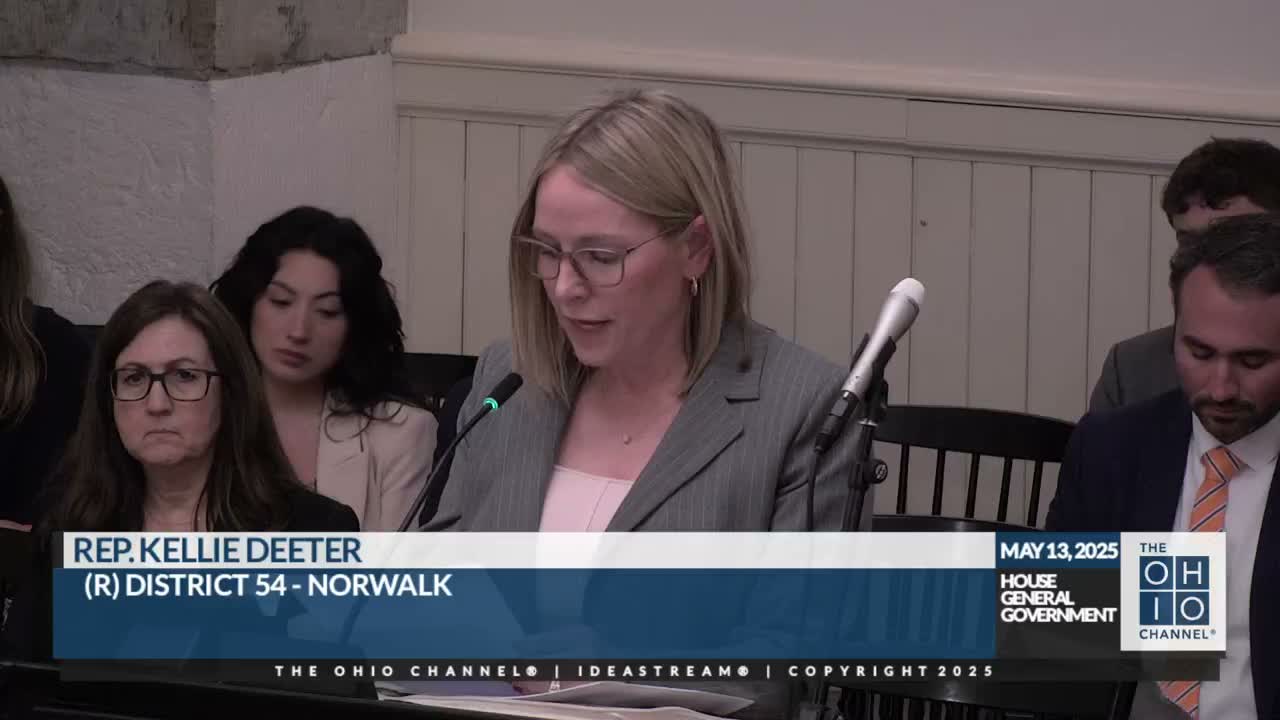
Representative Dieter, sponsor of House Bill 229, told the House General Government Committee that the bill would establish licensing requirements and standardized reporting for pharmacy benefit managers (PBMs), moving PBMs into a dedicated chapter of the state insurance code and giving the Department of Insurance clearer authority to oversee them.
Dieter said the PBM industry has consolidated in ways that affect pricing and access, telling the committee that "3 PBMs process approximately 80% of all pharmacy claims and 6 PBMs control over 90% of the market." She said the subbill includes reporting requirements to plan sponsors and the Department of Insurance for discounts, rebates, clawbacks, fees and reimbursements and that the measure balances transparency with protections for sensitive business information.
Committee members pressed sponsors on the bill’s likely effect on consumer drug prices. Dieter responded that HB 229 is primarily a transparency and licensing measure and that any direct impact on out‑of‑pocket prices would likely be indirect and subject to later negotiation or to companion bills that address pharmacy pricing specifically.
The committee adopted a substitute as the working document for the bill without objection. Dieter said the subbill reflects recommendations from the Department of Insurance and contains clarifying language intended to aid future oversight rather than substantive policy changes to the original text.
The hearing closed after members asked questions about how the reporting would function and whether surrounding states had adopted similar licensing frameworks; the sponsor said she could defer some jurisdictional comparisons to proponents. No vote on final passage was taken; the bill received a first hearing and Q&A.