Get Full Government Meeting Transcripts, Videos, & Alerts Forever!
Get email alerts on the Education Licensing topic
No spam. Unsubscribe anytime.
State Board of Education outlines licensure pathways, monitoring and staffing challenges before House General Government Committee
Summary
Ohio State Board of Education Superintendent Paul Craft told the House General Government Committee the SBOE is expanding alternative licensure pathways, enrolling staff in the Rap Back monitoring system and tracking shortages in special education and career-technical fields; members pressed for clarity on oversight, training burdens and recruitment for new computer-science and international teacher pathways.
Paul Craft, Ohio’s superintendent of public instruction, told the House General Government Committee on General Government that the State Board of Education is expanding licensure pathways and using near-real-time monitoring to protect students while trying to grow the educator pipeline.
Craft said the SBOE oversees more than 460,000 credentials held by roughly 351,272 individuals and serves more than 1,600,000 students. He described a range of licenses and permits — from adult educator and career-technical credentials to a new pre-service permit for educator-preparation students — and outlined how applicants use an OHID account and the Connected Ohio Records for Educators (CORE) dashboard to apply. “The State Board of Education is committed to providing trusted and professional support to Ohio schools, staff, and students,” Craft said.
Why it matters: Lawmakers pressed the SBOE on how licensing policy and monitoring affect staffing and student safety amid persistent teacher shortages, especially in special education and career-technical fields. The committee heard that some targeted licenses have grown rapidly (educational aides numbered about 47,783) while newly created pathways — such as a computer-science industry license — have seen little uptake.
Craft described Rap Back, the SBOE’s automated alert system, which notifies the agency when a licensed or enrolled individual has a law-enforcement interaction that could trigger a professional-conduct review. Rap Back enrollment costs about $5 per person per year; Craft said Rap Back allows SBOE staff to inform districts promptly when issues arise. “Rap Back makes us a safer place for students,” he said, noting the system supplements five-year background checks that look beyond Ohio’s court system.
Members asked detailed questions. Representative Russo sought the difference between the pre-service permit (for students before graduation) and the resident educator license (the first two years of teaching); Craft said pre-service covers field experiences before degree completion while the resident educator pairs new teachers with a mentor during their initial professional practice. Representative Plummer questioned whether Rap Back duplicates background-check processes and flagged gaps in reporting from some local jurisdictions; Craft acknowledged limitations where local law enforcement does not timely submit records to central systems and said the five-year background check fills gaps such as out-of-state or federal records.
On targeted licenses, Craft gave examples and counts and, where possible, fees: adult educator (about 3,485, $25/year), career-technical workforce development (over 7,000, $40/year), substitute teaching (about 39,146, $25/year), and educational aides (about 47,783, $25/year). He said a newly added computer‑science industry license, available since February, had no applicants so far and that the Ohio Revised Code requires five years’ industry experience for that credential; SBOE staff said temporary or district‑sponsored pathways can still place new graduates under provisional or temporary authorization.
Craft also walked members through the interim resident educator license created to help near-qualified candidates. That district‑specific, three‑year pathway requires a district‑designed mentoring and improvement program with multiple observations each year; successful candidates can transition to a professional license after the period.
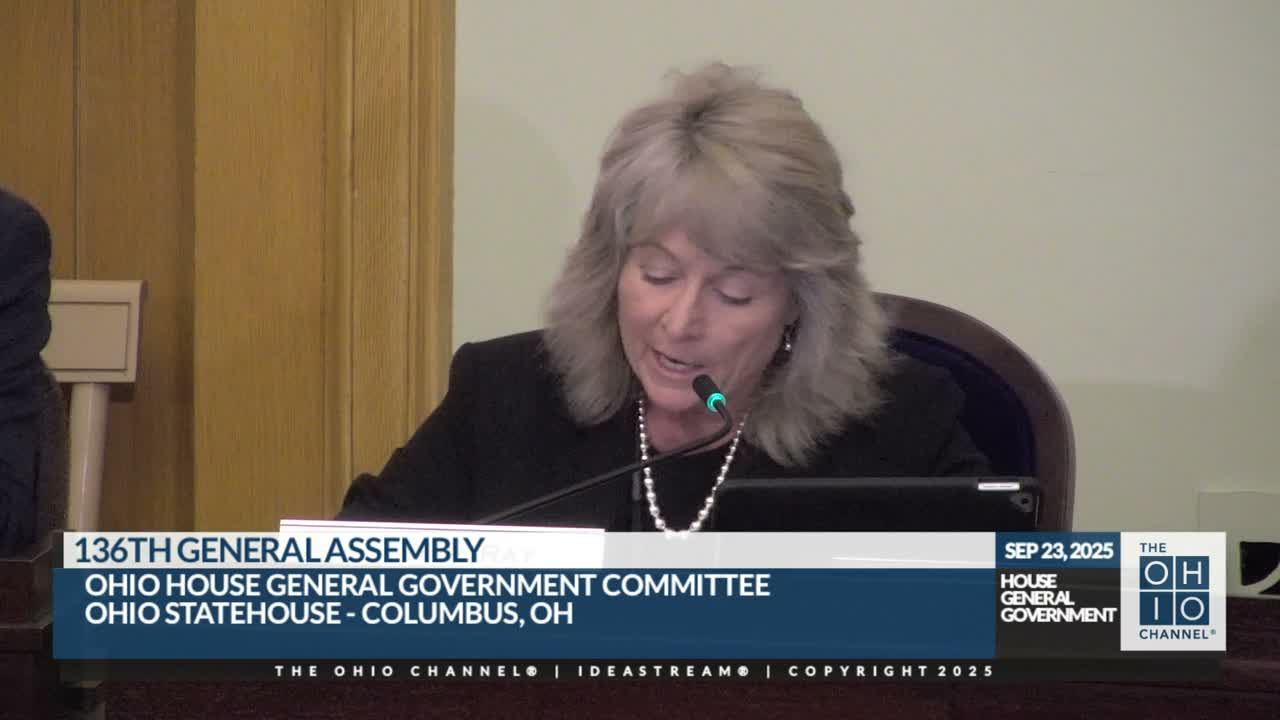
Committee business: With no quorum, the meeting proceeded as a subcommittee and Chair appointed Representative Russo as committee secretary. The session concluded without votes on policy measures and the committee adjourned.
What’s next: Committee members requested follow-up data on historical trends for educational aides, more detail on Rap Back coverage and reporting gaps, and tracking of educator pipeline data later this year when DEW releases vacancy and retention figures.