Get Full Government Meeting Transcripts, Videos, & Alerts Forever!
Get email alerts on the Construction Licensing topic
No spam. Unsubscribe anytime.
Construction licensing board describes exams, reciprocity and long-unchanged fees
Summary
Carol Ross told the committee the Ohio Construction Industry Licensing Board oversees specialty contractor licensing (electrical, plumbing, HVAC, refrigeration, hydronics), approves training agencies, requires $500,000 liability insurance, and has not increased fees since conversion to mandatory licensing around 2000.
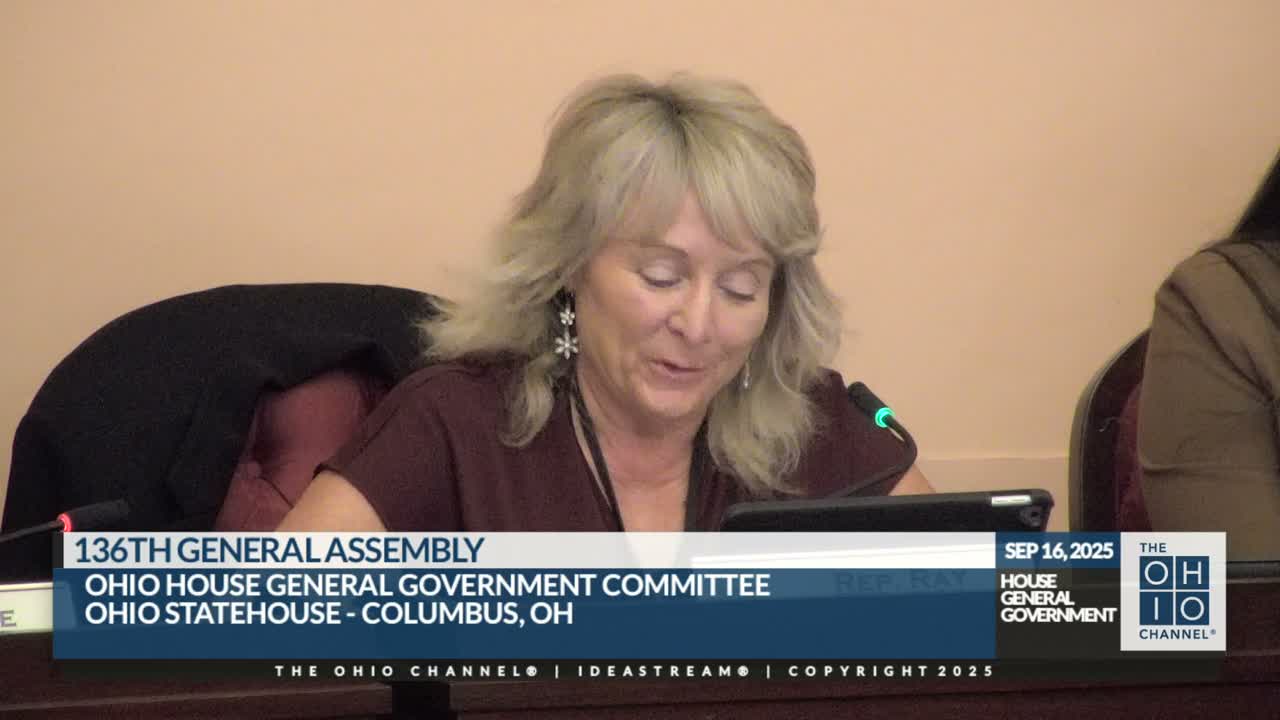
Carol Ross, executive secretary of the Ohio Construction Industry Licensing Board, briefed the General Government Committee on the board’s mission to promote public safety by licensing specialty commercial contractors and described exam and renewal requirements.
Ross said the board licenses approximately 15,200 specialty trade licenses across five regulated trades and requires applicants to meet experience via permits, journeyman cards, or qualifying education before sitting for a stringent exam covering code and business law.
She explained renewals can be one-year or three-year cycles (for example, $60 per year or $180 for three years), continuing education requirements (8 hours per year or 24 for a three-year renewal), and a $500,000 liability insurance minimum. Ross also noted reciprocity with many states including Kentucky, West Virginia, North Carolina, South Carolina, Louisiana, Tennessee, Arkansas, Alabama, Mississippi and Virginia.
Representative Brent asked how the board sustained operations without fee increases since 2000; Ross said the program transitioned from certificates to mandatory licenses around 2000 and the current fee structure has been sufficient, noting many other states charge much higher fees.
The committee had no formal vote; the board’s presentation emphasized safety-focused testing and wide reciprocity.