Lifetime Citizen Portal Access — AI Briefings, Alerts & Unlimited Follows
Committee hears first testimony on 'She Wins' informed-consent bill for abortion care
Loading...
Summary
Sponsors told the House Health Committee the She Wins Act would treat abortion like other medical procedures, require a minimum 24-hour informed-consent period and allow virtual or in-person consent; members pressed sponsors for data and for clarity on required materials and mental-health disclosures.
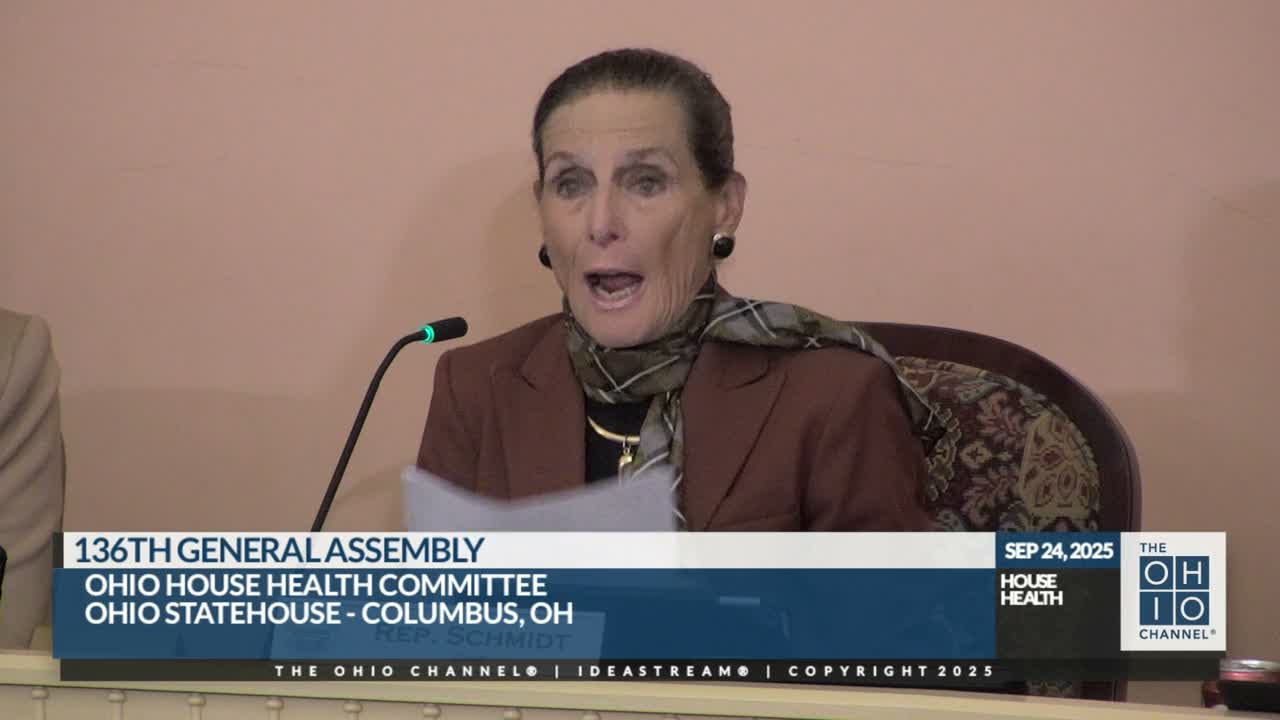
Chair Schmidt called the first hearing on House Bill 347, the Share the Health and Empower with Informed Notice Act, known by sponsors as the She Wins Act. Representative Zodioso introduced the bill and Representative Williams gave sponsor testimony, saying the measure "affirms abortion as a health procedure under the Ohio Constitution" and would require informed consent to be secured at least 24 hours before an abortion procedure.
The bill, as sponsors described it, would apply the same informed-consent standards required for other medical procedures, allow consent to be obtained by telephone, virtual meeting, email or in person and include a private cause of action for patients denied full information. "She Wins does not seek to litigate the decision the Ohio voters made in August 2023, but rather to provide women with the full protection of informed consent," Zodioso said.
Committee members pressed sponsors on key details. Representative Simani asked whether a 24-hour waiting period is already under litigation and sought the specific physical and psychological risks the bill would require providers to disclose. Williams responded that litigation is ongoing and that the bill does not mandate verbatim risk language; he listed examples of potential complications including uterine perforation and possible infertility and said, "we don't specifically say what risks need to be told verbatim from the doctor to the patient because we're not gonna get involved in that medical decision." Williams also asked committee members to provide the underlying studies when statistics were cited.
Representative White asked how the measure differs from Ohio's existing Woman's Right to Know Act; sponsors said the bill expands or clarifies disclosures (including mental-health risks and alternatives) and creates a reflection period. On mental-health language, sponsors said they were open to discussion and possible removal if the committee chose. Representative Grimm asked who would prepare written risk materials; sponsors emphasized there is no statutory requirement for a specific pamphlet and that clinical providers often communicate risks directly.
Several members asked for data and examples. Representative Gross said he expected to hear examples of patients who were not fully informed under current rules; sponsors said they planned to present proponent testimony with personal accounts and encouraged members to request additional documentation from sponsors.
The committee concluded the bill's first hearing without a formal vote on the measure; sponsors and witnesses indicated they would provide additional materials and peer-reviewed data when available. The chair closed the hearing and turned the gavel to Representative Dieter for the next item.