Get Full Government Meeting Transcripts, Videos, & Alerts Forever!
Get email alerts on the HB257 topic
No spam. Unsubscribe anytime.
Survivors and health advocates press committee to pass Ohio Medical Debt Fairness Act
Summary
Survivors and health advocates urged the House Health Committee to support HB 257, which would cap medical‑debt interest, ban wage garnishment for medical debt and bar reporting unpaid medical bills to credit bureaus; witnesses cited polling, state examples and personal financial hardship.
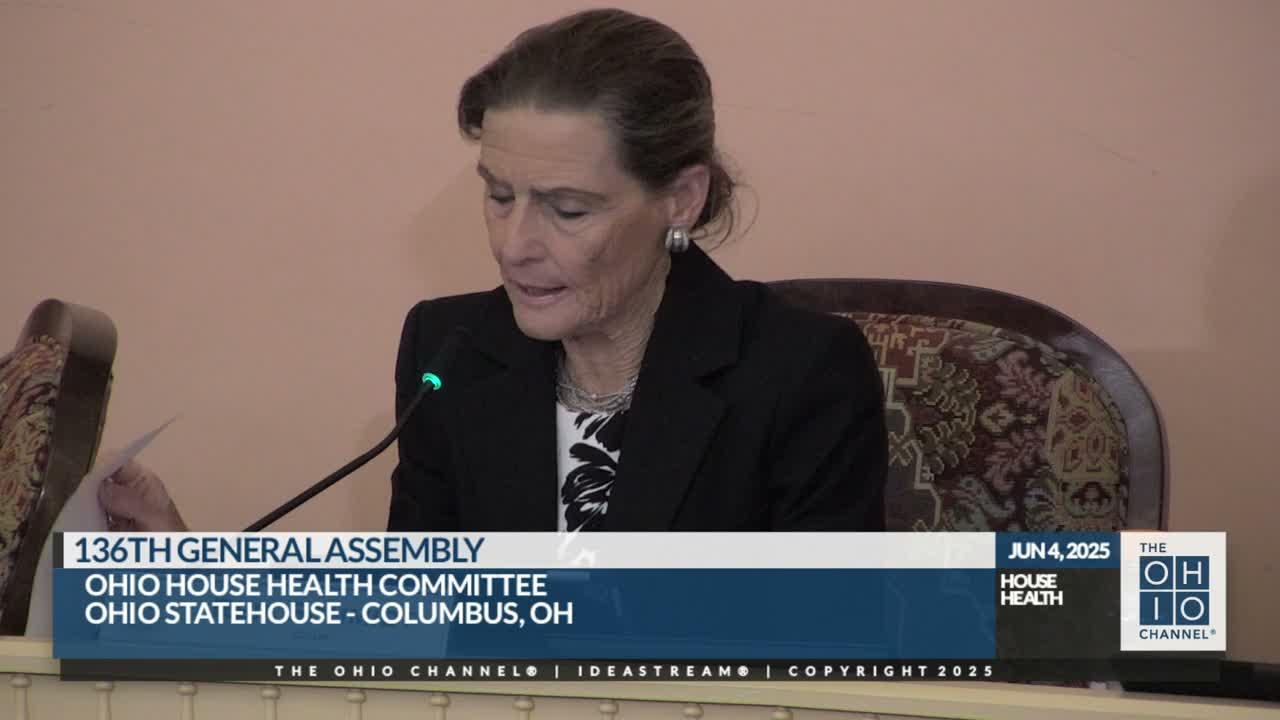
The House Health Committee held a second hearing on House Bill 257, the Ohio Medical Debt Fairness Act, which would cap interest rates on medical debt, prohibit wage garnishment for collection of unpaid medical bills and prohibit reporting unpaid medical bills to consumer credit reporting agencies.
Lauren Edwards, state government affairs director at the Leukemia & Lymphoma Society, described polling and public support for the protections and said the bill is intended to reduce the financial toxicity patients face after serious illness. Edwards said the measures are not debt forgiveness; rather, they preserve collection tools while reducing long‑term harm to patients' credit and financial stability.
Olivia Hiltbrand, a cancer survivor, gave emotional proponent testimony about her experience with T‑cell acute lymphoblastic leukemia: despite having insurance and savings, she said her first three weeks of hospitalization resulted in almost $200,000 in bills and that her first year of treatment cost more than $1 million. She said she and her family are still recovering financially and urged lawmakers to support HB 257 to prevent survivors from enduring lifelong financial ruin.
Leo Almeida of the American Cancer Society Cancer Action Network highlighted studies showing patients with cancer are more likely to have accounts in collections and face bankruptcy; he said other states have adopted similar protections, pointing to bipartisan examples. Committee members questioned how the bill would affect providers' ability to collect unpaid bills and whether removing credit reporting or banning garnishment could have unintended consequences for lenders or for provider revenue streams. Witnesses responded that many collection tools would remain (liens, lawsuits, third‑party debt collectors), that reasonable payment plans are an effective collection method, and that other states' experience demonstrated providers still recover revenue while patients avoid long‑term credit damage.
Committee members requested additional comparative information on other states' laws and implementation details. Chair closed the second hearing on HB 257 and the committee received written testimony on members' iPads.