Get Full Government Meeting Transcripts, Videos, & Alerts Forever!
Get email alerts on the Medical Debt topic
No spam. Unsubscribe anytime.
Industry, banks and lawmakers spar over scope of Ohio Medical Debt Fairness Act
Summary
At its third hearing on HB 257, industry witnesses urged striking a key provision, citing federal preemption under the Fair Credit Reporting Act and concerns that the bill's broad definition of "medical debt" would sweep in credit-card balances; sponsors plan an amendment and will continue talks next week.
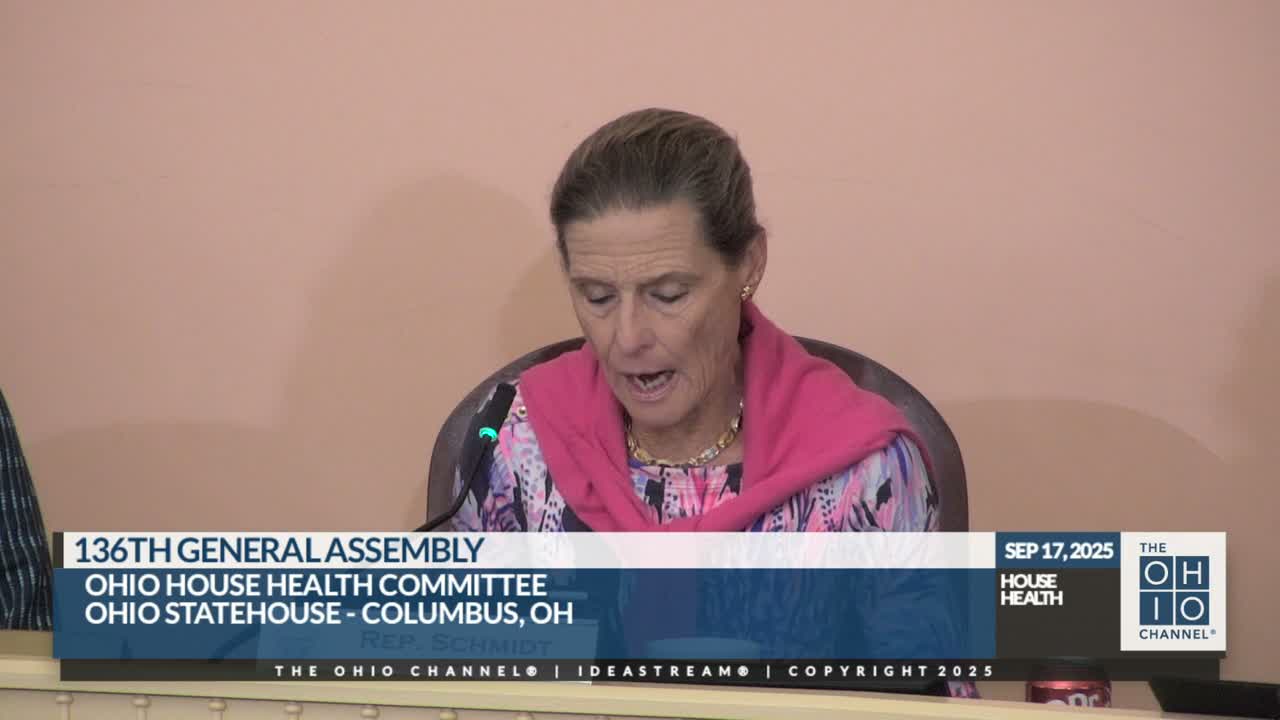
Chair Schmidt convened the third hearing on House Bill 257, the Ohio Medical Debt Fairness Act, as proponents and industry witnesses clashed over how broadly the bill should define and restrict reporting of medical debt on consumer credit reports.
Zachary Taylor, director of government relations for the Consumer Data Industry Association, told the committee he represents consumer reporting agencies and asked lawmakers to strike section 1349.54 in its entirety. "Our members are already tightly regulated by the Federal Fair Credit Reporting Act," Taylor said, arguing that federal law "preempts" state provisions that would prohibit a consumer reporting agency from including coded medical information on a consumer report. He cited 15 U.S.C. sections referenced in his testimony and a recent federal district court decision in Texas that vacated a CFPB medical-debt rule.
Taylor also described voluntary industry changes intended to reduce the presence of medical debt on reports: agencies removed existing debts under $500 and will not add new debts under $500; many medical debts were removed following national adjustments, he said. "Removing information makes reports less valuable and introduces uncertainty," Taylor warned, saying limiting furnished information could raise the cost of lending and reduce access to credit.
Proponents and committee members emphasized the bill's intent to protect people who face unexpected health costs. Chair Schmidt offered a personal example of recent medical bills and said the bill is "going after real issues that occur unexpectedly." Representative Grimm said an amendment—prepared with the bankers' industry—should clarify the definition, and noted that many states have adopted similar laws.
Dawn Boyd, vice president of state government relations and general counsel for the Ohio Bankers League, urged the committee to narrow the bill's definition so general consumer credit products (credit cards, HELOCs) would not be captured. Boyd said stakeholders have discussed language similar to Maine's statute to target hospital-incurred medical debt and avoid unintended scope expansion.
Members pressed witnesses on practical consequences: Representative Stewart asked whether limiting reporting would reduce hospitals' ability to collect and strain rural providers operating on thin margins; Taylor said that collection and furnishing decisions are outside the CRAs' role and are made by providers and collection agencies. Representative Jeters asked whether a creditor can identify that a debt shown on a report is medical; Taylor said medical debt is coded but reporting practices and the bill's current wording could make distinctions unclear.
Chair Schmidt said a proposed amendment will be shared before the committee's next meeting and invited industry feedback; Taylor said he would review the amendment but remained concerned about federal preemption. The committee concluded the hearing and indicated it will continue consideration next week.