Get Full Government Meeting Transcripts, Videos, & Alerts Forever!
Get email alerts on the Patient Safety Drug Policy topic
No spam. Unsubscribe anytime.
Sponsors tell committee Patient Protection Act would require in‑person exams, ban mail order for some high‑risk drugs
Summary
Sponsors said House Bill 324 would prohibit mail order sales of drugs that cause severe adverse events in more than 5% of users and require in‑person exams and follow‑ups for such drugs; proponents said the Director of Health would publish the list in consultation with insurers and state boards.
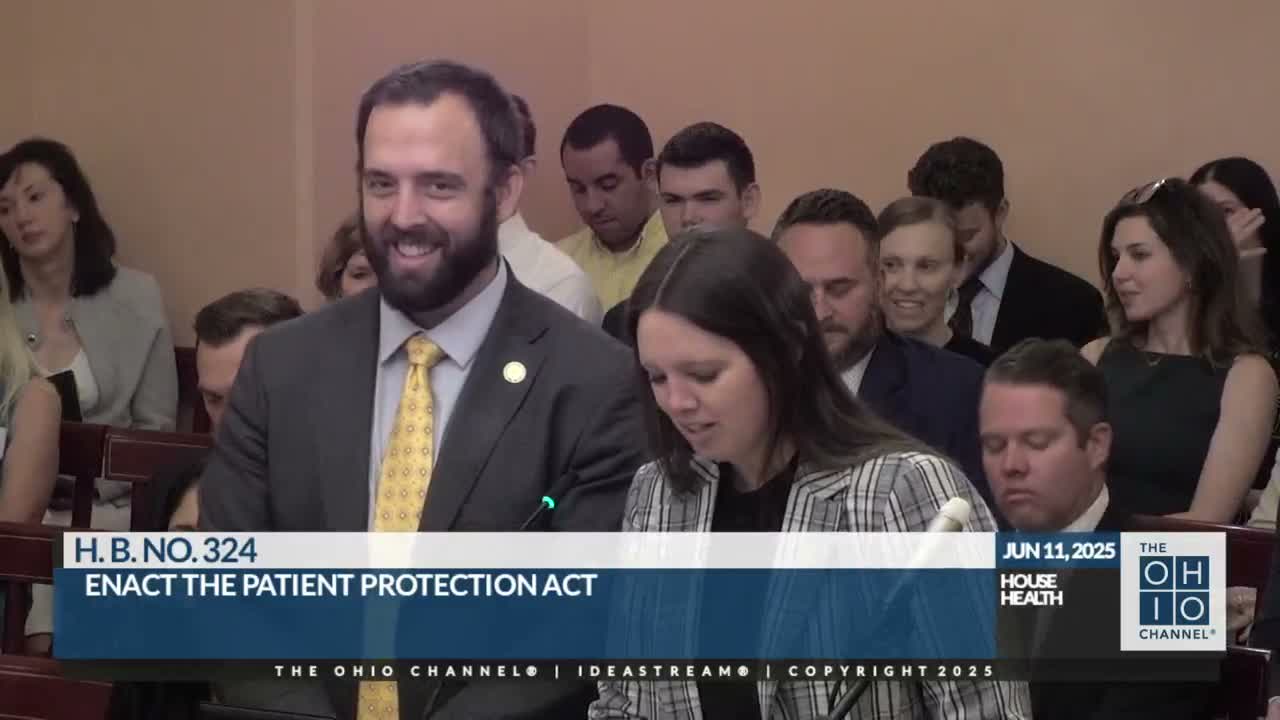
House Bill 324, labeled in testimony as the "Patient Protection Act," received its first hearing before the Ohio House Health Committee. A sponsor presented the bill as a measure to increase oversight and safety for medications with a high risk of severe adverse effects, defined in testimony as those causing death, organ failure, sepsis, infections requiring hospitalization, or hemorrhaging at a rate affecting more than 5 percent of users. The sponsor said the bill would prohibit sale of those high‑risk drugs by mail and require prescribers to perform an in‑person exam before issuing such prescriptions and to schedule follow‑up appointments.
A supporting witness said the bill would task the Director of Health, in consultation with the Superintendent of Insurance and state medical and pharmacy boards, to maintain and present a public list of drugs meeting the 5 percent severe‑adverse‑event threshold, and cited state authority to act where federal standards may not provide the same level of oversight. During committee questioning members asked for examples of targeted drugs; the record captured references to SSRIs, mifepristone, and prior state actions on drugs such as oxytocin and oxycontin. Sponsors emphasized the bill is intended to be narrower than other states’ measures that have reclassified drugs as controlled substances and said the Department of Health would use insurer claims, patient reports, boards’ data, and FDA sources when evaluating candidates for the list.
Committee members pressed on data sources and potential access impacts; sponsors agreed to provide supporting studies and state comparisons. The committee closed the first hearing on HB 324 after members’ questions.