Get Full Government Meeting Transcripts, Videos, & Alerts Forever!
Get email alerts on the Pdmp Oars topic
No spam. Unsubscribe anytime.
Ohio Board of Pharmacy urges budget support for OARS, warns of counterfeit medications
Summary
Ohio Board of Pharmacy Executive Director Steve Shurholdt told the House Health Committee the board needs funding in the governor—s executive budget (House Bill 96) to sustain licensing operations and OARS, and highlighted a rise in counterfeit and illegally imported medications that harmed patients.
Steve Shurholdt, executive director of the Ohio Board of Pharmacy, told the Ohio House Health Committee the board—s budget request in House Bill 96 does not use GRF funds and is aimed at sustaining licensing and public-safety functions.
Shurholdt said the board employs 92 staff who oversee licensure for more than 93,000 pharmacists, interns, technicians and licensed locations. He said staffing and process improvements have shortened pharmacy technician processing to "less than 3 business days," which he described as necessary to keep the state "open for business."
Shurholdt warned the committee about an increase in counterfeit and substandard medications, citing federal and state seizures. "Customs and Border Patrol in Cincinnati reported at least 11 seizures of counterfeit Ozempic in 2024," he said, and added that the board, working with the FDA, seized "more than 11,000 unit doses of counterfeit Ozempic." He said the most-targeted products include antibiotics, pain medications, oncology drugs and lifestyle medications.
A major component of the board—s request is continued support for the Ohio Automated Rx Reporting System (OARS), the state—s prescription drug–monitoring program. Shurholdt described OARS as one of the most highly utilized PDMPs in the country: he said about "94 percent of Ohio prescribers and 75 percent of pharmacies" access OARS via integrated systems, and that system use has helped reduce doctor-shopping and opioid dispensing over time.
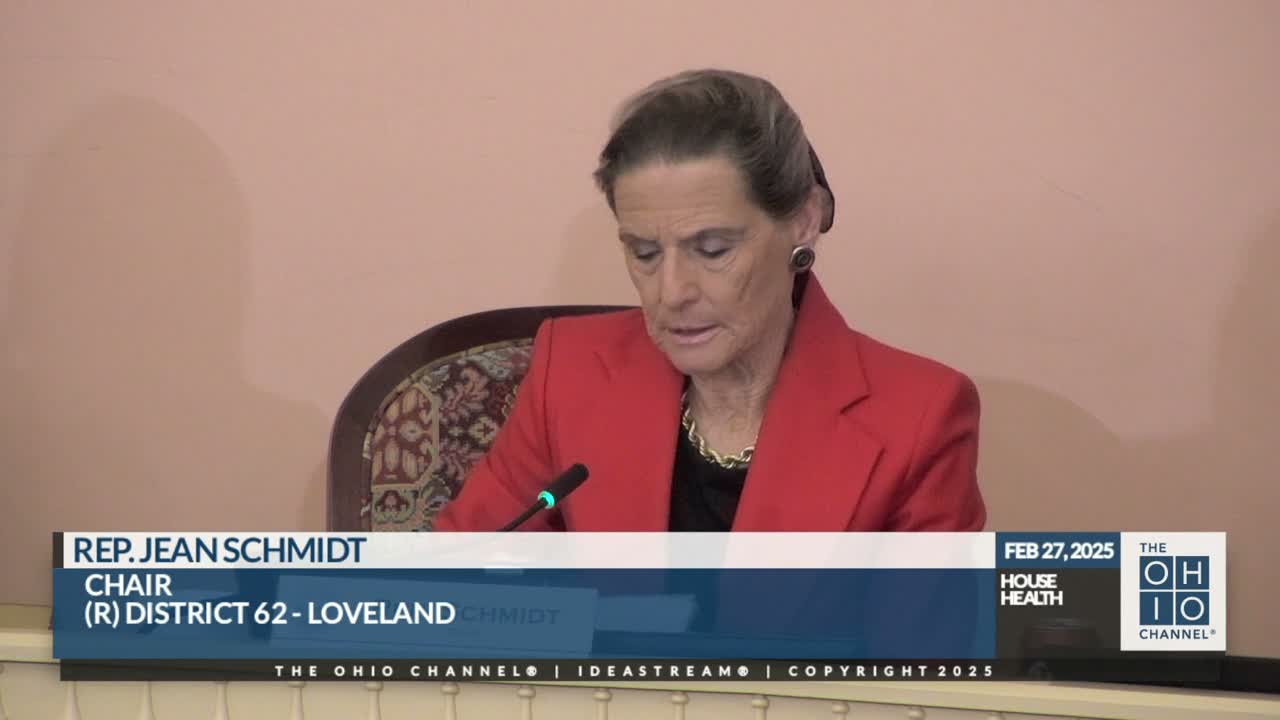
Officials acknowledged integration gaps. In response to questions from Chair Schmidt and Representative Dieter, Shurholdt said most pharmacies are integrated through common vendors but a small set of "one-off" vendor systems lack the capability; the board has funded integrations but must still negotiate with some vendors.
Shurholdt also described technical and statutory proposals included in the budget packet: consolidation of nonresident license categories with modest fee adjustments (and a requested correction to drafting language that misstated whether a pharmacy technician trainee fee is annual or biannual), authority for the board to approve certain overdose-reduction tools so they would not be treated as drug paraphernalia, and a proposal to limit disclosure of individual licensees— personal contact information under public-records law to reduce scams and threats.
Shurholdt said the board will continue inspection and enforcement work, including criminal and administrative investigations, and will work with state and federal law enforcement on investigations that can result in convictions and restitution.
The committee followed with questions about test-strip policies and harm reduction; Shurholdt said the administration supports allowing the board to evaluate new test strips (for example, for xylazine and benzodiazepines) while guarding against criminal misuse. A witness said the Department of Mental Health and Addiction Services and other partners have distributed nearly 200,000 fentanyl test strips to licensees for wider distribution.
Shurholdt concluded by urging timely funding and technical corrections in bill language so the board can maintain operations and pursue enforcement and prevention efforts.
The committee did not vote on any measures during the hearing; Shurholdt offered to provide additional materials included with his testimony.