Get Full Government Meeting Transcripts, Videos, & Alerts Forever!
Get email alerts on the Project Lifesaver topic
No spam. Unsubscribe anytime.
Sheriff—s deputy and families urge state support to expand Project Lifesaver tracking program
Summary
Licking County deputy Karen Dunlap and family members told the Health Committee Project Lifesaver—s radio-frequency tags have rapid locate success, cost about $375 per transmitter and require county funding for receivers ($1,600) and startup costs (~$5,000); they urged state investment to expand coverage across counties lacking the program.
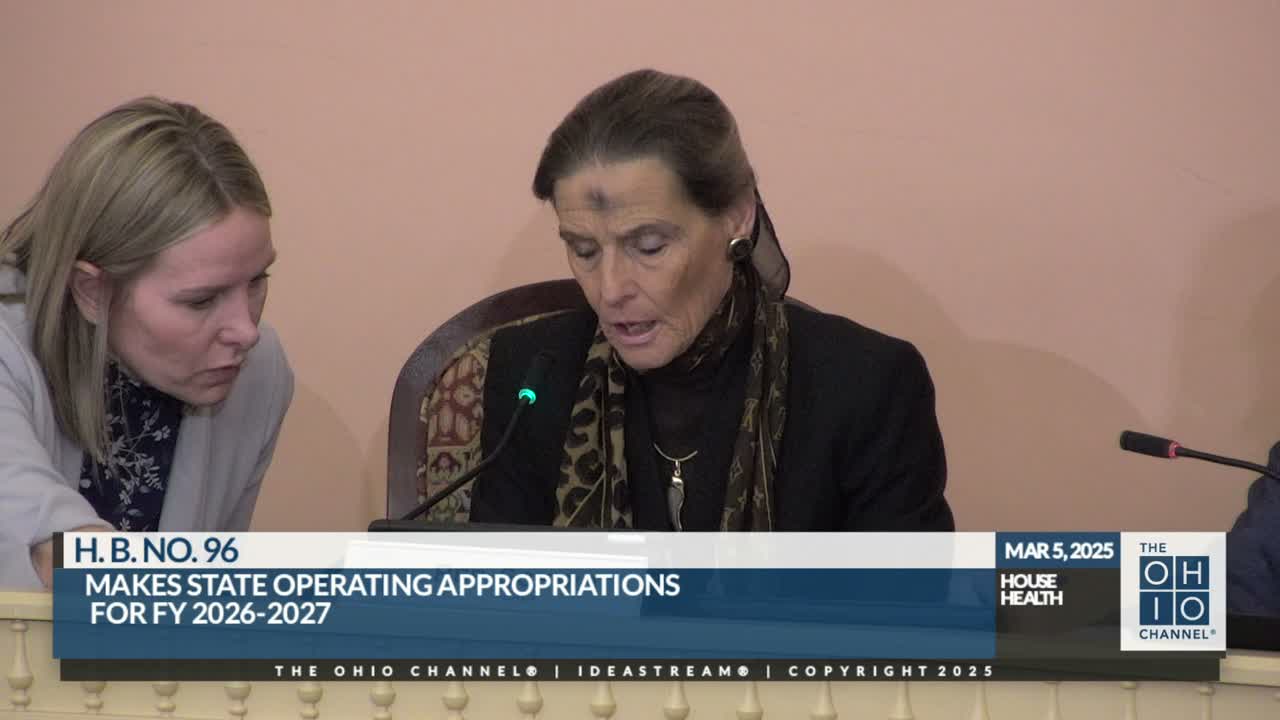
Deputy Karen Dunlap told the House Health Committee that Project Lifesaver—s radio-frequency transmitters can quickly locate people who wander because of dementia, autism or other cognitive disorders and that counties without the program face long search times.
Explaining how the system works, Deputy Dunlap said dispatchers enter a missing person—s frequency and profile into a database so trained teams can pick up the signal. She said a transmitter costs $375 and a receiver costs $1,600, adding a typical county start-up with a few receivers and transmitters would be about $5,000.
David Kale, whose son Parker wears a tracking band, recounted repeated elopements and said the program—s database and first-responder access are critical in quickly locating loved ones. Committee members asked about program funding, integration with existing emergency communications and whether grants could kick-start programs in counties without coverage; witnesses said funding generally comes from senior levies, boards of developmental disabilities, grants and local fundraising.
No formal appropriation or amendment was adopted in the hearing; witnesses asked the committee to consider sustained budget support to expand Project Lifesaver statewide so more counties can avoid long search times and the risk of fatal outcomes when vulnerable people wander.