Get Full Government Meeting Transcripts, Videos, & Alerts Forever!
Get email alerts on the Brain Injury topic
No spam. Unsubscribe anytime.
Families, clinicians urge $1.75 million boost for Ohio Brain Injury Program in HB 96
Summary
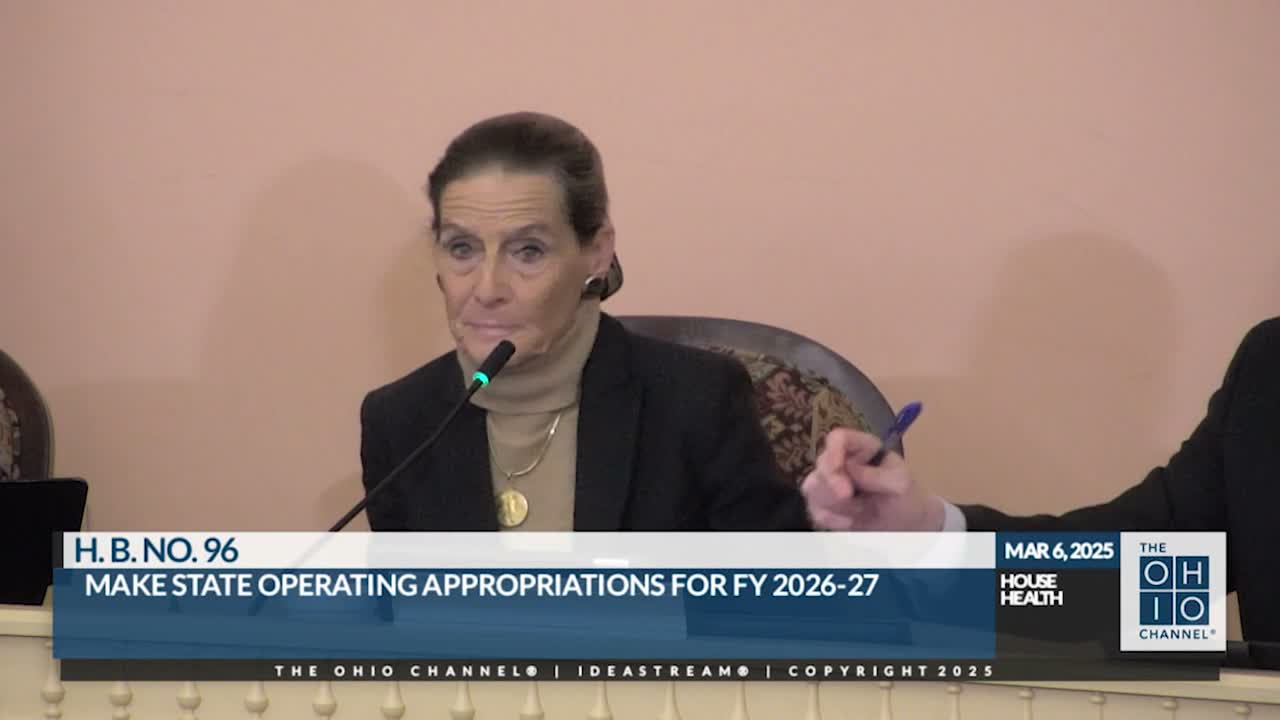
Survivors, family members and clinicians told the House Health Committee that an amendment to HB 96 should add $1.75 million to the Ohio Brain Injury Program to expand statewide services, reduce out‑of‑state placements and fund school reintegration programs such as BrainSTEPS.
Philip Crippen, a board member of the Brain Injury Association of Ohio, told the House Health Committee that an amendment to the state operating budget should boost the Ohio Brain Injury Program’s funding to $1,750,000 to expand services for survivors and families. “With the right resources and support, recovery is possible,” Crippen said, describing his son Connor’s 2013 traumatic brain injury and long recovery.
Dr. Christine Caturba, a pediatric neuropsychologist and board member of the association, told lawmakers that brain injury affects all ages and that Ohio’s investment is low compared with peer states. “State expenditures for brain injury equal just 5¢ for each Ohioan, which amounts to just over $500,000 per year,” she said, and urged the committee to provide the requested funding to expand services statewide and reduce out‑of‑state placements.
Witnesses described specific program priorities tied to the request. Crippen asked the committee to fund BrainSTEPS, an evidence‑based program that trains teachers, parents and school staff to support students with brain injury and ease reintegration into classrooms. Dr. Caturba said additional funding would support statewide navigation, access to rehabilitation after insurance benefits end, and outreach to clinicians and families.
Committee members thanked witnesses for personal testimony and asked for clarifications about programs that helped Connor and other survivors. The chair acknowledged the cost‑saving potential of community‑based recovery supports and said staff would follow up on testimony as the budget is finalized.
The hearing produced no formal action or vote; witnesses asked the committee to consider the amendment before floor deliberations on the budget.
The committee is expected to receive written testimony and cost estimates and may consider incorporating a line item or amendment into the budget language before the deadline for amendments.