Get Full Government Meeting Transcripts, Videos, & Alerts Forever!
Get email alerts on the Labor Relations topic
No spam. Unsubscribe anytime.
SERB chair cites steady operations, 60‑day turnaround for unfair labor practice charges
Summary
Craig Zemfer, chair of the State Employment Relations Board, told lawmakers SERB's proposed budget would maintain current services and staff, marking its 40th anniversary and reporting measured turnaround times of roughly 60–63 days to process unfair labor practice complaints. He discussed training, data services and the agency's role in labor‑management disputes.
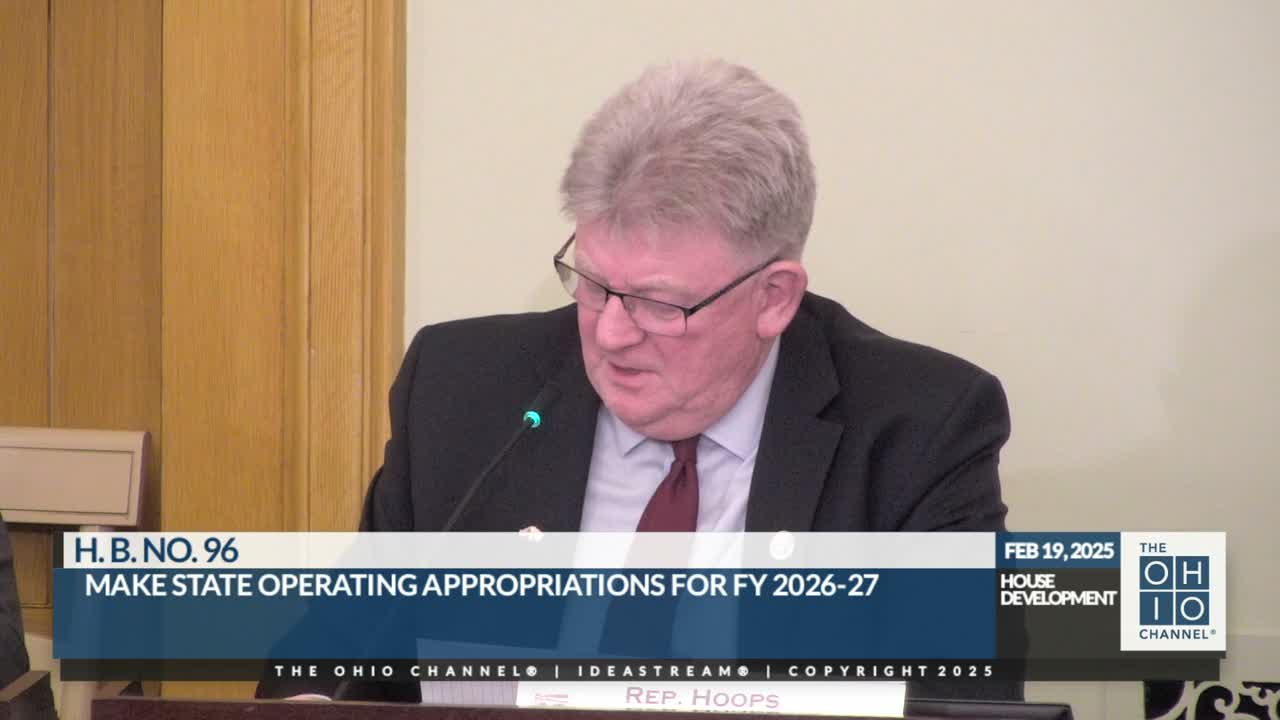
Craig Zemfer, chair of the State Employment Relations Board, told the House Development Committee that SERB's budget request is intended to maintain existing service levels and cover negotiated wage increases. "We have not requested funding for any additional programs, projects or staffing," Zemfer said, noting the executive recommendation would allow SERB to cover general wage increases and predictable operating costs.
Zemfer highlighted the agency's 40th anniversary and the scope of its jurisdiction over Ohio's public‑sector collective bargaining landscape. He said SERB adjudicated 181 unfair labor practice matters and conducted more than 220 union representation elections last year and emphasized the board's role in providing data to negotiators and offering training academies for practitioners.
On processing times, Zemfer said the statutory timetable allows up to six months for resolution, but SERB measures its performance and currently averages about 60 days from intake to initial resolution. In committee discussion he referenced a recent reported figure of approximately 63 days.
Members asked whether SERB would be involved in a proposed higher‑education measure described in committee analysis that would prohibit strikes by full‑time faculty and require a final‑offer settlement procedure. Zemfer said that, based on the description, dispute resolution would likely proceed through conciliation, fact‑finding or arbitration and that an independent arbitrator, not SERB, would typically administer such an arbitration process.
Zemfer also described SERB's benchmarking tools and training seminars that supply neutral salary and bargaining data to both labor and management. The committee did not take action on SERB's request during the hearing.