Get Full Government Meeting Transcripts, Videos, & Alerts Forever!
Get email alerts on the Insurance Budget topic
No spam. Unsubscribe anytime.
Ohio Department of Insurance presents nearly flat biennial budget, pushes provider payment disclosure language
Summary
Director Judith French told the House Development Committee the department is seeking a largely flat, non‑GRF budget for FY26–27 and highlighted priorities including mental‑health access, provider payment fee disclosure language and workforce partnerships. She said the proposed request would fund core regulation while protecting consumers.
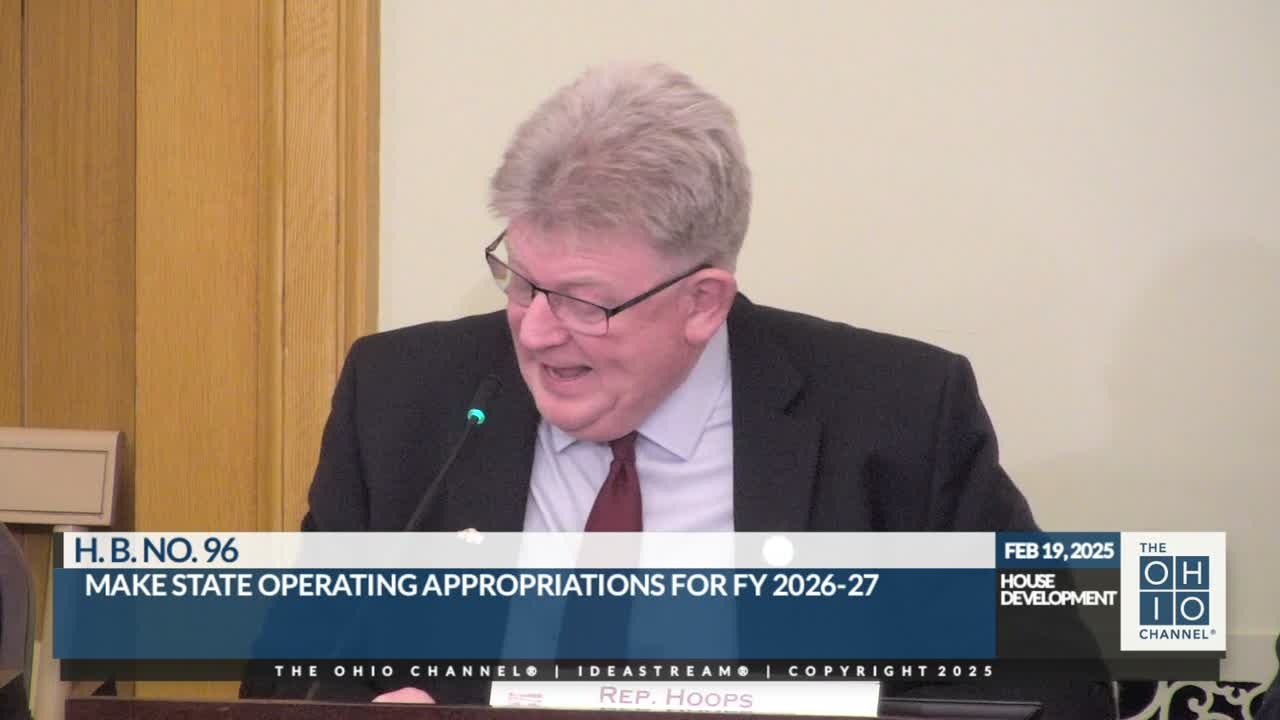
Judith French, director of the Ohio Department of Insurance, told the House Development Committee that the department is seeking a non‑general‑revenue budget she described as "fiscally sound and virtually flat funded compared to the last biennium." French presented a request of $51,172,453 for fiscal year 2026 and $52,750,313 for fiscal year 2027 and emphasized consumer protection and service priorities during her remarks.
French highlighted the Ohio Senior Health Insurance Information Program, or OSHIP, as a major consumer‑facing success, saying "OSHIP ... helped Ohioans save more than $54,000,000 in 2024." She also said the department's consumer services division has increased recoveries and shortened complaint processing times, and noted the department recovered about $13,100,000 for consumers in recent work.
A top policy priority French described is improved access to mental‑health and substance‑use disorder care. She said the department has formed an informal working group that includes representatives from state agencies, providers, health plans and consumer advocates and that it produced budget language requiring provider payment fee disclosures. "This proposed language would, at a minimum, require disclosures and give choices to the health providers for payment options," French said, explaining the measure aims to address third‑party payment platforms that impose processing fees on providers.
French also framed workforce development as a budget focus, telling lawmakers the department has reached out to higher education and industry partners to build a talent pipeline for the state's insurance sector. On fees, she said the agency reduced a regulatory fee two years ago from $15 to $10 "saving the industry more than $11,000,000 a year," and that the department is monitoring cash balances and may propose further reductions if balances remain elevated.
In follow‑up questions, Chairman Hoops asked whether recent catastrophic losses on other U.S. coasts were driving Ohio rates upward; French said rates are primarily driven by individual risk and replacement costs, though "the broader industry could be affected" by large losses that in turn affect reinsurance. On restitution and fines, French said most consumer recoveries are returned to consumers, while fines ordered to companies are deposited to the state.
No committee votes occurred. The department's budget request and proposed language will proceed through regular budget review steps and further committee consideration.