Get Full Government Meeting Transcripts, Videos, & Alerts Forever!
Get email alerts on the Dual Enrollment Reform topic
No spam. Unsubscribe anytime.
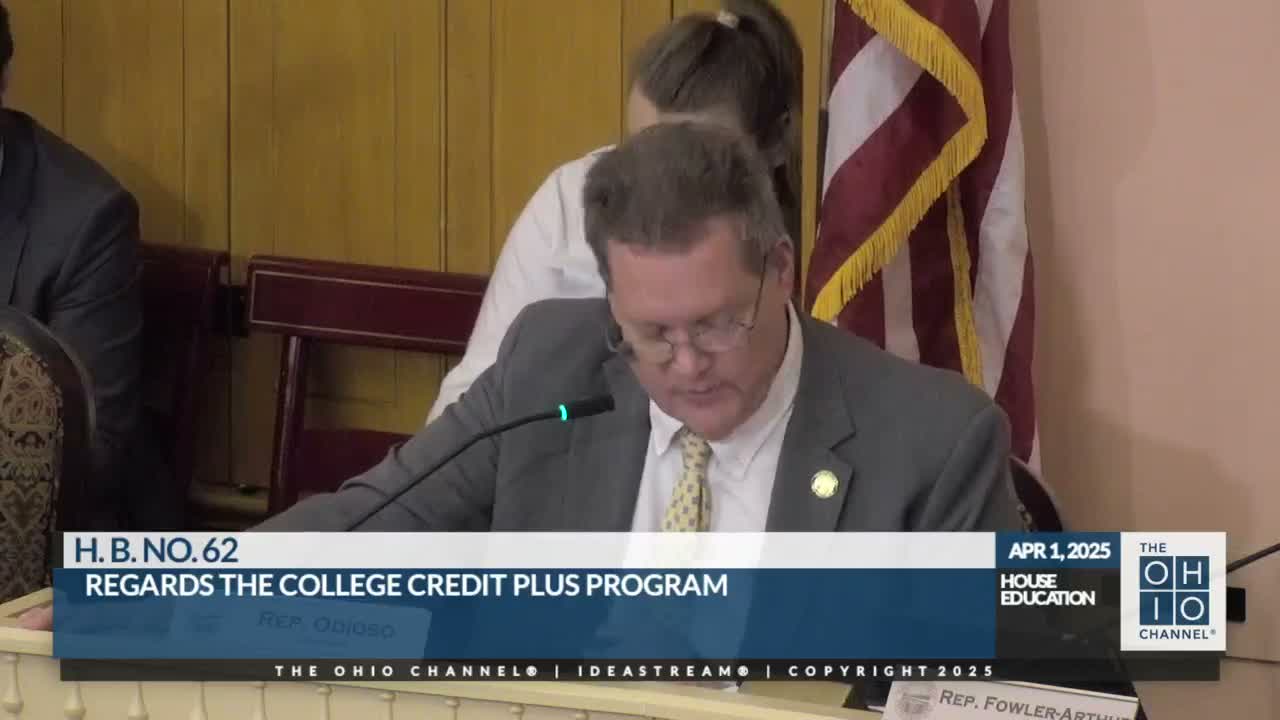
Superintendents testify on College Credit Plus reforms, flagging online costs and school‑culture impacts
Summary
Superintendents Dawn Wallace and Kyle Newton urged HB62 reforms to College Credit Plus, citing district data on CCP costs, heavy use of online courses and textbook spending; they argued revised cost structures and a push toward open-source materials would save districts money and encourage students to return to in‑person instruction.
Superintendents Dawn Wallace (Adams County Ohio Valley Schools) and Kyle Newton (Warren Local Schools) presented proponent testimony for House Bill 62, a set of reforms to College Credit Plus (CCP) that would change cost structures for online courses, encourage open‑source instructional materials, and shift administration to reduce district burdens.
District fiscal data: Superintendent Wallace told the committee Adams County students earned about 3,071 college credit hours the prior year, with approximately 1,617 hours taken online; she said the district’s CCP costs (excluding textbooks) totaled $421,000 and that the district spent $61,360.37 on textbooks, which students kept. Superintendent Newton said Warren Local earned 1,726 semester hours with 718 online (42 percent) and that Warren’s total CCP cost was $181,000 in the prior year, with online courses accounting for $119,000 of that total.
Rationale for reform: Both witnesses argued online CCP courses often offer lower rigor and reduce in‑person school engagement and leadership opportunities. They said HB62’s proposal to align online-course fees with the lower in‑person-on‑campus rate when a college professor teaches on a high‑school campus (a lower per‑student rate cited by witnesses) would make costs fairer, reduce administrative burdens, and potentially bring students back to classrooms.
Other details: Witnesses supported mandates to prefer open‑source materials where available and proposed splitting or reallocating textbook costs where necessary. Superintendents warned of negative cultural impacts when high‑achieving students take much of their school day online and urged a K–16 conversation about rigor and pathways. Committee members asked about budgeting, shared services, the potential colleges' objections, and how reforms would affect accelerated students.
What happens next: The committee received 12 written testimonies in addition to in‑person witnesses; no vote was taken at this hearing.