Get Full Government Meeting Transcripts, Videos, & Alerts Forever!
Get email alerts on the College Credit Plus topic
No spam. Unsubscribe anytime.
Superintendents back CCP reforms, warn of online‑course costs and cultural effects
Summary
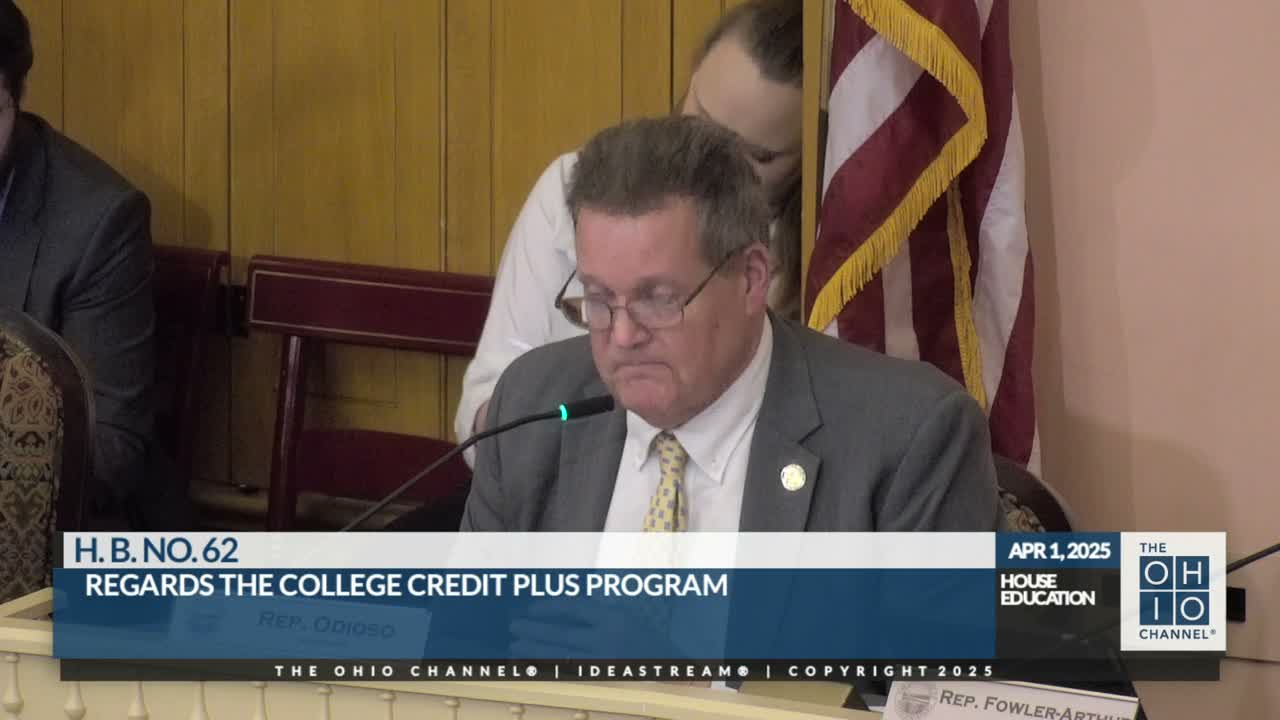
Superintendents Dawn Wallace and Kyle Newton testified in favor of House Bill 62 reforms to College Credit Plus, saying current online CCP courses raise costs and reduce rigor and on‑campus participation; witnesses provided district data on CCP credit hours, textbook spending and district CCP costs and argued HB62 would rebalance cost structures and encourage in‑person instruction.
Two superintendents testified in favor of House Bill 62, a proposed reform of College Credit Plus (CCP) financing and materials policies, providing data and describing operational challenges faced by rural and small districts.
Dawn Wallace, superintendent of Adams County Ohio Valley Schools, said her district earned roughly 3,071 college credit hours and that about 1,617 of those were online. She testified that Adams County spent $61,360.37 on textbooks in the prior year and that the district’s total CCP cost (excluding textbooks) was roughly $421,000. Wallace said online CCP use reduces in‑person enrollment and harms school culture because many students take college courses remotely and do not participate in on‑campus activities.
Kyle Newton, superintendent of Warren Local School District, provided similar testimony for his rural district: in the 2023–24 school year his district earned 1,726 semester hours through CCP (718 online, 42 percent) and incurred roughly $181,000 in CCP costs, with more than $119,000 attributable to online courses. Newton said online courses often lack the classroom rigor and social interaction that in‑person instruction provides and that HB62 would equalize cost rates so in‑person courses taught by a college professor on a high‑school campus would be reimbursed at a lower rate ($83.28) than current online tuition rates.
Committee questioning focused on textbook cost‑sharing, how many online credit hours represent students who never set foot on campus, whether colleges retain tuition revenue, and whether open‑source materials would reduce textbook costs. Witnesses said textbook ownership typically becomes the student’s property, that colleges derive financial benefit from CCP enrollments, and that HB62’s provisions could yield six‑figure savings for some districts and encourage students to return to campus.
No opponents were present in person for this hearing excerpt; the committee heard 12 written testimonies as well and concluded the second hearing on HB62.