Get Full Government Meeting Transcripts, Videos, & Alerts Forever!
Get email alerts on the Graduation Readiness topic
No spam. Unsubscribe anytime.
Sponsors describe GRAD Act to connect juniors and seniors with career, education and health resources
Summary
Representative Williams and Representative Santucci introduced the GRAD Act (HB119), which would require the Department of Education and Workforce to create an exit-orientation program for 11th and 12th graders linking students to local workforce centers, apprenticeships, financial aid, and health services.
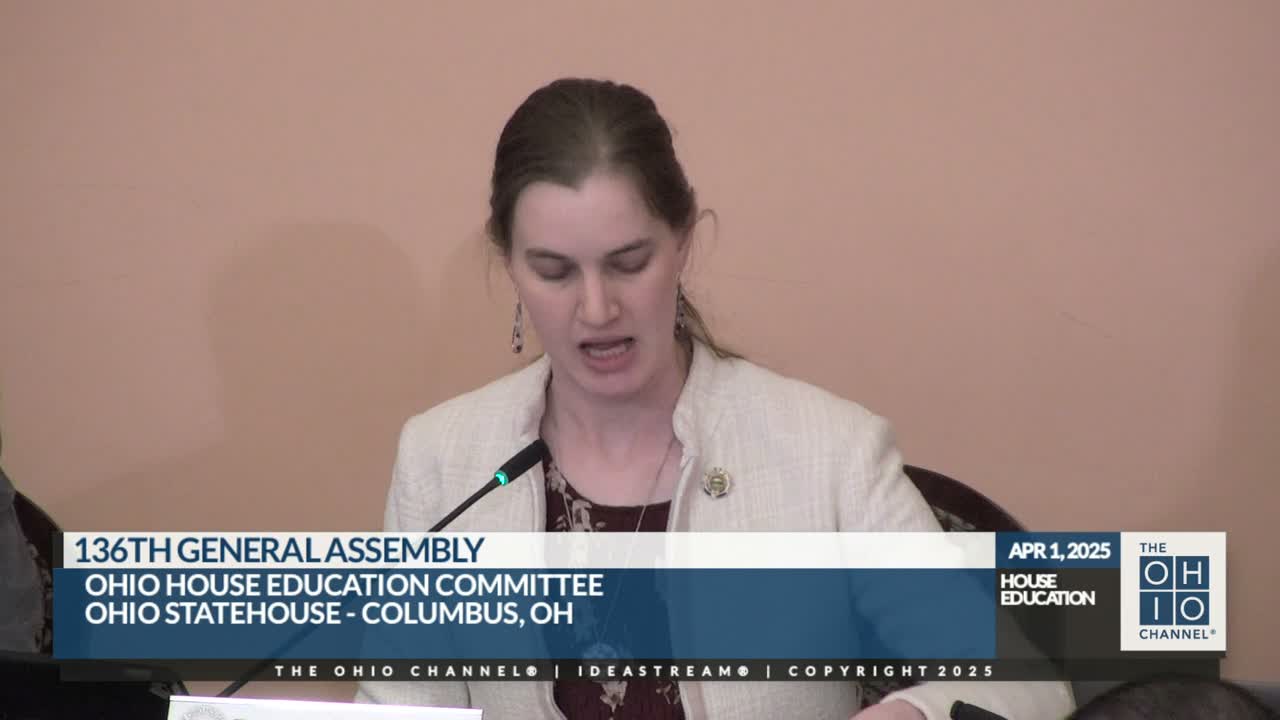
Representatives Williams and Santucci told the House Education Committee HB119, the Graduation Readiness and Development (GRAD) Act, aims to ensure juniors and seniors leave high school aware of local education, employment and life‑support resources.
"That is why Representative Santucci and I introduced the GRAD Act," Williams said, explaining DEW would formulate an exit orientation administered by schools or districts to connect students to federal and state grant programs, apprenticeships, OhioMeansJobs centers, and local health clinics and STD‑testing resources.
Santucci cited data about college enrollment and in‑demand jobs and said local workforce development boards and OhioMeansJobs centers would collaborate with schools to tailor events to local labor markets. Sponsors described the program as more extensive than typical career fairs and emphasized a comprehensive approach to workforce and life‑skills transition.
Committee members questioned costs, attendance requirements and local control. Sponsors said they do not anticipate additional costs because events would rely on existing agency resources; they described potential administrative rules from DEW to allow waivers and local flexibility. Representative Brennan asked whether student attendance would be mandatory for graduation; sponsors said schools must make programs available but not tie attendance to diploma requirements and that alternative assignments or waivers could be allowed.
No committee vote was taken on HB119 at the hearing. Sponsors indicated they expect proponent witnesses and planned small amendments as they continue discussions with educational service centers and other stakeholders.