Get Full Government Meeting Transcripts, Videos, & Alerts Forever!
Get email alerts on the Teacher Training topic
No spam. Unsubscribe anytime.
Committee hears sponsors on bill to reimburse implicit‑bias training for educators
Summary
House Bill 165 would reimburse schools for graduate‑level implicit‑bias training for educators, have the State Board and Chancellor set reimbursable credit hours and standards, and appropriates $750,000 per fiscal year for reimbursements; sponsors said the training is permissive and intended to count toward recertification or CEUs.
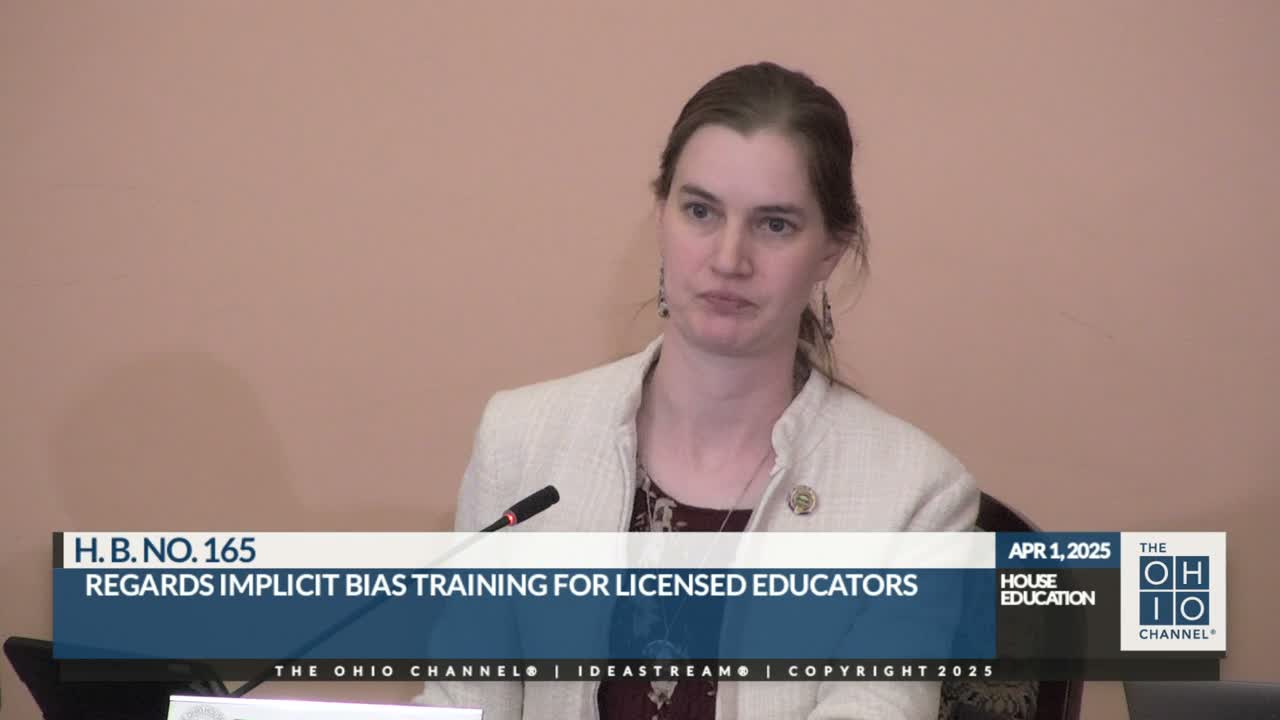
Representatives Miller and Brewer presented House Bill 165 to the House Education Committee, proposing reimbursement for implicit‑bias training for licensed educators and that the training be eligible to count toward recertification or continuing education.
"This bill would require public and chartered non‑public schools to reimburse educators for receiving graduate level implicit bias credits or the equivalent if they chose to take those as credits," Representative Miller said, and the State Board of Education and the Chancellor of Higher Education would set reimbursable credit hours and minimum standards.
Representative Brewer said the proposal is intended to help teachers become "better professionals" and explicitly stated the bill does not "indict educators" but offers an opportunity to improve classroom fairness and outcomes.
Committee members asked whether existing law prevents voluntary participation in such training and whether credits could count toward recertification. Sponsors said they were unaware of a specific ORC provision prohibiting such voluntary training and that the goal is to ensure the training could be applied as continuing education credits if appropriately approved.
The bill includes an appropriation of $750,000 per fiscal year for reimbursement purposes. No vote was taken; sponsors said they would answer further questions and the committee closed the first hearing.