Get Full Government Meeting Transcripts, Videos, & Alerts Forever!
Get email alerts on the Education Professional Development topic
No spam. Unsubscribe anytime.
House bill would reimburse schools for implicit‑bias graduate credits for educators
Summary
House Bill 165 would reimburse districts for implicit-bias training or graduate credits for licensed educators, with the State Board of Education, Chancellor and DEW setting standards. Sponsors framed the training as a voluntary professional development tool to improve equitable outcomes; the bill includes a $750,000 annual appropriation for reimbursements.
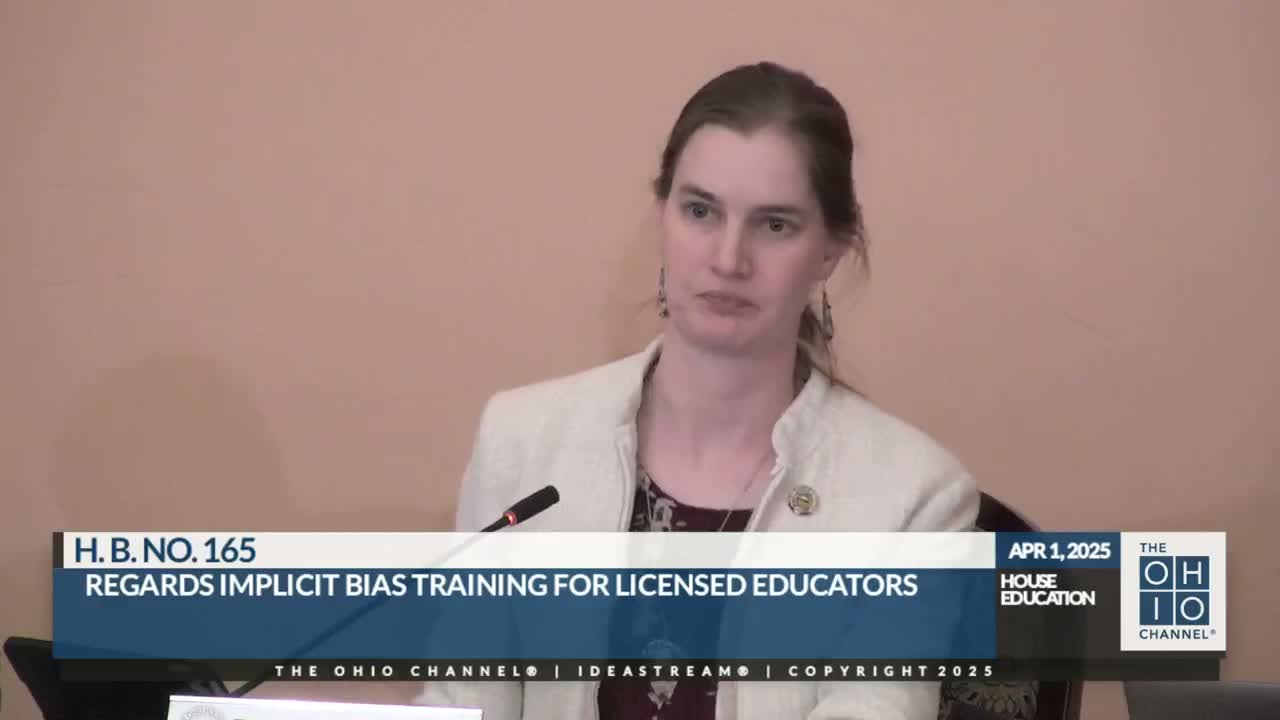
Representatives Miller and Brewer presented House Bill 165 to the House Education Committee, proposing that public and participating nonpublic schools be reimbursed for graduate-level implicit‑bias credits or equivalent continuing‑education units taken by educators.
Under the bill sponsors described, the State Board of Education and the Chancellor of Higher Education would set the reimbursable credit hours and the Department of Education and Workforce would establish minimum standards for the training. Representative Miller said the Department “will establish the number of credit hours in implicit bias training that is reimbursable” and Representative Brewer said the training is meant to support educators, not to “indict” them, by helping them identify unconscious associations that can affect classroom interactions.
Why it matters: Sponsors and supporters said implicit‑bias training can reduce disparities in discipline and outcomes for students of color and students with disabilities by helping educators reflect on expectations and classroom interactions. The bill also appropriates $750,000 for each fiscal year 2026–27 to fund reimbursements.
Committee members asked whether current law prohibits voluntary participation and whether the credits would count toward recertification. Sponsors said they were unaware of prohibitions and intended the training to be available and recognized as professional development credit where appropriate. The committee closed the first hearing with sponsors offering to answer follow‑up questions.