Get Full Government Meeting Transcripts, Videos, & Alerts Forever!
Get email alerts on the Fitness Testing topic
No spam. Unsubscribe anytime.
Sponsors seek to restore presidential fitness test as Ohio fitness test for K–12
Summary
House Bill 322 would create an "Ohio fitness test" modeled on the former Presidential Fitness Test for grades 1–12, measure five fitness domains, and emphasize effort/participation; sponsors cited WHO and CDC data and committee members asked about supports for educators and potential stigma for lower‑performing students.
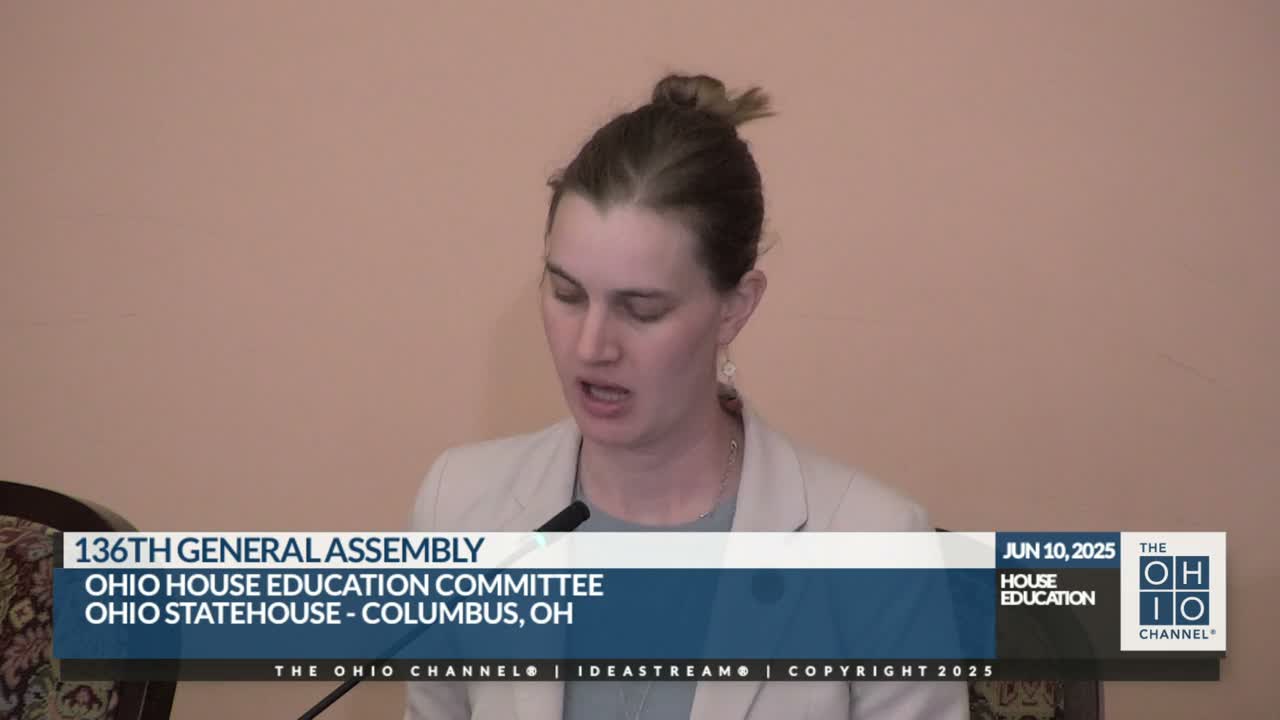
Representatives Lorenz and Rogers presented sponsor testimony on House Bill 322, which would reinstate a statewide fitness assessment for students in grades 1–12 modeled on the Presidential Fitness Test.
Sponsors said the proposed "Ohio fitness test" would measure five age‑appropriate areas — cardiovascular endurance, muscular strength, flexibility, body composition and agility — and would not be framed as strictly pass/fail. Representative Lorenz cited public‑health data in support of the bill, saying CDC guidance recommends 60 minutes of activity per day and arguing that structured fitness goals can improve physical and mental health. "House Bill 3 22 will reinstate the presidential physical fitness test for students in grades 1 through 12," the sponsor said in testimony.
Representative Rogers said the measure aims to restore motivation and goal setting and to provide parents, schools and policymakers with data that could inform prevention and health efforts. He and co-sponsors emphasized recognition for participation and effort — not punishment for lower performance — and said the Department of Education and Workforce would be consulted to develop criteria and tools for educators. Committee members asked why the Presidential Fitness Test was discontinued in 2012 and whether the program would supply teacher supports and classroom tools; sponsors said they would research the 2012 change and intend Department consultation for educator guidance.
Some members cautioned about unintended consequences. Representative Manning warned that fitness testing can stigmatize students who do not perform well; sponsors replied the bill builds in participation recognition and seeks to foster a team environment that encourages improvement. The committee concluded the first hearing on House Bill 322 with no formal vote and indicated further work on education provisions will occur as part of upcoming budget deliberations.