Get Full Government Meeting Transcripts, Videos, & Alerts Forever!
Get email alerts on the Drug Prevention topic
No spam. Unsubscribe anytime.
Senator urges statewide, evidence-based K–12 drug-prevention curriculum in sponsor testimony for SB 7
Summary
Senator Johnson told the House Education Committee that Substitute Senate Bill 7 would require developmentally appropriate, evidence-based K–12 instruction on substance misuse and that state agencies would compile approved materials; he cited state overdose data and said the bill aims to coordinate fragmented prevention efforts.
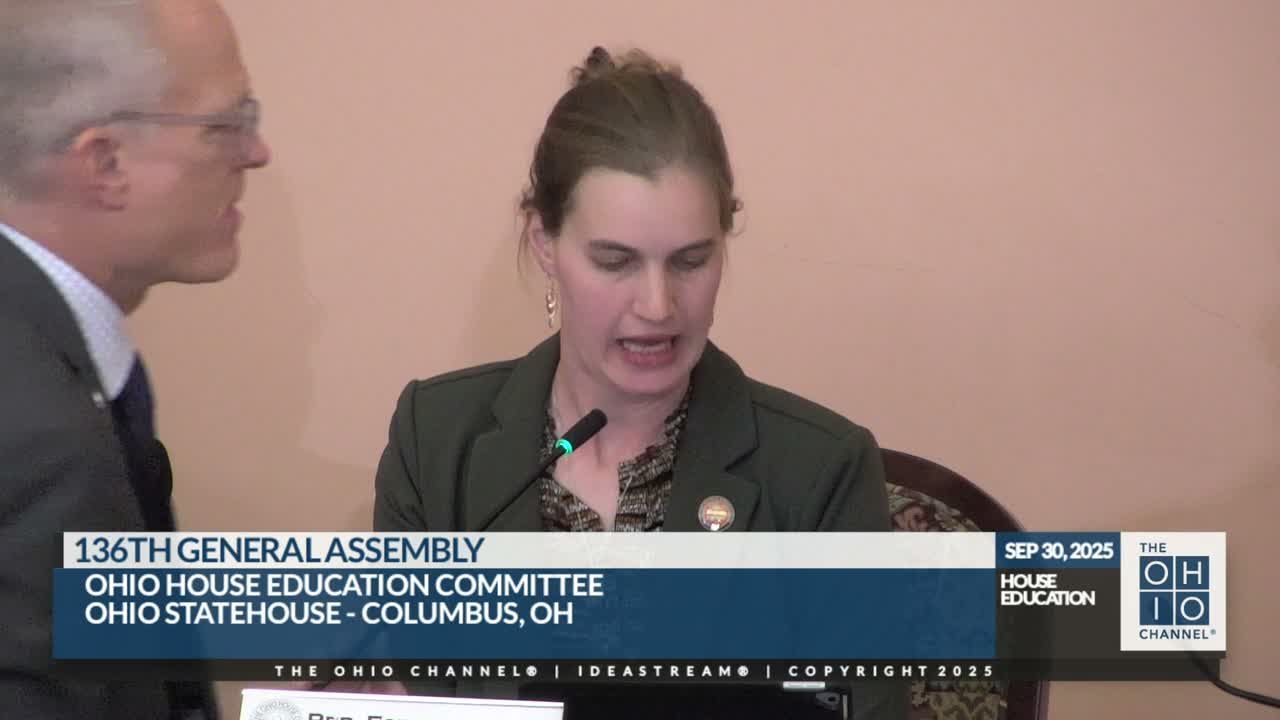
Senator Johnson, appearing for sponsor testimony on Substitute Senate Bill 7, told the House Education Committee the state needs a coordinated, evidence-based approach to K–12 substance-use prevention and described SB 7 as a framework requiring annual, developmentally appropriate instruction and a state-managed list of approved curricula.
In testimony, Johnson summarized the scale of the problem and cited state data: "According to the most complete data available from the Ohio Department of Mental Health and Addiction Services, between the years 2014 and 02/2023, 41835 Ohioans died from an accidental drug overdose," and said the majority of those deaths were opioid related. He said prevention should focus on demand reduction and that the Department of Education and Workforce (DEW), working with the Ohio Department of Mental Health and Addiction Services (OMAS), would develop a list of evidence-based curricula, materials and instructional strategies districts may use.
Why it mattered: The senator argued that prevention programming across Ohio is uneven and largely unmeasured, and that SB 7 would create statewide coordination and measurable standards for curriculum selection. He also noted the bill would apply across public, community, career-technical and college-preparatory schools and would include instruction on marijuana, opioids, alcohol, tobacco, e-cigarettes and other substances; anti-bullying and hazing requirements were also added in this version.
Questions from committee members focused on implementation and cost. Representative Rhett Brennan asked how SB 7 would fill gaps and whether districts would incur costs; the senator said DEW and OMAS would identify curricula and that some districts might need to adapt or procure materials, including digital content, and that measurement systems would be used to evaluate effectiveness. Representative Miller asked whether an appropriation would be needed for interactive or digital materials; the senator acknowledged the possibility and said the agencies and partner organizations would work to develop appropriate, measurable tools.
What comes next: The committee completed a first hearing on SB 7; no committee vote was taken at this meeting. The senator said the bill previously passed the Senate Education Committee unanimously and cleared the Senate floor 33–0, and he signaled intent to continue pursuing the measure in the House.