Get Full Government Meeting Transcripts, Videos, & Alerts Forever!
Get email alerts on the Instructional Time topic
No spam. Unsubscribe anytime.
School leaders back HB145's goal to restore instructional time but warn of costs, bargaining and logistics
Summary
BASA and OSBA told the House Education Committee they support restoring student instructional time under HB145 but cautioned the committee that many non‑instructional days are statutorily required, that the LSC fiscal note anticipates higher salary/benefit costs, and that collective-bargaining and scheduling issues will require time to resolve.
School-district leaders said they share the goal of House Bill 145—to increase students' direct instructional time—but asked lawmakers to account for state-mandated training, collective-bargaining impacts and potential fiscal costs before changing hours or calendars.
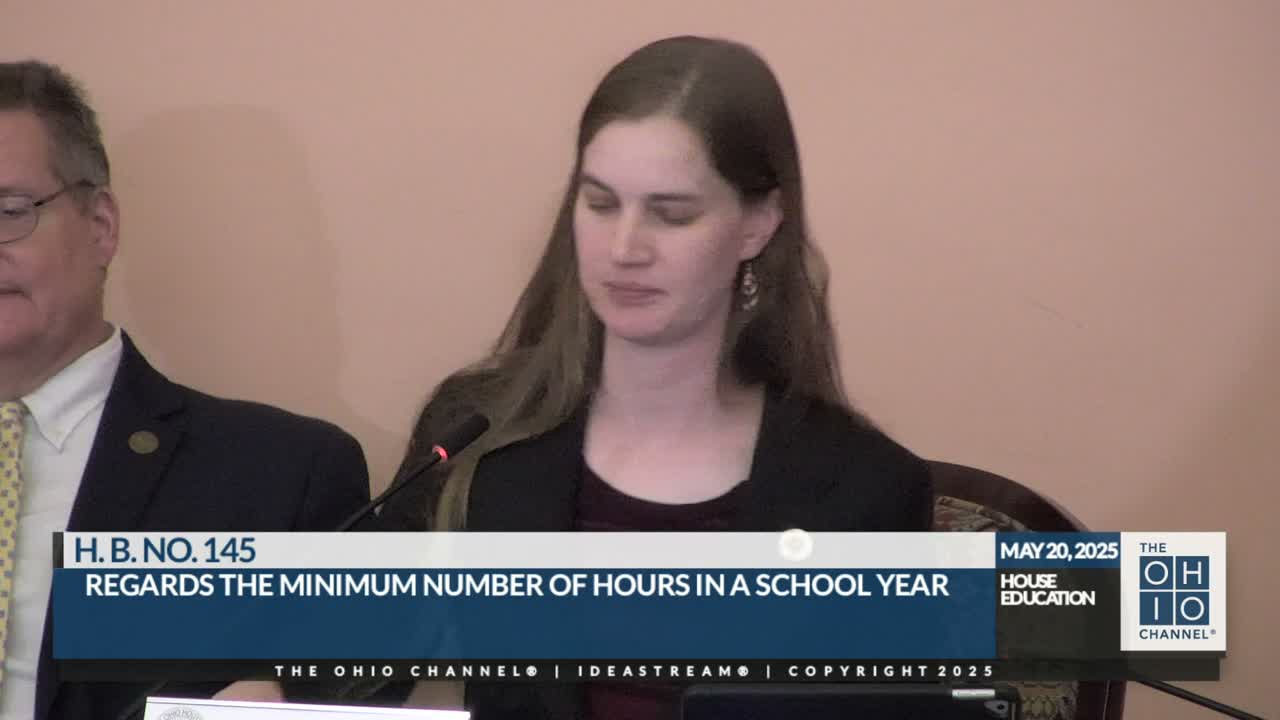
Paul Imhoff of the Buckeye Association of School Administrators (BASA), joined by Malena Birney of the Ohio School Boards Association (OSBA), told the committee they "support the goal" of HB145 but cautioned many of the non-instructional days the bill targets are the product of state‑required professional development such as dyslexia training, CPR/AED instruction and safety drills. "These are all important initiatives, but they consume staff time and often require full day training sessions," Imhoff said.
Imhoff pointed to an LSC fiscal note indicating the proposal may lead to increases in salaries and benefits to accommodate added instructional time. When Representative Pickelantonio asked how many districts would fall short of the proposal's hour totals, Imhoff said he lacked hard statewide numbers but that, in a recent meeting of 50 superintendents, attendees generally thought they would be compliant; several noted that typical snow days could put near‑compliant districts below the threshold.
A major line of questioning focused on collective bargaining. Rep. Pickelantonio and others asked what would happen in districts whose contracts specify a number of workdays rather than hours. Imhoff said "every CBA is different" and that implementing HB145 would likely require negotiation and time at the bargaining table to reconcile changes in hours vs. days.
Lawmakers also raised practical concerns about transportation, extracurriculars, and utility costs associated with calendar changes. Imhoff told members that thoughtful planning would be needed and that the changes likely would not be ready for the 2026–27 school year.
The committee heard no formal amendments or votes during the fourth hearing. Chair Fowler Arthur closed testimony, reminded members that written testimony (including from the OEA) is available on their devices, and recorded that the fourth hearing had concluded.