Get Full Government Meeting Transcripts, Videos, & Alerts Forever!
Get email alerts on the Judicial Confirmation topic
No spam. Unsubscribe anytime.
Committee declines to sponsor constitutional amendment to require senate confirmation of Supreme Court nominees
Summary
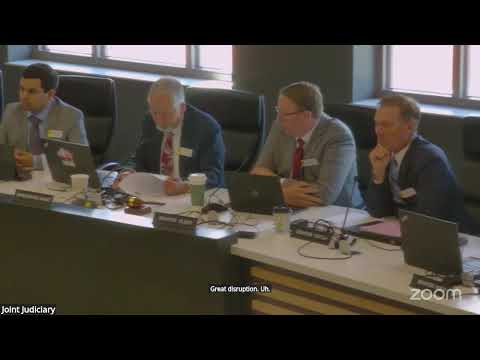
After extended testimony from former justices, bar groups and public witnesses, the committee voted on a proposed constitutional amendment to require Senate confirmation of Wyoming Supreme Court justices; the roll-call failed on the Senate side and the committee did not sponsor the amendment.
A draft constitutional amendment that would require Wyoming Senate confirmation of nominees to the Wyoming Supreme Court (26LSO77) drew extended testimony from former justices, bar associations and public witnesses before the committee voted and the motion failed on the Senate side.
LSO staff summarized the proposed amendment, which would add language to Article 5, Section 4(b) of the Wyoming Constitution to require Senate confirmation of a governor’s nominee for the Supreme Court before assuming office. Staff noted that adoption would likely require corresponding statutory changes to appointment and term language.
Former Wyoming Supreme Court Justice Mike Davis and retired Chief Justice Michael Golden testified against the proposal. Davis called Wyoming’s merit-based selection "the best method" for choosing judges and warned that Senate confirmation "would have a negative impact on the public's perception of both the Senate and the court system." He said confirmation proceedings would delay appointments, create scheduling challenges for the court and risk politicizing appointments. Golden and other witnesses, including representatives of the Wyoming Trial Lawyers Association, Defense Lawyers Association and the Wyoming State Bar, echoed those concerns and cited the merits-based Judicial Nominating Commission (JNC), gubernatorial vetting and retention elections as existing public safeguards.
Proponents argued a confirmation step would let elected lawmakers question nominees about interpretative approaches and provide additional public input. Senator Hicks and other proponents said the focus was narrowed to Supreme Court justices because they rule on constitutional issues and the public should have a voice.
After public testimony the committee took a roll-call vote on whether to forward the constitutional resolution as a committee-sponsored measure. The roll call recorded votes by members in the transcript and the motion failed on the Senate side; the resolution was not sponsored by the committee that day.
Next step: No committee sponsorship; the transcript records the vote result and the committee discussion about possible rule or process changes in lieu of a constitutional amendment.