Get Full Government Meeting Transcripts, Videos, & Alerts Forever!
Get email alerts on the Libraries Obscenity topic
No spam. Unsubscribe anytime.
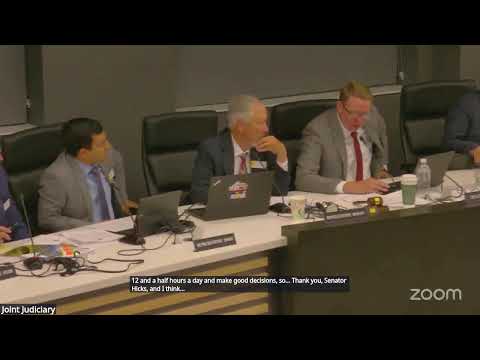
Committee tables sweeping library explicit‑material bill after hours of public comment
Summary
After several hours of testimony from librarians, teachers, parents and victims, the Judiciary Committee tabled work on a draft that would require library and school district staff to prevent access to "sexually explicit" materials in children—s sections and would allow private causes of action and large civil penalties.
A proposed Judiciary Committee draft that would require public libraries and school districts to ensure sexually explicit materials are not accessible in children—s sections—and that would authorize civil penalties of up to $50,000 per violation and private causes of action—was tabled after an extended public‑comment period and extensive committee questioning.
LSO counsel summarized the draft (LSO 80), which defines "sexually explicit" material by listing sexual acts and depictions and would prohibit placement of such materials within any area of a library or school library devoted primarily to persons under age 18. The draft would make the library entity (or school district) potentially liable under the Governmental Claims Act and allow an "interested party" to sue for injunctive relief, damages and attorney fees.
Public comment ran more than an hour. Professional librarians and library‑association leaders emphasized the practical burdens of the draft: Wyoming public libraries house millions of items across 23 systems, many small libraries operate with few staff hours and volunteers, and the administrative cost of reviewing collections and policing shelves could be prohibitive. Library witnesses also warned that the bill—s $50,000 civil penalty per violation could bankrupt small county libraries and chill routine services and programs.
Parents, educators and some trustees urged protections for minors and tighter controls. Several speakers urged a middle path: require clearer, local reconsideration policies, create juvenile versus adult library cards, or fund a state‑level review or rating database rather than imposing heavy civil penalties. Victims and advocates asked the committee not to understate the harms of sexualized materials for minors.
Committee members debated specific drafting issues: the definition of "children—s section" in small one‑room libraries, whether "interested party" should be limited to local residents, what constitutes a single "violation," and whether to target individuals who place materials versus the entity. LSO and members agreed more time was needed to craft workable language; the committee decided to table the bill for further amendment work and asked sponsors and LSO to circulate proposed edits well in advance of the next meeting.
Next steps: LSO will accept amendment language and members asked for a three‑week circulation period (deadline Sept. 22) to allow meaningful review before the October meeting. The committee emphasized using local reconsideration processes and a working group approach to develop narrower, implementable language rather than a one‑size‑fits‑all solution.