Get Full Government Meeting Transcripts, Videos, & Alerts Forever!
Get email alerts on the Retail Theft Penalties topic
No spam. Unsubscribe anytime.
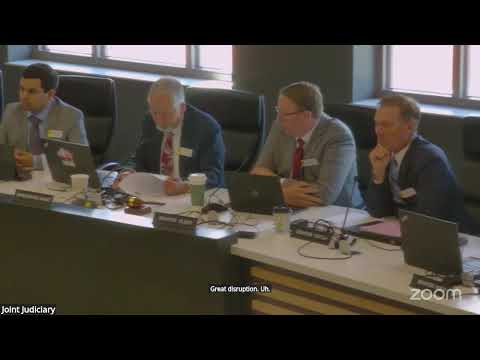
Committee debates lowering felony theft threshold as retailers, law enforcement press for tougher penalties
Summary
A proposed revision would lower the felony theft monetary threshold and raise misdemeanor penalties; retail associations and law enforcement pushed for deterrents while some legislators warned the changes could criminalize youth and asked for aggregation rules and other targeted measures.
A bill draft (26LSO81) discussed at length in the Joint Judiciary Committee would alter Wyoming’s theft penalties: it would lower the monetary threshold for felony theft and raise misdemeanor maximums. LSO staff described the draft as changing the felony trigger from $1,000 to $500, increasing misdemeanor maximum penalties to up to one year and $1,500, and reducing the number of prior offenses needed for an escalating felony from five to three.
Retail trade organizations and local chambers urged the committee to adopt stronger tools. "Retail theft is something that has been climbing significantly in this state," said Dale Steenburgen of the Wyoming Chamber of Commerce. Mike Mosher of the Wyoming State Liquor Association said lowering the threshold and increasing penalties would deter organized rings that follow state thresholds. Law enforcement representatives said increased penalties and the third-strike escalation could help, while warning that changing thresholds will have to be balanced against prosecutorial discretion and jail costs.
Many committee members worried about unintended consequences. Senator Hicks, Representative Lane and others warned a lower monetary threshold could sweep in teenagers and opportunistic offenders; they and others proposed alternatives such as aggregation language (already present in statute for continuing schemes), stronger misdemeanor fines, or separate organized-retail-crime provisions. Law enforcement witnesses said aggregation and the three-offense escalation are key tools to address repeat and organized theft.
The committee considered multiple amendments. One proposal to keep the felony threshold at $1,000 (rather than reducing it to $500) was debated and failed in an initial voice/show‑of‑hands test; a subsequent roll‑call on the bill’s amendments was taken and the transcript records a mix of yeas, nays and recusals. Members subsequently moved to reconsider; the record shows several roll-call sequences and continued procedural votes. The committee ultimately continued deliberations and took steps to reconsider the amendments rather than finalize the bill that day.
Next step: committee staff and members will further refine the draft — possible options discussed include retaining a $1,000 threshold while strengthening aggregation rules, raising misdemeanor fines, or drafting separate organized-retail-theft language.