
Summit Board of Education adopts five strategic goals and new mission statement
Get AI-powered insights, summaries, and transcripts
Subscribe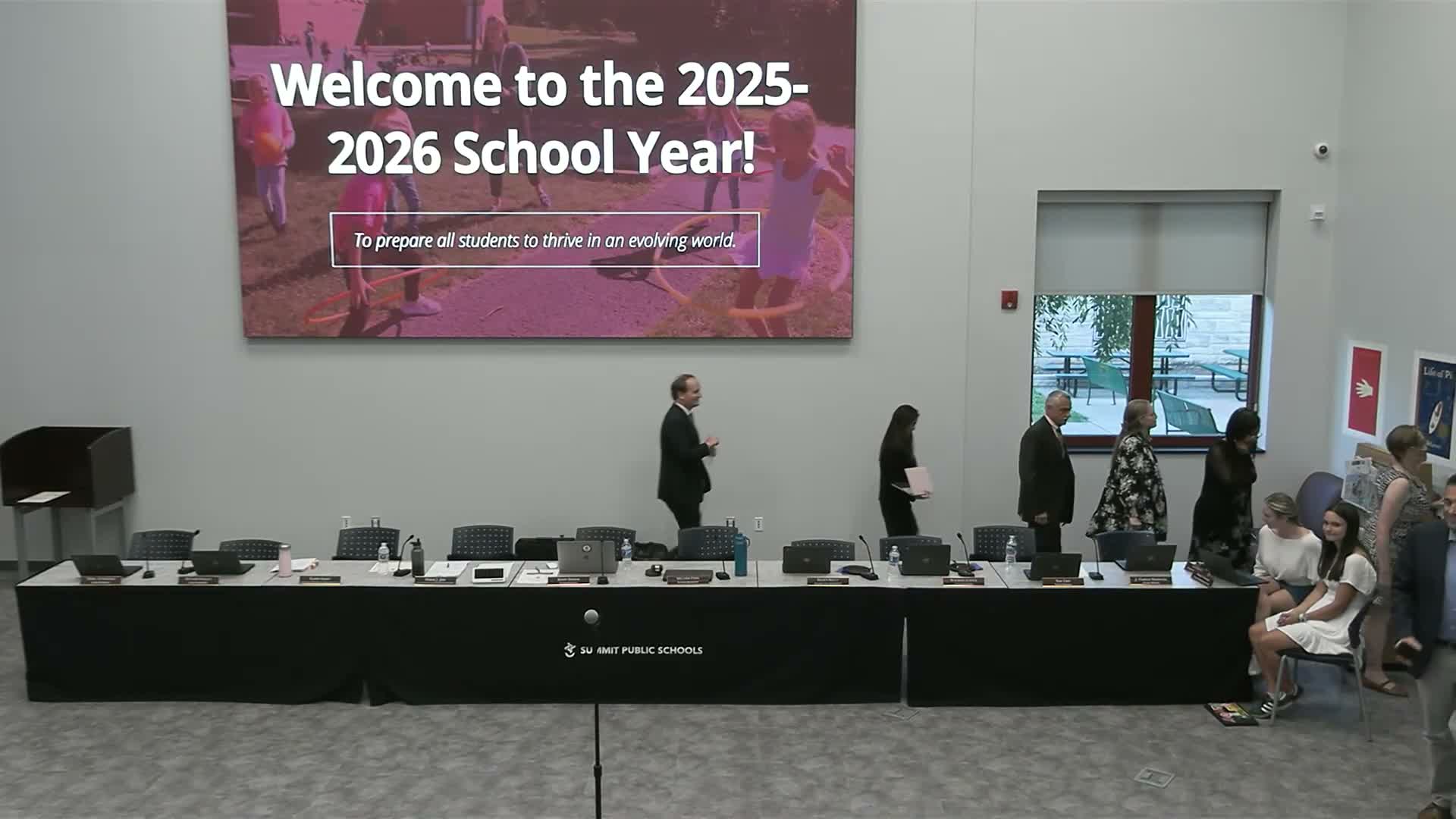
Summary
The Summit Board of Education approved five 2025–26 board goals and a new mission — "to prepare all students to thrive in an evolving world" — after a presentation by Superintendent Scott Huff that summarized a year-long strategic planning process with the Madison Institute.
The Summit Board of Education on Sept. 11 approved five board goals for 2025–26 and unveiled a new district mission statement, following a presentation by Superintendent Scott Huff.
Huff told the board the district engaged the Madison Institute in a year-long strategic planning process that included parent focus groups, surveys of students in grades 6–12, and a core team of about 28–30 teachers, administrators, parents and board members. He presented the new mission: "to prepare all students to thrive in an evolving world." "We spent a lot of time on the mission statement," Huff said during the presentation.
The goals correspond to five subcommittees identified during the planning work: safety and wellness; teaching and learning; leadership and governance; community and culture; and finance and facilities. Under teaching and learning, Huff emphasized curriculum updates, project-based learning and balancing technology use with hands-on instructional time; he said the cell-phone policy and screen time were a particular focus of discussion. For finance and facilities, the presentation highlighted a three-year budget model and the need for transparent budget allocation processes.
Huff described a two-stage implementation approach: administrative teams are developing Year 1 action plans for each goal, with subsequent year plans to follow. He said the board would be approving the goals that evening and that action-plan details will include who is responsible for Year 1 tasks and the timing for deliverables.
Board members voted to adopt the goals as presented. The vote followed the presentation and moved the district into the implementation phase, where administrators will develop specific action steps and timelines for the new priorities.