Get Full Government Meeting Transcripts, Videos, & Alerts Forever!
Get email alerts on the School Consolidation topic
No spam. Unsubscribe anytime.
Corvallis superintendent proposes K–6 conversions, middle‑school closure to address enrollment decline
Summary
Superintendent Ryan Naas proposed converting several elementary schools to K–6, making Mountain View K–8, creating a 7–8 Corvallis Junior High and closing Sheldon Middle School; the plan would save an estimated $1.87 million but would not close the district’s entire budget gap. Community listening sessions are scheduled for input.
Superintendent Ryan Naas on Sept. 11 presented an initial school consolidation plan to address projected enrollment declines and budget shortfalls in Corvallis School District (SD 509J). The proposal would convert multiple elementary schools to serve kindergarten through sixth grade, repurpose Linus Pauling as a seventh‑ and eighth‑grade Corvallis Junior High, make Mountain View a K–8, and close Sheldon Middle School while retaining its gyms for sports.
The plan was described as an initial recommendation — the board may adopt, modify or reject it after public feedback. "The recommendation that I brought forward was to create K sixes at Lincoln, Adams, Catherine Jones Harrison, Garfield, Leticia Carson, and Bessie Coleman," Naas said, adding that Mountain View would become a K–8 and Linus Pauling would be renamed Corvallis Junior High.
Why it matters: District officials say enrollment has fallen from historical highs and is expected to continue declining. Kim Patton, director of operations, summarized the Long Range Facilities Planning Committee’s work, noting the district had about 4,500 students in 1959, is now "a little more than 5,500" and projects further declines. At the elementary level, Patton said capacity is about 3,422 students (3,233 excluding specialty classrooms) while projected elementary enrollment for the year was 2,221 — roughly 69% utilization.
Financials and staffing: Naas said the consolidation proposal would reduce roughly 11.28 positions compared with maintaining the status quo (described in the presentation as "about 28.8%") and would produce estimated consolidation savings of $1,870,000, or about 3.4% of current spending. He cautioned that the proposal "does not address all of our financial concerns" and that the district anticipates needing an additional reduction of approximately $2,000,000 for the upcoming school year.
Alternatives considered: The superintendent said the board also asked staff to analyze maintaining the status quo and closing a single elementary school. Maintaining the status quo preserves feeder patterns and avoids reboundary, but would not address long‑term financial needs because district funding follows student counts rather than building counts. Closing one elementary school would create some savings and keep feeder patterns more intact than closing a middle school, but could require reboundary work and risks losing neighborhood school communities and students at the elementary level.
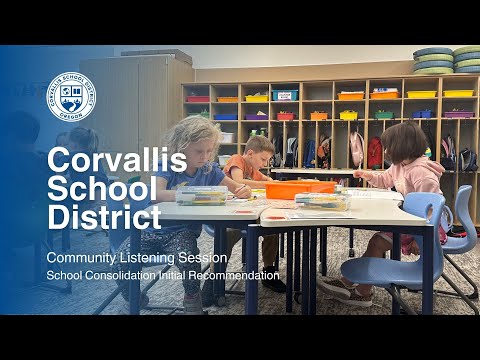
Timeline and next steps: Naas said the proposed changes would be implemented for the next school year if the board approves them, and that the board will review the feasibility of maintaining two comprehensive high schools in the 2028–29 school year or earlier if enrollment falls below 2025 levels. He emphasized no final decision has been made and that the presentation is intended to solicit community feedback through listening sessions, a QR code and ongoing board meetings.
Staff outreach and program planning: District staff have begun conversations with affected school employees; human resources is reviewing licensure and supports needed for teachers assigned to expanded grade spans. An innovation team of teachers, board members and building leaders will meet through the next two years to plan instructional and programmatic approaches during and after any consolidation.
What’s next: The superintendent asked the community to participate in listening sessions and use the QR code to submit feedback. The board could take action in coming meetings; Naas referenced a Nov. 13 timeline as a possible decision point but stressed the schedule is subject to change.
No formal vote or board action was recorded in this presentation; the superintendent’s proposal is framed as an initial recommendation for public input and board consideration.