Get Full Government Meeting Transcripts, Videos, & Alerts Forever!
Get email alerts on the Title Ix Amicus topic
No spam. Unsubscribe anytime.
Kern County Board to sign on to Title IX amicus brief after contract edits and promise to review filing
Summary
The Kern County Board of Education agreed to join an amicus brief in two U.S. Supreme Court cases involving transgender athletes — provided the district’s requested edits are accepted and the board reviews the final brief before filing by the court deadline.
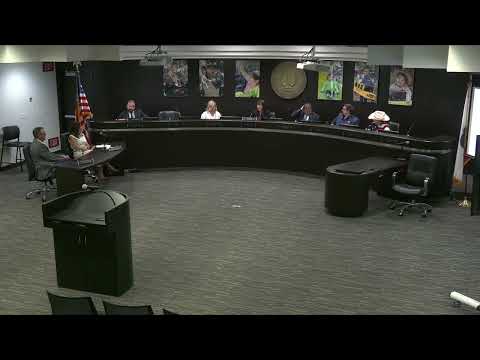
The Kern County Board of Education voted to move forward with signing on to an amicus brief in two U.S. Supreme Court cases concerning transgender participation in school sports, but only after the district’s requested edits to the attorney engagement agreement and an opportunity to review the brief before it is filed.
Board members discussed the request from Advocates for Faith and Freedom to join Little v. Hecox (Idaho) and West Virginia v. B.P.J., both described at the meeting as cases raising whether state laws that limit transgender girls’ participation in girls’ athletics conflict with Title IX and the Equal Protection Clause. The board was told the firm preparing the brief planned to file by May 18 and that oral arguments in related matters were scheduled in mid‑month.
“It's a historical landmark,” the board president said, arguing the county’s support would demonstrate commitment to the board’s earlier Title IX resolution and to girls’ athletics. Several trustees voiced similar support for backing the district’s previously adopted position.
Other trustees and advisors urged caution. A board legal reviewer flagged two clauses in the engagement agreement: a sentence in paragraph 4 saying the client would make a “good faith effort” to help the firm raise money for this and other cases, and paragraph 12 stating the client could be responsible for damages, costs and attorney fees awarded to a prevailing opposing party. The attorney described an amicus brief as a “friend of the court” filing rather than a party‑level lawsuit, but said the fee language in paragraph 12 and the fundraising sentence in paragraph 4 raised “concerns” that should be addressed in writing.
A guest speaker invited to comment recommended the board ask the firm to remove the final sentence of paragraph 4 and strike paragraph 12. Trustees sought assurance the district would not bear out‑of‑pocket costs to prepare the brief, and repeated a request to review the firm’s draft before it is filed. One trustee said the board could “bow out” if it did not approve the finished brief.
After discussion the board approved a motion — with a second recorded — to proceed if the firm agrees to the edits (strike paragraph 12 entirely and remove the last sentence of paragraph 4) and to provide the board a copy of the amicus brief for review prior to filing. The board president said staff would notify trustees the next day whether the firm accepted the stipulations and would circulate any revised agreement or language.
The board’s action was procedural: it authorized the district to sign as a signee of the amicus brief contingent on contract edits and the opportunity to review and, if necessary, withdraw. The board did not adopt the text of the brief at the meeting and did not commit district funds for the brief beyond the edits and review conditions discussed.
The items discussed at the meeting included: the two Supreme Court cases (Little v. Hecox; West Virginia v. B.P.J.), the disputed contract clauses (paragraph 4 fundraising sentence and paragraph 12 liability language), a request to receive and review the amicus brief before filing by the court’s stated deadline, and a majority vote to proceed contingent on those edits.
Next steps: staff will advise trustees whether the outside counsel agrees to strike the disputed language and will circulate the revised agreement and draft brief for a follow‑up board review and vote if required by public‑meeting rules.