Get Full Government Meeting Transcripts, Videos, & Alerts Forever!
Get email alerts on the Wastewater topic
No spam. Unsubscribe anytime.
Greenfield council hears stark sewer-rate options as plant upgrades loom
Summary
City staff and consultants presented a 10-year sewer rate and fee study tied to a required wastewater-plant upgrade; presenters said the sewer fund balance is zero and outlined two financing scenarios that would raise rates, while residents urged exploring regional treatment or phased approaches.
City of Greenfield officials told residents on Sept. 9 that a required upgrade to the city's wastewater treatment plant and new state discharge requirements leave the sewer fund with no reserve and force a significant rate review.
Consultant Tony Nisic summarized a 45-page rate study that lays out a 10-year financial plan and two scenarios: one that assumes substantial state grant funding paired with a State Revolving Fund (SRF) loan, and a second that assumes little or no grant support and relies on larger loans that would raise costs for ratepayers. "One of the assumptions in the model is the current sewer fund balance is 0," Nisic said, urging council and residents to consider that reality when weighing how quickly to recover costs.
The study recommends a rate structure combining a fixed monthly charge to cover administrative costs and a variable charge tied to usage measured in 1,000-gallon units. Consultants said a tiered approach and a capped usage threshold for single-family homes (about 5,000 gallons per month) would protect low-usage households while incentivizing conservation. "For those people who use a different level of water than the average, they're going to pay less money under these new rates than they would have under the old ones," the presentation said.
Staff and consultants said the preferred technical solution is a membrane bioreactor (MBR) system, which has a smaller footprint and higher treatment performance for nitrogen and other constituents the Central Coast Regional Water Quality Control Board now requires. Consultants told the council the plant must meet new waste-discharge requirements and aimed to be online by 2029.
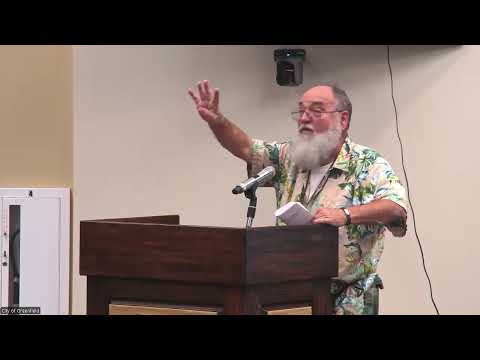
Speakers from the public urged the council to consider alternatives and the community's limited means. One resident asked whether the city could route wastewater to an adjacent city's plant or expand existing ponds. A speaker who identified themselves as familiar with wastewater systems said long-distance pumping to another plant is generally costly and operationally complex and cited permitting and easement hurdles; the consultant said those options had been examined and were generally not cost-effective or fast enough to meet the compliance deadline.
Mayor Robert White said staff should begin public forums and strengthen outreach so residents understand how different households will be affected by the proposed structure. Staff told council they are finalizing a crisis-communications contract to lead outreach and recommended at least one public workshop, possibly more, scheduled at different times to reach working residents.
Council did not take formal action on rates at the meeting but directed staff to proceed with public education, additional technical and financial analysis, and outreach meetings before any vote.
What happens next: staff will schedule public workshops, complete the communication plan, and bring rate and fee ordinance options back to council for consideration and potential adoption.