Get Full Government Meeting Transcripts, Videos, & Alerts Forever!
Get email alerts on the Facility Fees topic
No spam. Unsubscribe anytime.
Laramie County School District #1 board approves updated facility fee schedule amid community objections
Summary
The Laramie County School District #1 board voted 5–1 to adopt an updated facility‑use fee schedule intended to recoup basic operating costs for high‑impact spaces. Community swim and youth club representatives urged a delay, saying higher charges could price out low‑income families and reduce access to swim lessons.
The Laramie County School District #1 board of trustees voted 5–1 to approve an updated facility‑use fee schedule that raises or restructures charges for community groups using school auditoriums, stadiums, gymnasiums and pools. The vote followed public comment from swim‑club parents and youth sports coaches who urged the board to delay the change and negotiate with community clubs.
Administrators told trustees the schedule was developed after a statewide survey of publicly posted fee schedules and follow‑up calls to comparable districts. Operations staff said the proposed rates reflect minimum operating costs for high‑impact venues and identified sample minimums used in staff analysis: an auditorium about $150 per hour (including technician), a stadium just under $100 per hour, a large gym about $105 per hour and pool use roughly $256 per hour. Staff emphasized those costs vary by event size, custodial needs and seasonal energy use.
Community speakers said the proposed changes could limit access. Joanne Hassell, a parent and swim‑club participant, asked for clearer transparency around personnel requirements and cited a perception that swimming fees would be ‘‘$150 per day plus personnel fees,’’ which she said could force clubs to raise dues and price out lower‑income families. Sarah Delay of Capital City Athletics said swim clubs provide safety‑critical services — lifeguard and CPR training, job opportunities and swim lessons — and asked where collected fees would go; staff replied that revenue from facility rentals is returned to the district general fund to cover operating costs and is not intended as a profit center.
Several youth‑sport coaches described the practical impact of higher fees. Jojo, a youth wrestling coach, and Amy Tortorich, speaking for local clubs, said past fee increases led to reduced participation and urged the board to table the vote and convene stakeholder meetings with coaches and clubs prior to implementation.
Trustees and administrators said many previously charged fees for lower‑impact spaces (for example, classrooms and some music rooms) were reduced or eliminated during the review. The district also pointed to existing MOUs and reciprocal agreements — including a reciprocal use agreement with the City of Cheyenne and an MOU with Cheyenne Frontier Days — that preserve fee‑free or negotiated uses in some circumstances.
During board discussion, trustees asked staff to publish clearer, itemized guidance about when personnel charges (kitchen manager, custodial staff, pool technician, audiovisual technician) apply. Operations staff said facility scheduling staff will vet each request and confirm which personnel and charges are required before approving a reservation.
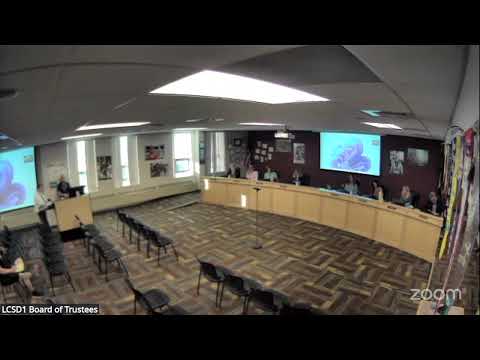
The motion to adopt the schedule was made and seconded at the public meeting; the board then held an extended Q&A with administrators before voting. The motion passed on a 5–1 vote. The transcript does not list individual roll‑call votes or an effective date for the new schedule; staff said clarifying documentation on personnel charges and other implementation details will be provided on request. Trustees then moved into executive session on separate district matters.
What happens next: administrators said they can produce the comparative data and a personnel‑charge table on request and encouraged community groups to work with district facility schedulers to confirm exact costs for specific events. The district noted that the fees are intended to offset operating costs and that they are not meant to be a revenue source for other district programs.