Get Full Government Meeting Transcripts, Videos, & Alerts Forever!
Get email alerts on the Homelessness topic
No spam. Unsubscribe anytime.
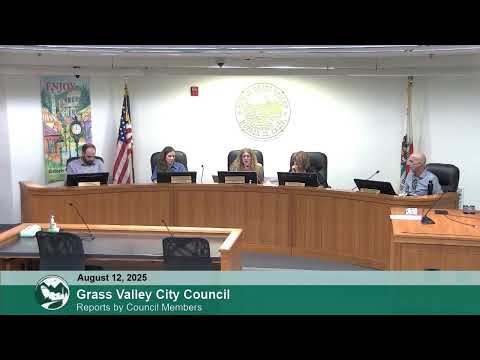
Grass Valley council adopts response to grand jury recommendations on homelessness
Summary
The City Council voted to adopt its written response to a grand jury report on homelessness and encampments after staff outlined existing ordinances and outreach; public commenters urged alternatives to enforcement and raised water-supply safety concerns.
Council voted to adopt the City of Grass Valley—s response to a recent grand jury report on homelessness, formalizing the city—s position after a staff presentation and public comment.
City Manager Tim Kieser presented the city—s written responses and read the grand jury recommendations and the city—s replies. Kieser said the city already enforces an ordinance that prohibits camping on public property, works with private property owners to obtain trespass letters valid for one year, and is open to regional collaboration and periodic policy review. He characterized one recommendation as "requiring further analysis" and noted the city found no municipally owned properties within city limits currently suitable for new sanctioned camping sites without further zoning review.
The matter drew public comment before the vote. Tom Durkin, director of the No Place To Go project, urged council to consider safety-focused alternatives to criminal enforcement, telling the council that "the only thing worse than a safe camp is no camp" when people have nowhere to go. Matthew Colter raised concerns about public-safety and water-supply risks from upstream encampments and asked whether automated water systems account for objects or people entering the canal feeding the city—s supply.
After the public remarks, council members moved and seconded adoption of the response; the motion passed on a voice vote with no recorded opposition or abstentions. Council also played a virtual public comment reiterating upstream safety concerns.
What happens next: Adoption of the city—s written response documents the city—s current enforcement practices and willingness to explore regional collaboration; any changes to ordinances, new authorized sites, or programmatic alternatives will require follow-up work by staff and future council actions.