Lifetime Citizen Portal Access — AI Briefings, Alerts & Unlimited Follows
Speaker warns airline consolidation has reduced competition, questions DOJ merger enforcement
Loading...
Summary
An unidentified speaker argued that consolidation has left four carriers controlling most U.S. domestic air travel, criticized the Department of Justice’s handling of the JetBlue‑Spirit merger, and urged modernization of air‑traffic control while praising Department of Transportation leadership.
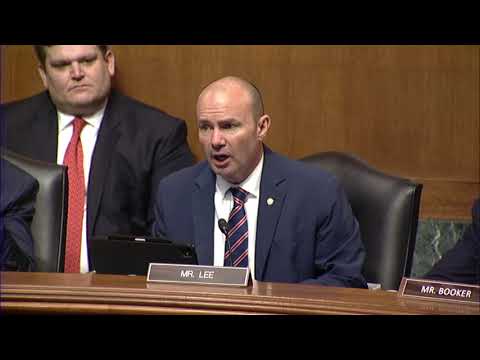
Unidentified Speaker opened by saying the nation relies on commercial air travel for major life events and daily needs and argued that recent consolidation in the industry has reduced consumer choice. "Today, there are just 4 major carriers, American, Delta, United, and Southwest that control over 80% of, US domestic air travel," the speaker said, framing consolidation as the central concern.
The speaker traced the issue to post‑deregulation market dynamics, saying competition following airline deregulation beginning in 1978 historically produced lower fares and innovation but recent mergers have reshaped the market. The talk cited examples of extreme market concentration at some airports—single carriers controlling roughly 70–80% of passenger traffic at hubs such as Atlanta and Dallas/Fort Worth and about 60% at places like Salt Lake City, St. Louis, and Minneapolis—and noted that even where market shares are lower, carriers often do not compete on the same routes.
Turning to merger enforcement, the speaker criticized the Department of Justice’s approach in blocking the proposed JetBlue–Spirit deal, saying DOJ engaged in what the speaker characterized as "an acrobatic distortion and contortion of the market" and arguing the merger might have produced a financially stable competitor able to contest legacy carriers. The speaker noted that Spirit later filed for bankruptcy and said that outcome raises questions about how markets are defined and whether doctrines such as the failing‑firm defense adequately reflect real‑world incentives.
The address highlighted the role of low‑cost and ultra‑low‑cost carriers as competitive constraints that typically lower fares when they enter routes, but observed those competitors face financial headwinds. The speaker cited recent developments: Spirit’s bankruptcy, Southwest’s move away from some elements of its earlier low‑cost model (such as free checked bags and free seat assignments), and JetBlue seeking partnerships to remain viable.
The speaker also pointed to structural limits on airline capacity—limited slots and gates, coordinated capacity decisions among fewer airlines, aircraft supply shortages, engine repair delays, and rising labor costs—that compound market concentration. On the operational side, the speaker said shortages of air traffic controllers and an antiquated air‑traffic control system constrain seat growth and service reliability.
On reform, the speaker said the U.S. Department of Transportation is modernizing the air‑traffic control system and streamlining Federal Aviation Administration hiring and pay. The speaker singled out Secretary Duffy at the Department of Transportation for praise, saying his leadership on reforms is essential not only for safety and reliability but also to create the capacity necessary to sustain or increase competition.
The remarks amounted to a policy critique and a call for a reexamination of antitrust enforcement frameworks; no formal votes or actions were recorded during the remarks.