Get Full Government Meeting Transcripts, Videos, & Alerts Forever!
Get email alerts on the Comprehensive Plan topic
No spam. Unsubscribe anytime.
Fort Thomas Planning Commission reviews 2018 comprehensive plan goals, flags items for City Council
Summary
The Planning Commission reviewed goals and objectives from the 2018 comprehensive plan, recommending cross-references to the Unified Development Ordinance and flagging implementation items for City Council review; commissioners emphasized drainage and stability concerns for the Carlisle site.
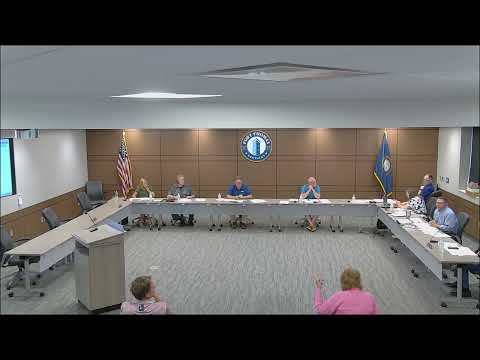
The Fort Thomas Planning Commission spent the bulk of its Sept. 17 meeting continuing a line-by-line review of goals and objectives carried forward from the 2018 comprehensive plan, agreeing to annotate the document to show which items are within the commission’s authority and which the City Council or staff would need to implement.
Staff and commissioners repeatedly said the text under review is verbatim from the 2018 plan and is not new policy. “This is what we’re reviewing, the goals and objectives from the 2018 comp plan,” a staff speaker said, noting the commission’s role is to confirm what remains relevant and to identify items that may require council action.
Commissioners proposed a mix of edits: remove or reword language that is redundant because the Unified Development Ordinance (UDO) already addresses it; change prescriptive household-target language (for example, references to “empty nesters” or specific household types) to more general phrasing; and flag items that are implementation or funding tasks outside the Planning Commission’s purview. Multiple commissioners argued in favor of keeping some aspirational or funding-related language in the plan because it strengthens future grant applications even if implementation would fall to other departments or to Council.
The commission debated several substantive items. On historic-preservation language that suggests pursuing local, state and federal funding, commissioners noted the actual pursuit of grants is typically not a planning-commission responsibility and recommended marking that sentence for Council or staff follow-up. Commissioners also discussed whether Fort Thomas should consider becoming a Certified Local Government; several members said the Design Review Board (DRB) already performs preservation review in practice and recommended clarifying that relationship.
The Carlisle property drew sustained attention. Staff described drainage and slope stability as the immediate priorities; one commissioner warned the site contains unengineered fill that would require substantial stabilization before major development could be feasible. Commissioners asked staff to note that the plan should indicate a realistic land-use vision for Carlisle—likely green space or limited development—rather than detailed building types until site stabilization and drainage are addressed.
Other recurring suggestions included cross-referencing the UDO where zoning or design standards already exist (rather than duplicating text), clarifying which city groups would implement neighborhood-focused programming, and keeping language that supports future grant applications if Council is willing to provide necessary local match funds.
Commissioners agreed not to make final deletions at this meeting. Instead, they will annotate the document with suggested edits and tags indicating which items are recommended to remain, which should be revised, and which should be forwarded to City Council or specific city departments for action. A public hearing and additional review with counsel and Council were discussed as the next steps.