Get Full Government Meeting Transcripts, Videos, & Alerts Forever!
Get email alerts on the Education Funding topic
No spam. Unsubscribe anytime.
Kent School Board work session focuses WASDA priorities on special education, transportation and budget stability
Summary
At a special work session, Kent School District leaders reiterated special education, transportation and flexible categorical funding as top WASDA priorities and asked directors to expand and rank a larger list for submission to the association.
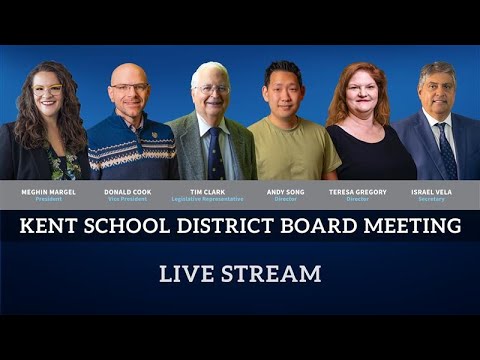
President Margiel convened a special work session for the Kent School District Board to refine the district’s legislative priorities ahead of the WASDA (Washington Association of School Directors) session. Superintendent Bella said boards and districts annually select priorities and urged members to consider prior items and emerging funding needs.
Director Clark, the board’s legislative representative, asked the board to build on last year’s cooperative approach with superintendents and to widen the district’s five recommended items into a ranked list for submission. Clark framed the work around three “buckets”: special education, transportation, and MSOC/utility and insurance pressures. He told directors the state had recently lifted an eligibility cap for special education but that the district still lacks corresponding state reimbursements, leaving local general funds to cover the difference.
Superintendent Bella described the district’s staff analysis and reiterated the board’s earlier emphasis on special education funding, transportation costs and flexible categorical funding to respond to uncertain federal and state allocations. District staff cited last year’s local special-education subsidy of roughly $24.5 million drawn from the general fund and described aggregated underfunding across multiple categories on the order of hundreds of millions for state-level adequacy.
Board members questioned operational details: how students are identified for special education, whether the district is missing eligible students, and whether flexible categorical rules would undermine dedicated state-funded programs. Staff replied that identification follows referral and child-find processes, compliance reviews include disproportionality checks, and MTSS and a planned special-education evaluation will help assure appropriate identification.
No final legislative package was adopted at the meeting; directors were asked to rank a longer list of priorities and submit their ranking sheets that evening so staff can compile the district’s WASDA submission.