Get Full Government Meeting Transcripts, Videos, & Alerts Forever!
Get email alerts on the Legal Notice Public Comment topic
No spam. Unsubscribe anytime.
Litigators tell Lakeville council state charging practices violate the U.S. Constitution, deliver notice
Summary
Two civil-rights litigators used the public-comment period to deliver a formal notice to the Lakeville City Council alleging Minnesota charging-by-information practices violate the U.S. Constitution and saying they have thousands of affidavits; no council action was taken during the meeting.
Jessica Saxton, a civil-rights advocate and litigator from Washington, D.C., told the Lakeville City Council during public comment that she was "here to provide notice" that she believes Minnesota charging practices conflict with the U.S. Constitution. "I'm here to provide notice that you cannot continue to pay public officials to commit crimes," she said, urging the council to review the matter.
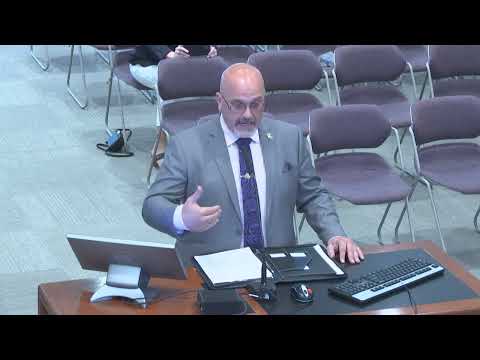
Tan Wood Downing, who identified himself as a civil-rights litigator, followed with more detailed claims and called on the council to cooperate. Downing said he has "approximately 22,000 criminal affidavits" alleging charges brought by way of information rather than indictment within Minnesota and cited federal criminal statutes, including Title 18 U.S.C. provisions he described as covering deprivation of rights and conspiracy to deprive rights. "We're not trying to get anybody into trouble," Downing said, "but if we can't get resolution ... we're going to have to do this in a much more public and messy manner." He also referenced Hurtado v. California (1884) in arguing about the primacy of the Constitution.
Both speakers framed their statements as legal notice to local officials and asked the council to investigate and respond. The council did not take formal action on those comments during the meeting; the matters were presented during the public-comment period and remain unresolved. Later in the meeting, members moved to a closed session to discuss unrelated litigation matters (see "Council actions" article for details).