Get Full Government Meeting Transcripts, Videos, & Alerts Forever!
Get email alerts on the Education Vouchers topic
No spam. Unsubscribe anytime.
Public speakers and committee urge Oakwood Board to join lawsuit challenging Ohio voucher expansion
Summary
A public commenter and a board committee urged Oakwood Board of Education to join a statewide lawsuit challenging Ohio’s EdChoice universal voucher expansion, citing a recent Franklin County court ruling and state funding disparities; the board directed staff to draft language for an October vote.
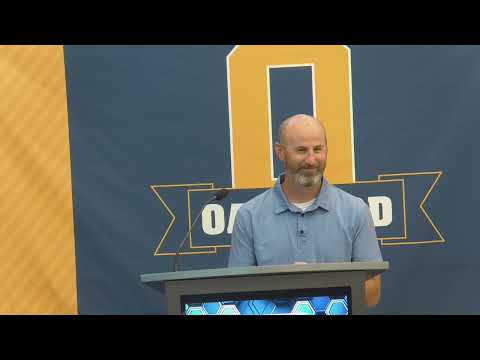
Ashley Tallman, a former public school teacher and president emeritus of the Smith PTO, told the Oakwood Board of Education at its Sept. 8 meeting that she and Oakwood Advocates for Public Education want the district to join a statewide lawsuit challenging Ohio’s EdChoice universal voucher expansion. "We urge you to join the lawsuit while there's still a public education system in the state to save," Tallman said during public comment.
A board committee that researched the issue read a recent court ruling in Franklin County and described three counts on which Judge Paige found the voucher program unconstitutional, according to the committee's presentation: (1) by creating a separate system of nonpublic schools funded with public money that can exclude students, (2) by failing to adequately fund public schools while funding vouchers, and (3) by providing state money directly to private religious schools in ways the committee said may violate the constitution. The committee also described funding disparities: Oakwood public-school students receive $2,479 in state per-pupil funding, while voucher funding can reach $6,165 per K–8 student and up to $8,407 for high school voucher students.
The committee told the board that EdChoice universal voucher eligibility expanded in 2023 to remove prior low-income requirements and said voucher use in Oakwood grew from 4 families in 2023 to 67 families in fiscal 2025, a change the committee characterized as "explosive growth." The committee estimated the district cost to join the lawsuit at $2 per student, totaling $3,868.
Board members thanked the committee for the work and discussed concerns about sustainability and fairness of state funding. The chair asked a board member to "write up some language that would put this up for a vote" so the board could consider voting on the matter at the Oct. meeting. That direction is the next procedural step; no formal vote to join the lawsuit was taken at the Sept. 8 meeting.
Why it matters: If Oakwood joins the suit, the district would align with more than 300 other Ohio districts that the committee said had joined; the underlying legal questions could affect state education funding, eligibility rules and the flow of public dollars to private schools. The board's October meeting will be the next opportunity for a formal vote.
Provenance: The public comment and committee presentation appear in meeting remarks beginning with the public comment introduction and Ashley Tallman's remarks (SEG 316–SEG 357) and the committee's detailed summary of the Franklin County ruling and funding figures (SEG 376–SEG 506). The board's direction to draft ballot/vote language occurs later in the discussion (SEG 569–SEG 576).