Get Full Government Meeting Transcripts, Videos, & Alerts Forever!
Get email alerts on the Landfill Permitting topic
No spam. Unsubscribe anytime.
State regulators say Jefferson County landfill expansion stalled by technical deficiencies; approval months away
Summary
Tennessee Department of Environment and Conservation staff told the Jefferson County Commission that missing hydrogeologic data and engineering inconsistencies have delayed approval of a proposed landfill expansion and that the county should expect months more for corrections and required public comment periods.
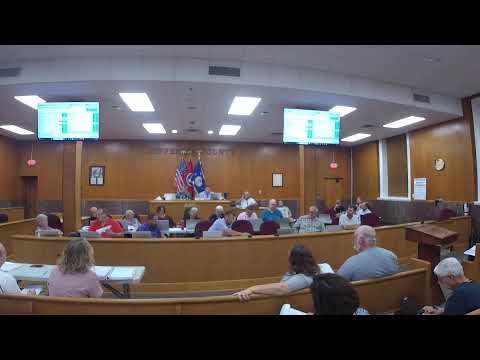
State environmental regulators told the Jefferson County Commission that the county’s proposed landfill expansion remains months away from final approval because key technical documents submitted by consultants were incomplete or inconsistent. Nick Lytle, statewide solid-waste permits manager for the Tennessee Department of Environment and Conservation, and Dr. Lewis Haynes, a TDEC consulting professional engineer, described multiple deficiencies in the county’s permit application and a lengthy public-notice process before construction can begin.
Why it matters: The county has run out of capacity for construction and demolition (C&D) waste at its Class 3 site and has been turning material away. That has real operational and financial impacts for the county’s sanitation operations and for residents who rely on local disposal options.
Lytle told commissioners the department received an incomplete hydrogeologic submittal in summer 2022 that lacked groundwater-elevation data and that subsequent engineering packages contained mismatched sheets and missing tie-ins between the existing and proposed cells. "If they weren't difficult to permit, everybody would have one in everybody's backyard," he said, stressing that permitting must ensure landfills do not leach into groundwater. He added that karst terrain and sinkholes identified in borings make the site technically challenging and require engineered solutions.
Dr. Haynes described the terrain complications and said the borings found perched fluids and other indicators that demand additional engineering. "It's a slightly more complicated problem than just digging a hole and putting trash in," he said, explaining that added structural work will extend the schedule.
TDEC outlined interim options commissioners could consider, including accepting C&D waste at the county's Class 1 municipal solid-waste landfill in the short term, while noting that doing so consumes airspace that would otherwise serve municipal waste. Lytle cautioned that once submittals are corrected and accepted by TDEC, the county must run a public-notice period (45 days of public comment) and allow roughly 60 days for processing and administrative steps before a final action, so approval remains months away.
The department invited commissioners and the public to a demonstration of landfill equipment scheduled for Oct. 4 at 1 p.m. at the landfill site. "We want to be transparent and answer your technical questions," Lytle said.
What happens next: County staff and consultants will need to address the listed deficiencies in the hydrogeologic and engineering submittals, and TDEC will require the public-notice and comment period before any permit decision. No timetable for final construction was set.
Speakers quoted in this article are drawn from the commission meeting transcript and include direct remarks by Nick Lytle and Dr. Lewis Haynes of TDEC.