Get Full Government Meeting Transcripts, Videos, & Alerts Forever!
Get email alerts on the Commission Role topic
No spam. Unsubscribe anytime.
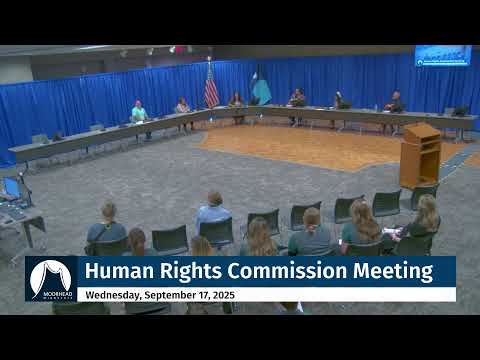
Moorhead Human Rights Commission debates focusing beyond events, plans outreach and Fargo coordination
Summary
At its monthly meeting, the Moorhead Human Rights Commission debated whether to emphasize cultural outreach or expand into investigating and referring human‑rights complaints, agreed to pursue more community drop‑ins and staff will check meeting-hosting rules and reach out to Fargo for possible coordination.
The Moorhead Human Rights Commission spent much of its meeting debating what the board should do beyond promoting cultural events and how it can better serve residents with potential human‑rights concerns.
Commissioner (speaker 9) pressed the commission to move past event promotion and take on more concrete human‑rights work, citing housing and employment discrimination as examples of issues that may go unreported because residents do not know where to turn. He said the commission should “dig into those places where we have human rights issues that aren't coming forward” and urged the group to produce visible, actionable work rather than primarily advancing cultural awareness events.
Supporters of continuing public education acknowledged the importance of outreach but said the commission can and should do both. Commissioners described past work connecting residents to Legal Services of Northwest Minnesota and the Immigrant Law Center and noted that education can be a gateway to addressing individual complaints. One commissioner said they had helped connect a family with the mayor’s office and that such referrals could lead to tangible assistance.
A recurring concern was how to handle confidential complaints. Commissioners agreed that when community members do not want identifying details disclosed, staff or commissioners can redact personal information for discussion and documentation so the commission can track recurring problems and make referrals without exposing vulnerable people. Several commissioners noted that individual commissioners should avoid taking unilateral action that could exceed their legal authority outside a quorum.
The commission debated regional collaboration with neighboring Fargo. One member proposed a larger, combined commission to share resources and tackle cross‑border issues such as transit cuts and childcare access; others cautioned that a merger could deprioritize Moorhead‑specific matters. The group settled on a cautious approach: staff will reach out to Fargo to explore options and feasibility before commissioners pursue direct contact.
Practical next steps were agreed: staff liaison Tanya will check the city’s requirements for where HRC meetings may be hosted, the commission will reserve time at a future meeting to set an annual plan, and commissioners will pilot more direct outreach — attending community events with name tags or hosting occasional “open form” drop‑in times to collect concerns. Commissioners discussed having two commissioners present at community outreach events and possibly scheduling an hour before regular meetings for private consultations.
Procedurally, the commission approved the previous meeting’s minutes earlier in the agenda and concluded the meeting with a voice vote on a procedural item related to agenda voting display. The commission adjourned after the final vote.
The commission did not adopt new enforcement powers; members emphasized referrals, documentation, education and collaboration as primary tools moving forward. The group set a follow‑up item for the next meeting to finalize hosting rules and an annual plan.