Get Full Government Meeting Transcripts, Videos, & Alerts Forever!
Get email alerts on the Fence Green Space Dispute topic
No spam. Unsubscribe anytime.
BZA continues Fenway Park fence dispute, orders barbed‑wire removed and asks parties to consult surveyors
Summary
Neighbors objected to a chain‑link fence and barbed wire placed along the property line between a commercial lot and the Fenway Park subdivision; the board continued the variance for 30 days and required removal of the barbed wire while the applicant works with county and private surveyors to propose a less disruptive alignment.
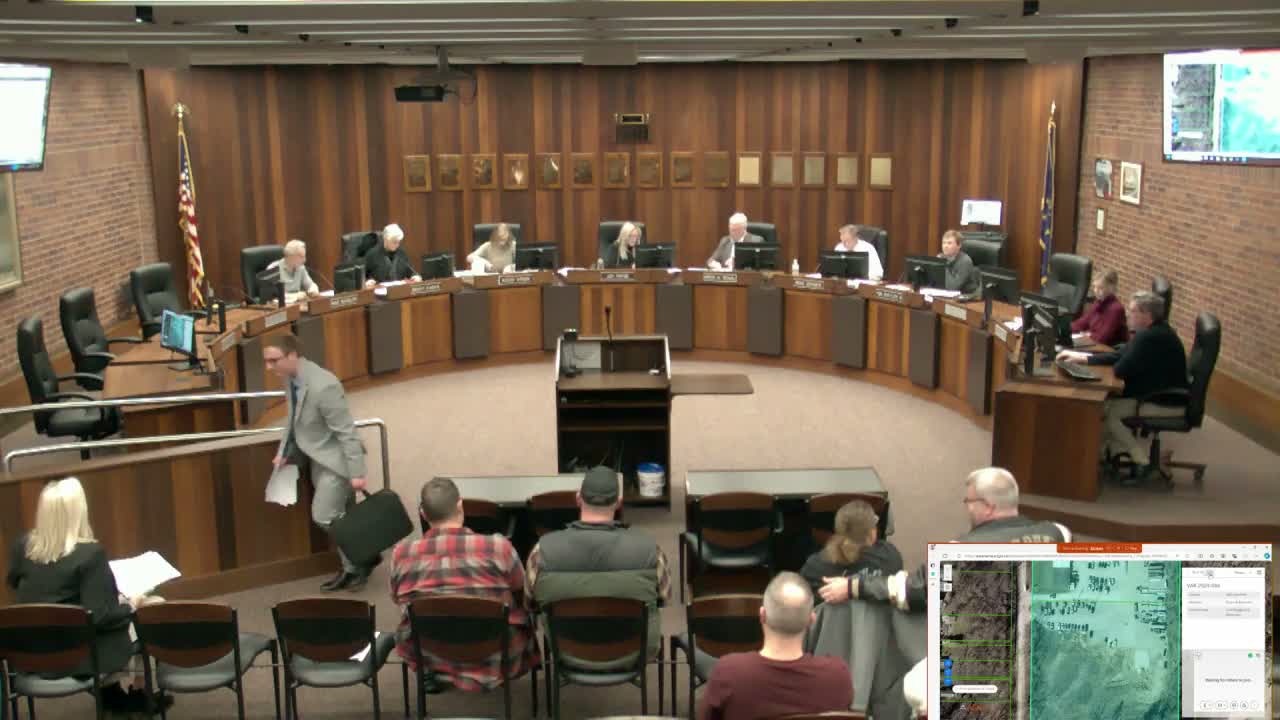
The Evansville Board of Zoning Appeals on November ___ continued a request by SS and K LLC for variances that would allow a chain-link fence and remove required green-space between a commercial lot and the adjacent Fenway Park subdivision, and it required the applicant to remove barbed wire from the fence within 30 days.
The applicant’s representative, attorney Krista Lockyer, told the board the fence is intended to protect equipment stored on the commercial property and to prevent neighbors from digging into a drainage area that serves part of the site. Lockyer said the fence sits on the property line and that moving it 10 feet to meet the green‑space setback would put the fence in a steep drainage swale and could create new drainage problems. “We do have concerns,” Lockyer said, and asked the board for a short continuance so the applicant could consult county and private surveyors and work with neighbors on a proposed solution.
Neighbors urged the board to deny the variance and described both safety and notice concerns. Shauna Lee Taylor Borsheld, who lives directly behind the commercial site, said she and other residents were startled by the fence and particularly by the barbed wire along its top. “I feel like, honestly, I’m in a prison,” she said, describing the fence line as visually intrusive and, she added, a safety concern for children. Other neighbors complained they had not received timely notice of the construction and said the property has standing‑water and drainage issues that were not resolved when the site was rezoned in 2018.
Board members pressed both sides about practical options. Several members suggested the applicant and neighbors attempt to relocate the fence to the gravel/access line on the commercial side or otherwise reconfigure the alignment so that the required green‑space is restored between house lots and commercial activity. Lockyer said the applicant is willing to meet neighbors but was concerned that moving the fence without surveying could create a new drainage problem. She also told the board, and then confirmed to neighbors, that removing the barbed wire would be a near-term concession: “Taking the barbed wire down is a no brainer. We’ll certainly do that.”
After discussion the board voted to continue the item for 30 days with conditions: (1) the applicant must remove the barbed wire from the existing fence within 30 days, and (2) fees for returning within the usual one‑year reapplication period were not waived. The motion passed by roll call, 5–0. Lockyer agreed to consult the county surveyor and her client’s surveyor and to meet with neighborhood representatives in the next month.
What happens next: The petitioner will consult surveyors and meet with neighbors, and the case will return to the board at the next scheduled BZA session for follow-up. The board’s action preserves the status quo for another month while requiring the applicant to remove the barbed wire and pursue a negotiated revision to the fence alignment.