Get Full Government Meeting Transcripts, Videos, & Alerts Forever!
Get email alerts on the Historic Preservation topic
No spam. Unsubscribe anytime.
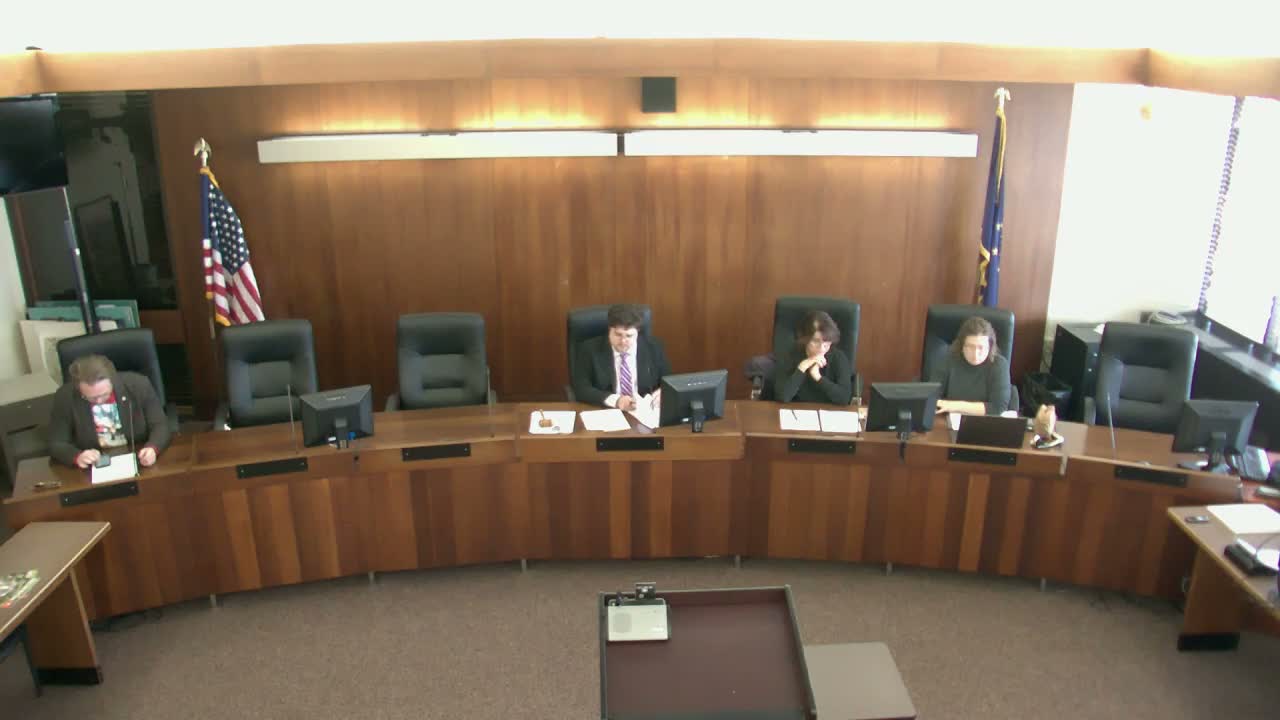
Historic preservation panel denies front‑window material change for 615 Southeast Riverside; approves rear screens
Summary
The Evansville Historic Preservation Commission reviewed a Certificate of Approval for 615 Southeast Riverside Drive on Dec. 11, 2024. Commissioners approved adding screens to two rear windows, took no action on a vinyl-replacement request for two rear windows, and voted down a blanket approval for front vinyl windows (4 nays, 1 abstention).
At a Dec. 11 meeting, the Evansville Historic Preservation Commission reviewed a Certificate of Approval (COA) application for 615 Southeast Riverside Drive and declined to approve vinyl replacements for the house’s front windows, saying material specifics and samples were required. The commission did approve full screens on two rear windows.
The applicant, Gail Cummings, said the property has been under renovation for several years and has suffered contractor failures and theft. “We have spent over a $156,000,” Cummings said, describing the project as costly and ongoing. She told commissioners the budget shortfall prompted a request to permit vinyl windows on the front—estimated at about $1,000 per window in the application—rather than more expensive wood windows, so savings could fund removal of a nonhistoric front office and restoration of the original wraparound porch.
The request matters to the neighborhood because commissioners said the house’s visible front facades set a precedent for the Riverside Historic District. Commissioners listed several concerns: adherence to the ordinance’s like‑for‑like material provisions, the visual and construction differences between vinyl and wood, and the lack of detailed product specifications in the current application.
Commission discussion and votes followed the COA’s three related line items. On item 5 (install two vinyl windows on the rear to match existing), a motion to approve failed to reach the four‑vote threshold and was recorded as no action. On item 6 (install full screens on two rear windows to match existing), the commission voted unanimously to approve. On item 7 (install front windows), the applicant and staff supplied cost comparisons: the COA packet lists a Woodrot estimate of “3,125.47” for wood windows (no warranty) and an approximate $1,000 per vinyl window; the applicant also reported a carpenter quoting about $3,500 to make a single wood window. Commissioners recorded the item 7 vote as four nays and one abstention, so the blanket vinyl replacement for the front was not approved.
Commissioners pressed the applicant for more specific product information. Several members urged a phased approach to the renovation and requested physical samples or detailed construction/specification information (muntin layout, trim dimensions or corner/cut samples) rather than a generic “vinyl” description. “I will never approve bridal windows for the front, in particular, of this house,” one commissioner said, reflecting a firm stance about front‑facing treatments (commissioner language as recorded). Another commissioner summarized the ordinance standard: the commission prefers like‑for‑like materials and visual appropriateness to keep structures close to their original appearance.
Staff and commissioners also noted that prior COA approvals and building permits can expire; the COA tied to earlier approvals had lapsed, which is why the owner returned with a new application. Commissioners told the applicant she may return with a revised COA that includes samples or a phased plan responsive to commissioner requests.
The chair read out next‑step options: the applicant may present samples or a more detailed specification at a future hearing; the commission offered the option of a phased plan focusing first on windows necessary for weatherproofing and then the porch restoration work. The commission’s next regular meeting was noted as the second Wednesday of the month (Jan. 8, 2025) at 11:30 a.m.
Outcome: item 5 — no action; item 6 — approved (roll call unanimous among present commissioners); item 7 — denied (4 nays, 1 abstention).